Why Strength Doesn’t Translate to Performance (According to Science)
Автор: Research Training Lab
Загружено: 2026-02-05
Просмотров: 27
Описание:
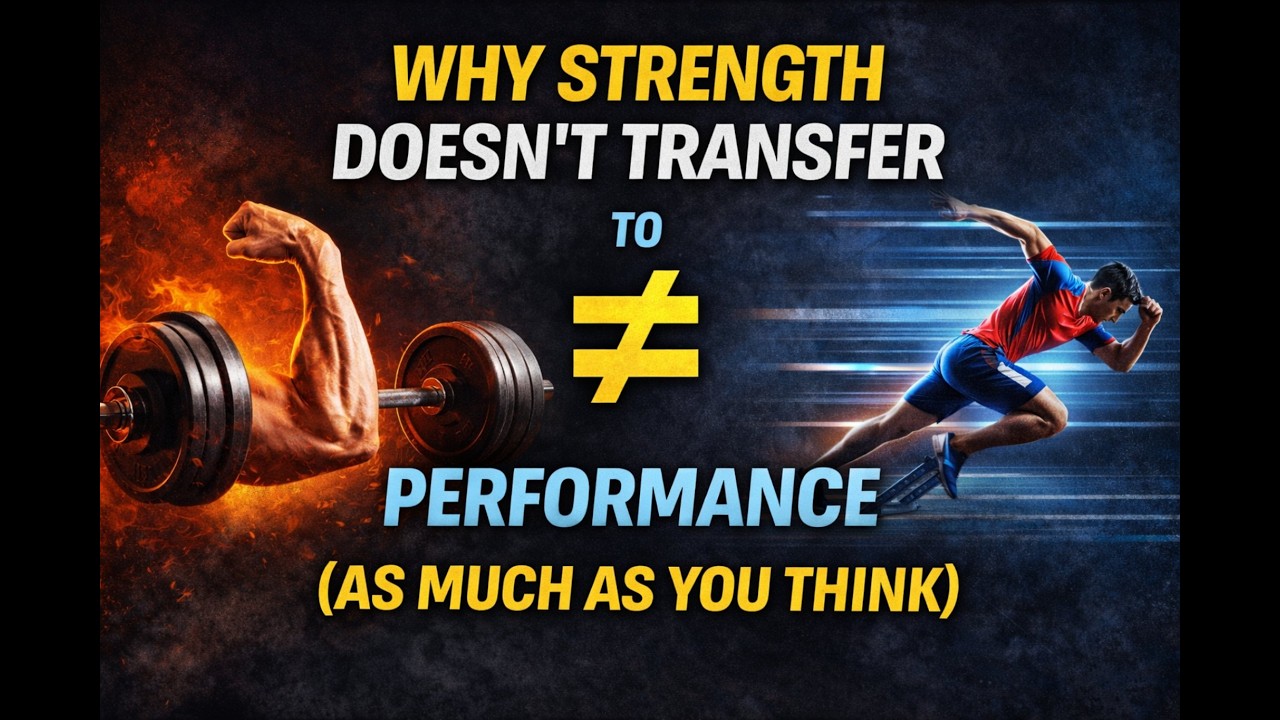
Getting stronger does not automatically mean performing better.
In this video, we explore why increases in maximal strength often fail to fully transfer to sport performance, even in well-trained athletes.
Using evidence from neuromuscular physiology, biomechanics, and applied sport science, we break down the key mechanisms that limit transfer, including:
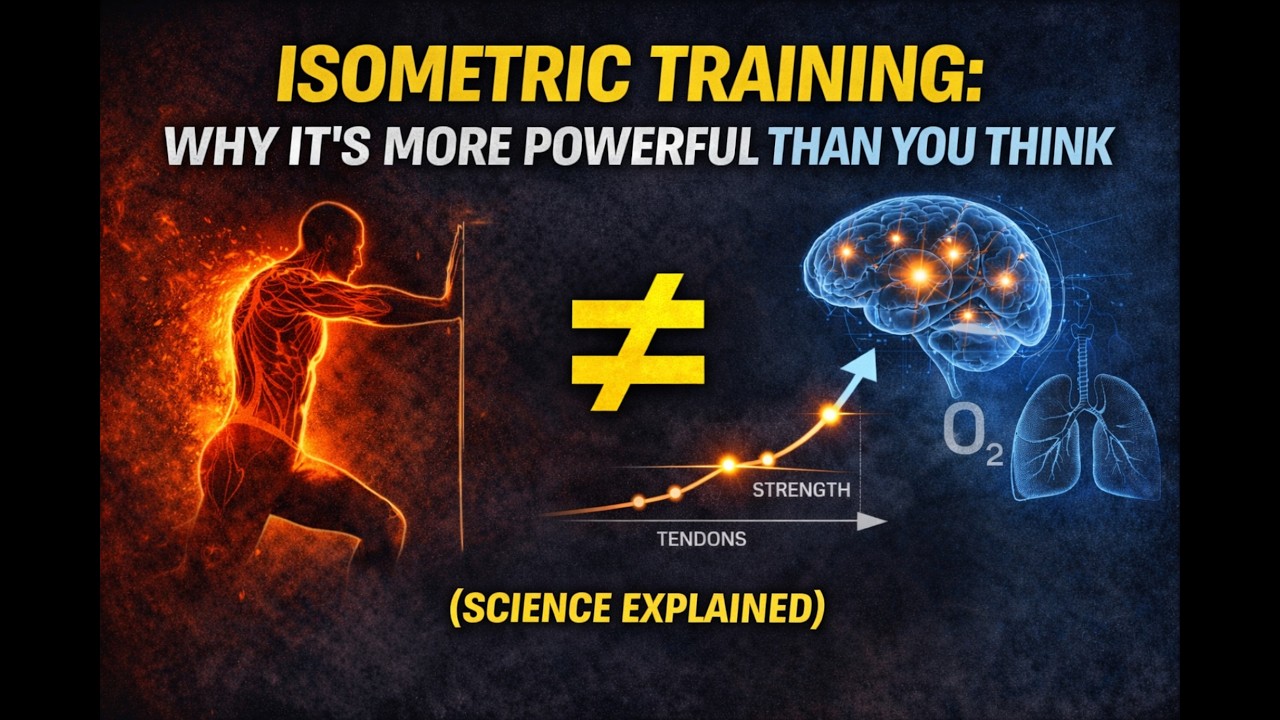
• Force–time characteristics and rate of force development (RFD)
• Velocity and contraction specificity
• Joint-angle and task specificity
• Neural coordination and co-activation
• Tendon behavior and elastic contributions
We also discuss when strength training does enhance performance, and why its effectiveness depends on how force is produced, transmitted, and expressed in sport-specific contexts.
This is not an argument against strength training.
Strength is essential — but it is not sufficient on its own.
If you’re interested in evidence-based training and performance science, consider subscribing for more research-driven content.
• Burnie, L., Barratt, P., Davids, K., Worsfold, P., & Wheat, J. (2022). Effects of strength training on the biomechanics and coordination of short-term maximal cycling. Journal of Sports Sciences.
• Duchateau, J., & Amiridis, I. G. (2023). Plyometric exercises: Optimizing the Transfer of Training Gains to Sport Performance. Exercise and Sport Sciences Reviews.
• Haugen, T. A., Breitschädel, F., & Seiler, S. (2019). Sprint mechanical variables in elite athletes: Are force-velocity profiles sport specific or individual? PLoS ONE, 14(7), e0215551.
• Lanza, M. B., Balshaw, T. G., & Folland, J. P. (2019). Is the joint-angle specificity of isometric resistance training real? And if so, does it have a neural basis? European Journal of Applied Physiology, 119, 2465–2476.
• Lecce, E., Amoruso, P., Felici, F., & Bazzucchi, I. (2025). Resistance training-induced adaptations in the neuromuscular system: Physiological mechanisms and implications for human performance. The Journal of Physiology, 1-35.
• Van Hooren, B., Aagaard, P., & Blazevich, A. J. (2024). Optimizing Resistance Training for Sprint and Endurance Athletes: Balancing Positive and Negative Adaptations. Sports Medicine, 54(12), 3019–3050.
• Van Dyke, M. (s.f.). Rate of force development (RFD) and Co-activation.
• Young, W. B. (2006). Transfer of strength and power training to sports performance. International Journal of Sports Physiology and Performance, 1(2), 74-83.
#strengthtraining
#sportsperformance
#exercisescience
#humanperformance
#biomechanics
#rfd
#evidencebasedtraining
#performancescience
Повторяем попытку...
Доступные форматы для скачивания:
Скачать видео
-
Информация по загрузке: