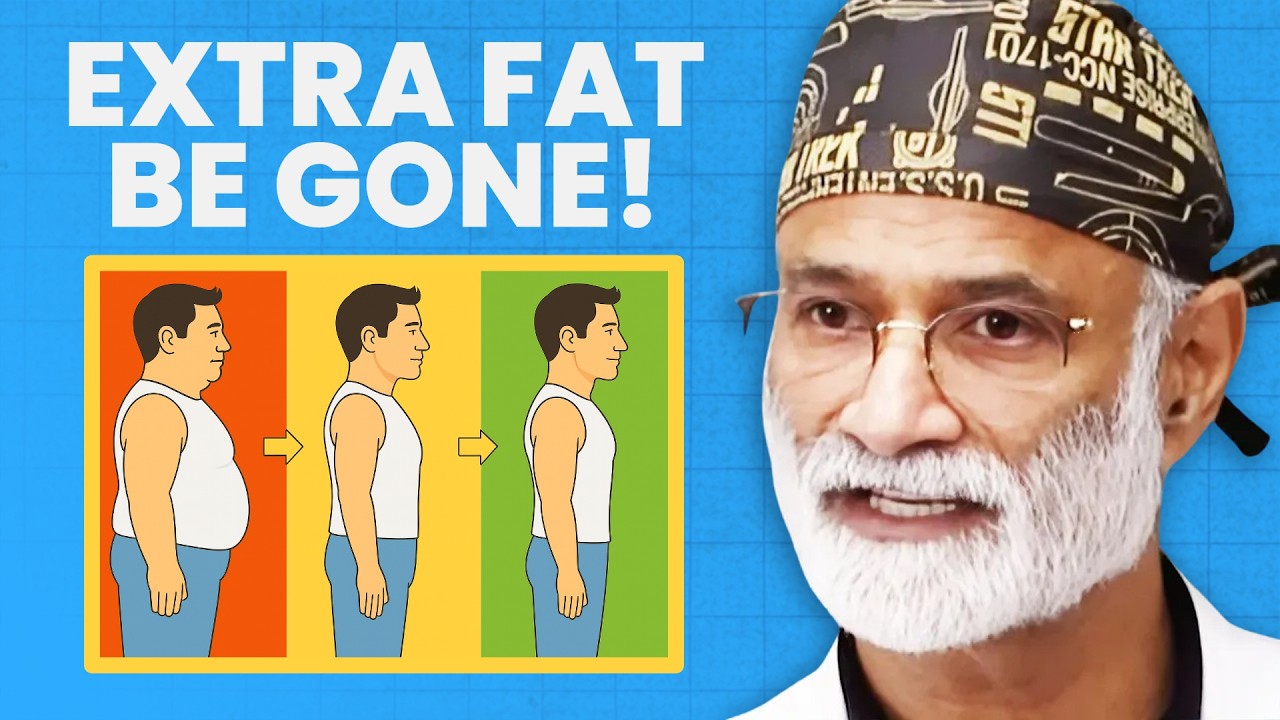
Visceral Fat Can’t Survive When You Follow This #1 Fasting Hack | Dr. Pradip Jamnadas Explains
Автор: Dr. Pradip Jamnadas Explains
Загружено: 2026-02-09
Просмотров: 124
Описание:
Visceral fat is the deep fat stored around your organs—and it’s one of the most dangerous types of fat because it’s closely linked with insulin resistance, fatty liver, chronic inflammation, and higher cardiometabolic risk. The good news is that visceral fat is highly responsive when you lower the signals that keep it “protected,” especially insulin. That’s why the most effective fasting strategies aren’t about suffering—they’re about creating the right low-insulin environment so your body can finally access stored fat.
In this video, Dr. Pradip Jamnadas explains the #1 fasting “hack” that helps many people target visceral fat more effectively. You’ll learn what really makes fasting work, why some fasting routines fail (even with long windows), and how small changes in timing, what you consume during the fasting window, and how you break your fast can dramatically improve results—without extreme dieting.
This is evidence-based medical education designed to help you fast smarter, reduce belly fat safely, and improve metabolic health long-term.
▶️ WHY YOU SHOULD WATCH THIS VIDEO
You have stubborn belly fat and suspect visceral fat is the issue
You’re fasting but still not seeing results
You want to lower insulin and improve metabolic flexibility
You want doctor-led guidance instead of internet myths
You want a fasting strategy you can actually sustain
🧠 WHAT YOU’LL LEARN
What visceral fat is and why it’s strongly tied to insulin
The #1 fasting principle that makes fat-burning easier
Hidden “fasting” habits that keep insulin high and stall progress
What to do during fasting windows to avoid cravings and fatigue
How to break your fast without spiking insulin and rebound hunger
Who should modify or avoid fasting for safety
⚠️ DISCLAIMER & AI CONTENT DISCLOSURE
This video is for educational and informational purposes only and does not provide medical advice. Fasting is not appropriate for everyone and results vary by individual. Always consult a qualified healthcare professional before starting intermittent fasting—especially if you are pregnant, have diabetes (or take insulin/sulfonylureas), kidney disease, gout, heart conditions, a history of eating disorders, or take medications that affect blood sugar or blood pressure.
This content may include AI-generated visuals and/or voice narration used for educational presentation purposes. The information shared is general in nature and should not replace personalized medical guidance.
Повторяем попытку...

Доступные форматы для скачивания:
Скачать видео
-
Информация по загрузке: