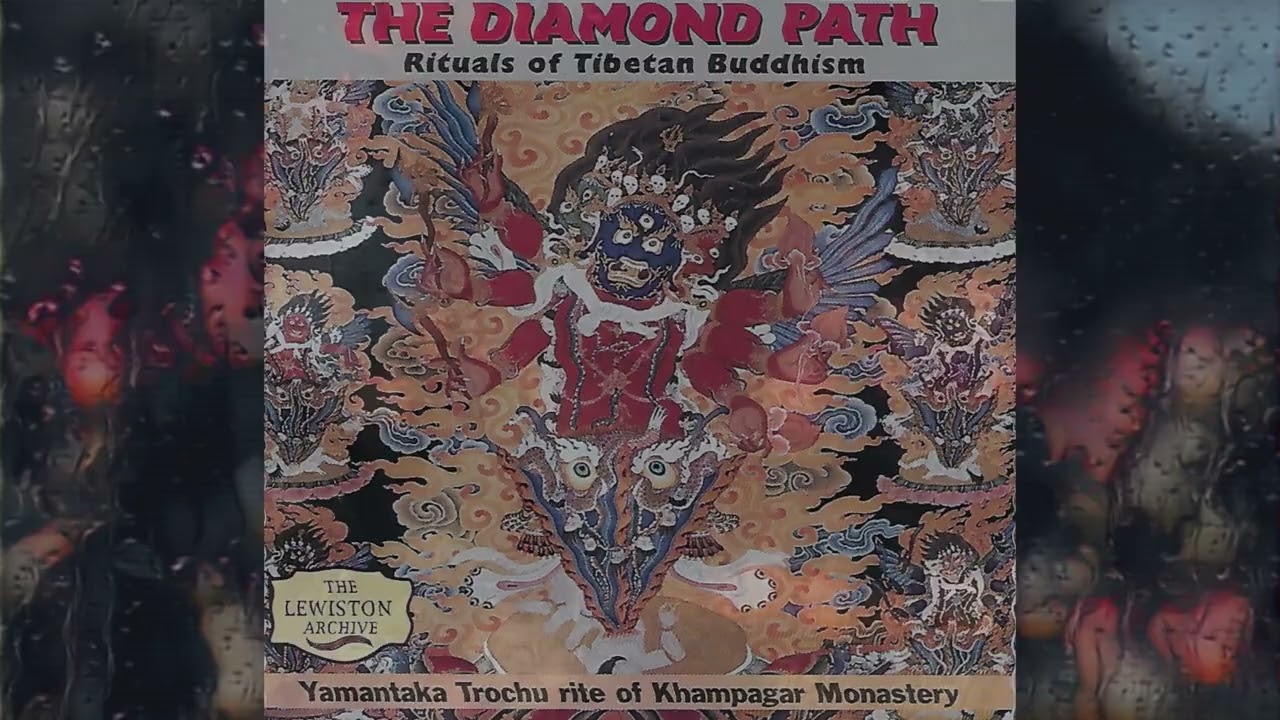
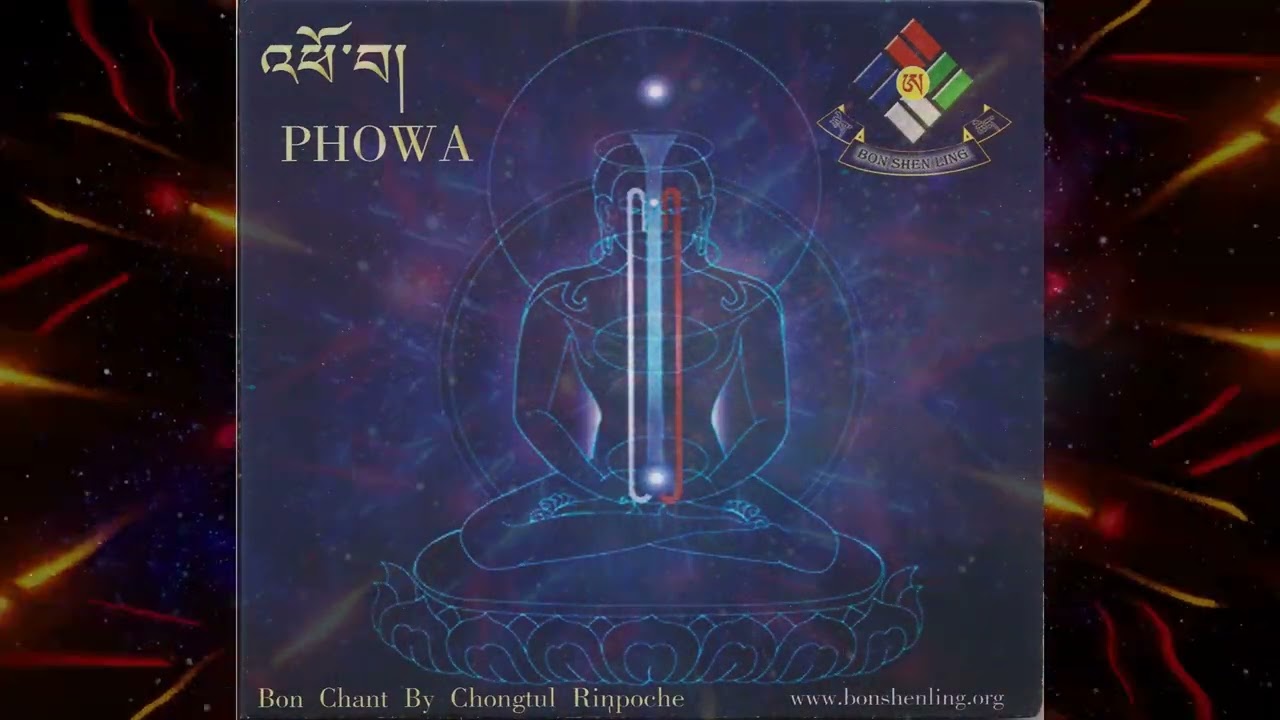
Tibetan Buddhist Rites From The Monasteries Of Bhutan Volume 2: Sacred Dances And Rituals (album)
Автор: Om Vajrapani Hum
Загружено: 2023-05-20
Просмотров: 670
Описание:
Tibetan Buddhist Rites From The Monasteries Of Bhutan Volume 2: Sacred Dances And Rituals Of The Nyingmapa And Drukpa Orders (album)
Tracklist
1.
Entreaty To The Three Buddha-Bodies
6:38
2.
Invitation To Padma Sambhava
6:32
3.
Rise Up, Padma
5:01
4.
Words Of Prayer
2:49
5.
Tibetan Shawms
2:19
6.
Myule Drelwa, Calling Down Of Deities To Subjugate Evil Spirit; And Kulwa, Its Death, Stabbed By Black Hat
10:24
7.
Part Of Junbeb, The Coming / Down Of Grace
3:16
8.
Monks In Procession Playing Portable Instruments Followed By Chanting Of The Heart-Drop Teaching. Recorded In Thimphu
5:26
9.
Drammyen Choshe, Song Of Offering, With Lute (Dramnyen) Lute Solo, Followed By Chorus, In A Praise Of Sons Of Buddha
3:58
10.
Dramnyen Choshe, Chorus Only, Song In Praise Of Chinese Silk
1:29
11.
Monks, A Clown, Crowds And Instruments 1
2:13
12.
Monks, A Clown, Crowds And Instruments 2
2:12
13.
Monks, A Clown, Crowds And Instruments 3
2:09
14.
End Of Festival, With Temple Belle, And Drums And Trumpets
2:48
15.
Wandering Ascetic
4:46
16.
(Manip) Chanting A Milarepa Poem And A Mantra
0:24
17.
Cymbals (Silnyen) Played Solo
0:53
18.
Cross-Flute (Zurlim), Folk-Song From E. Bhutan
2:19
19.
Another Manip Chanting Milarepa Poem
2:43
20.
First Manip As Story-Teller
1:46
Four schools of thought dominate the religious landscape of Tibetan
Buddhism; they are the Gelukpa, Nyingmapa, Kagyu and Sakhya orders.
Each of the schools interact with one another and share similarities,
but they also differ in aspects of practice, certain teachings
(e.g. philosophical, epistemological), and musical traditions.
Bhutan shares a similar religious culture to that of Tibet. While
the Gelukpa school rose to political power in Tibet (1690-1959), it
was the Drukpa Kagyu (or more simply, Drukpa) order — a derivative of
the Kagyu order — that took political hold in Bhutan. The religious
and musical life of Bhutanese Buddhists is dominated by the
traditions of both the Drukpa and Nyingmapa orders.
The re-released recordings do well to present the clarity of Levy’s
thoughts, as well as the musical forms akin to both the Nyingmapa
and Drukpa. The two CDs are divided into three parts, with the first
presenting ritual music of the Drukpa. These songs were recorded in
the towns of Thimpu and Punashka, and draw upon dominant religious
forms, found throughout Bhutan, as well as folk elements particular
to region. The second section presents music from ritual dances from
both the Nyingmapa and Drukpa orders. Both monastic and public
ceremonies from two separate annual festivals are presented in the
third section.
While the music on the two-disc set is presented as Tibetan Buddhist
Rites, it is also distinctly Bhutanese. The opening track, a
propitiatory rite, serves as an invitation to Genyen: a protector
deity specifically associated with an area in Bhutan in the Thimpu
Valley. "Chham gi Serkyem gi Yang (Tune for Offering of Consecrated
Drink)" also calls attention to the particulars of Bhutanese Buddhism:
calling attention to specific protector deities of Bhutan and Serkyem,
a Bhutanese take on beer.
The recordings also serve to present a majority of the various instruments
used in both monastic and non-monastic song. The music of the shawm, a double-reeded long horn, the silayen (cymbals), dramnyen (seven-string
long-necked guitar) and zurlim (flute) share space on these albums. Yet,
the most spectacular musical element on this CD comes from the individual voices and polytonal throat chanting of monks. The most compelling piece, in praise of the Nyingmapa scholar Padmasambhava (Guru Rinpoche), is performed by a manip, or wandering ascetic.
"Volume Two contains dance rituals in which spectacular human and animal masks are worn by the dancing monks, signifying mystical and terrifying aspects of the deities."
John Levy, an Englishman in Bhutan, early seventies. Released by Lyrichord in the mid-'70s, all the people who have listen to these vinyls know that there isn't something more powerful, more prodigious and pure than them. John Levy was a London ethnomusicologist who took refuge in Tibetan Buddhism. So he had all the possibilities to record - with his Nagra stereo - all the rituals (even the most sacred). We can say that what is discovered here is unique and far beyond all that was done after that. All the material is fully remastered, and we propose the Levy's collection divided into two volumes: one of rituals and chanting (SR222, 2005) and one of instrumentals and folk music (SR230, 2005).
https://subrosalabel.bandcamp.com/album/ti...
- -
May All Sentient Beings Benefit
Повторяем попытку...

Доступные форматы для скачивания:
Скачать видео
-
Информация по загрузке: