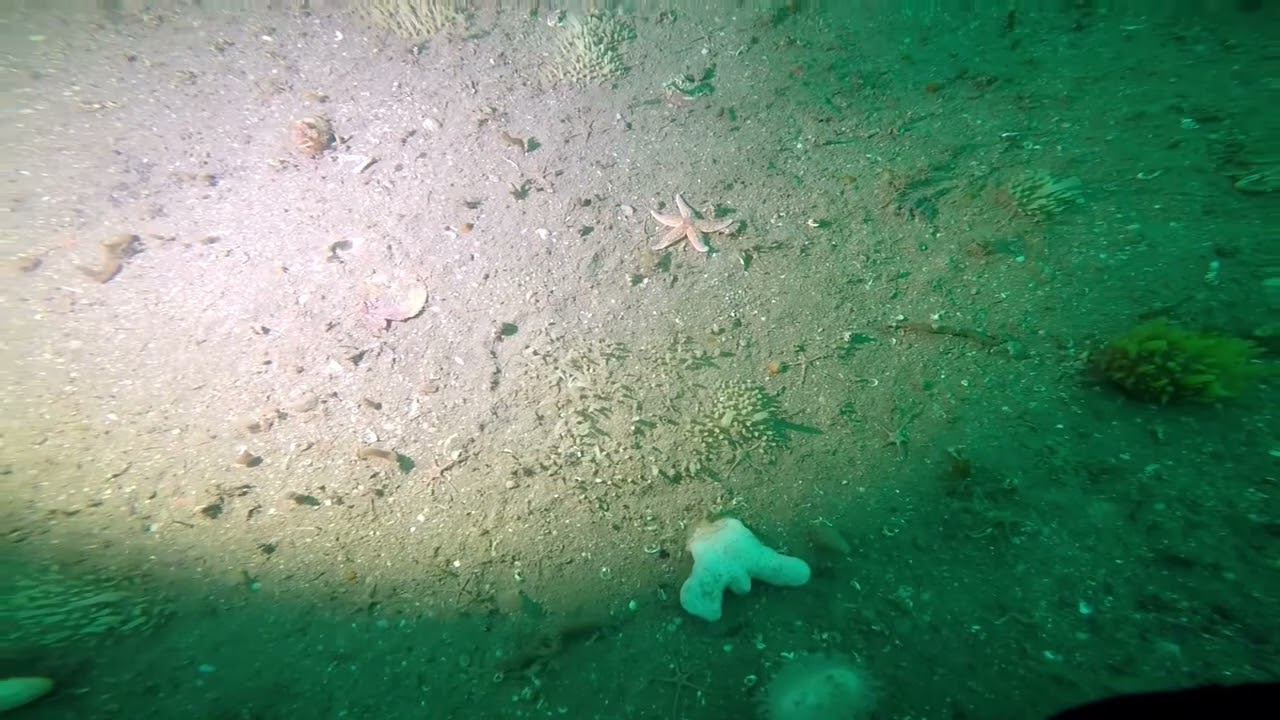
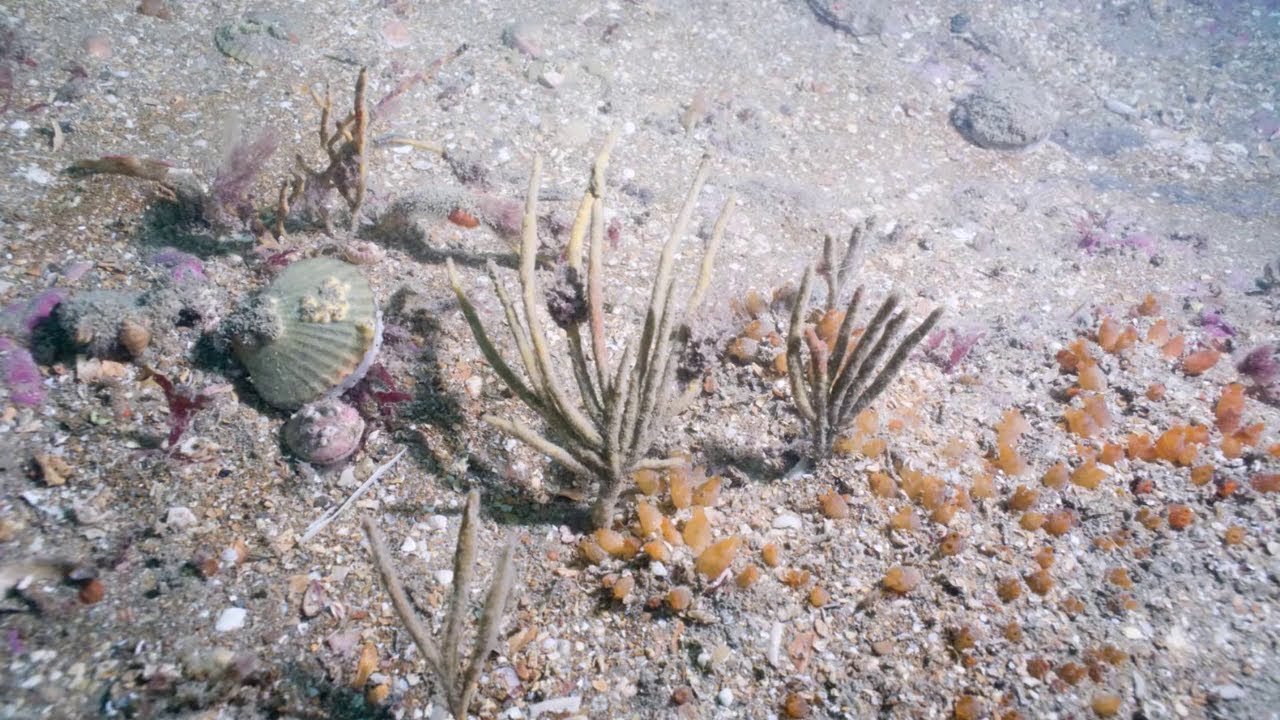
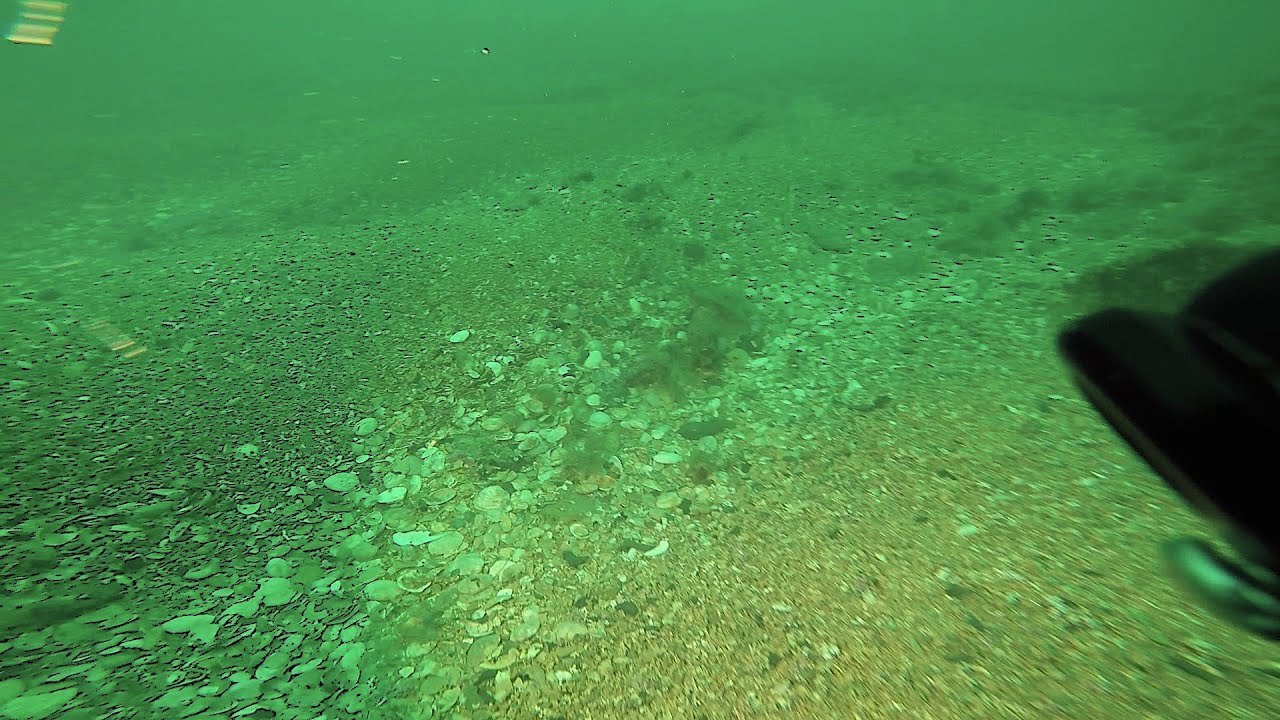
Marine Ecology: A Simple Sediment Veneer Biotope, Durlston, Dorset.
Автор: Anemone Marine Ecology
Загружено: 2025-07-22
Просмотров: 43
Описание:
Marine habitats (or biotopes) consist of the non-mobile life (community) and the substratum it grows on. There are many reef biotopes and many sediment biotopes on the UK list. Veneer biotopes combine elements of both: the community is attached to a hard surface (usually bedrock reef or stony reef) and grows through (or under) a layer of mobile sediment. This sediment is a potent modifier of the community - some species cannot cope at all, some cope quite nicely and others (evidence is growing) specialise in veneer habitats - black scour weed, Ahnfeltia plicata is one such and this community at Durlson also includes Halurus equisetifolius, Halopithys incurvus, Cladostephus sp., all with various other algae growing as epiphytes, plus large areas of coralline crusts.
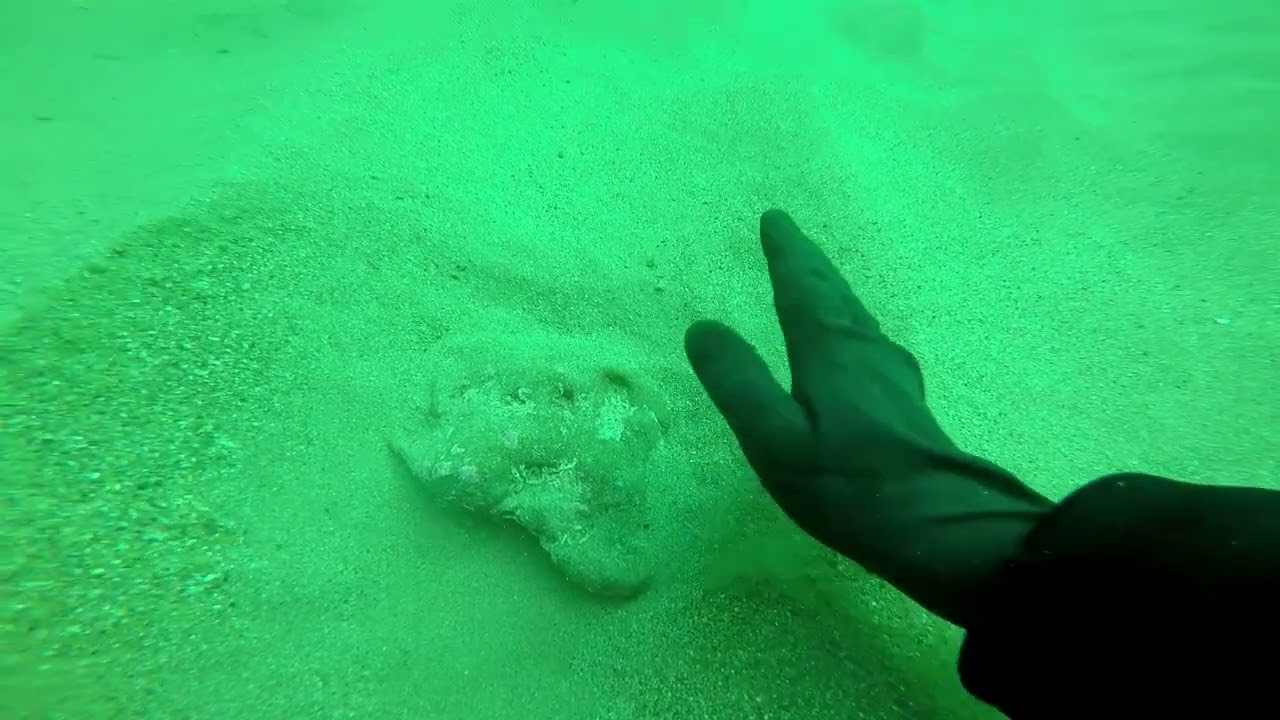
To qualify as a veneer, the sediment must be mobile - it has to periodically 'clear' the bedrock to allow reef species to settle and establish. To qualify as a biotope, your area of identifiable habitat must add up to at least 25 square metres in the area surveyed. This is an infralittoral biotope and is a sand veneer (with biogenic fragment component). The sand here contains little silt and is highly mobile. Most of it is rock (geogenic) fragments. Biogenic fragments are pieces of carapace, test, shell, worm tube, bryozoan colony produced by living oprganisms.
Silt and silt/biogenic fragment veneers exist and can be more species-diverse. Your sediment may contain more than one size class which may move in 'phases'. Mineral (geogenic) sediment behaves differently to particles of biogenic origin of similar dimension and will have a different effect on community under a geogenic sediment veneer - the particles are more dense, harder, often sharper and rounder and more 'scoury'. Geogenic fragments will need more energy to move and if lofted into the water column, will settle out faster than biogenic fragments of similar dimension.
At a particular locus a sediment veneer moves according to local current regime, exposure to weather and interactions between the two.
A veneer community will vary with depth/photic regime as does any marine community. The video shows and algae-dominated shallow infralittoral community. In the circalittoral, algae will be absent, but veneer biotopes contain a variety of sessile animals such as the uncommon sponge Adreus fascicularis which is actually fairly common in Dorset in circalittoral silt veneers. 'Unknown' Polymastia sponges also crop up. This clip is strung together from several shorter clips shot in May 2018 under the cliffs of Durlston near Swanage in Dorset in 9m of water. Crucially, veneer communities are part of the wider 'rocky reef' subset of marine biotopes but may be recorded as 'sediment' by remote survey techniques like towed video. In the UK, many areas of reef are protected because they are 'reefs' and large areas of sediment veneer biotope have historically been excluded from protection because they were not recognised as 'reef'.
Veneer biotopes might be viewed as a transition between sediment and reef. However, although areas of veneer biotope occur at such a transition, it is simplistic to view veneer biotopes as transitions - they contain specialist biota. Where a veneer occurs as a mosaic with reef and sediment, overall biodiversity of the mosaic may be significantly higher than for each subset (rocky reef and sediment) sampled separately and then added together.
It is possible that veneer communities at specific loci might act as bellweathers for changing weather patterns given repeat monitoring at those loci over long periods. More work is needed.
https://swmecosystems.co.uk/wp-conten... is aimed at Seasearch divers in the UK and gives more details on recording veneers (for which biotopes are expected to be written in the near future). Veneers as a concept arose from diving in 'flat'n'boring' areas away from upstanding rocky reefs. Areas of thin sediment layers over hard surfaces are (like reefs) hard to sample with grabs. The veneers concept is a work-in-progress and comments are welcomed.
Video originally uploaded in 2018 on my 'other' YouTube channel and moved to this one in 2025 with updated description.
Повторяем попытку...
Доступные форматы для скачивания:
Скачать видео
-
Информация по загрузке: