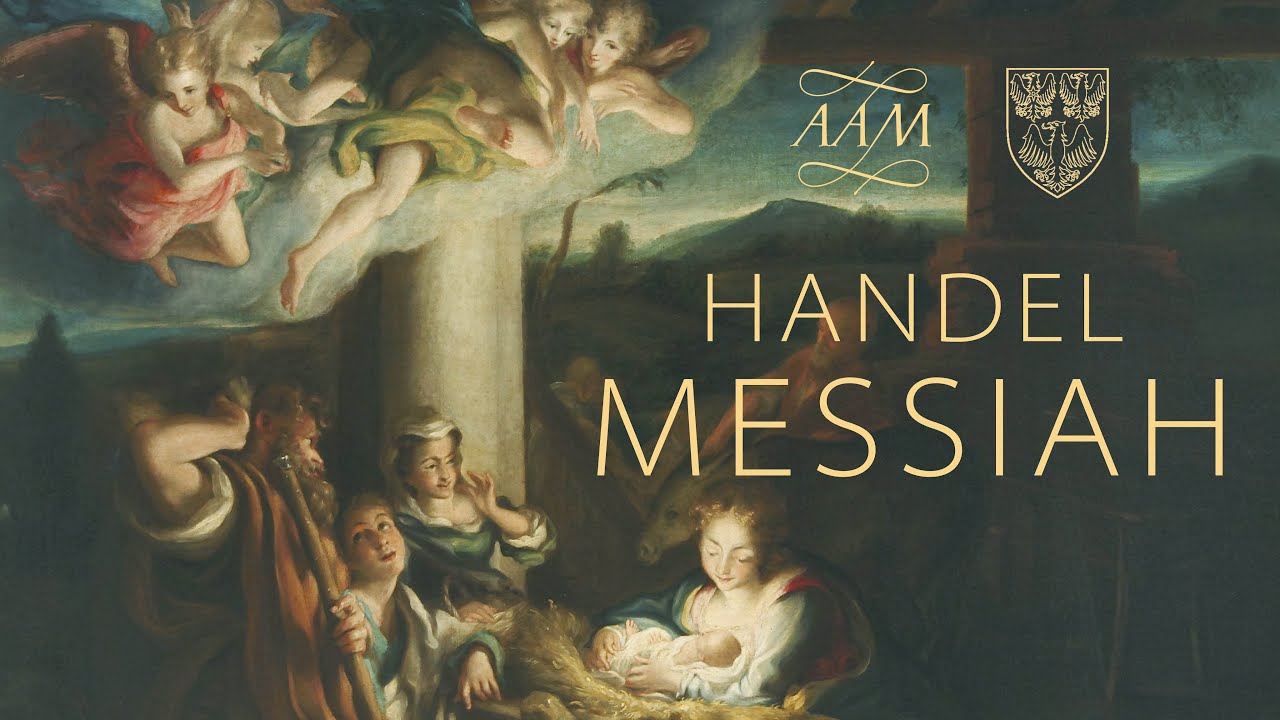
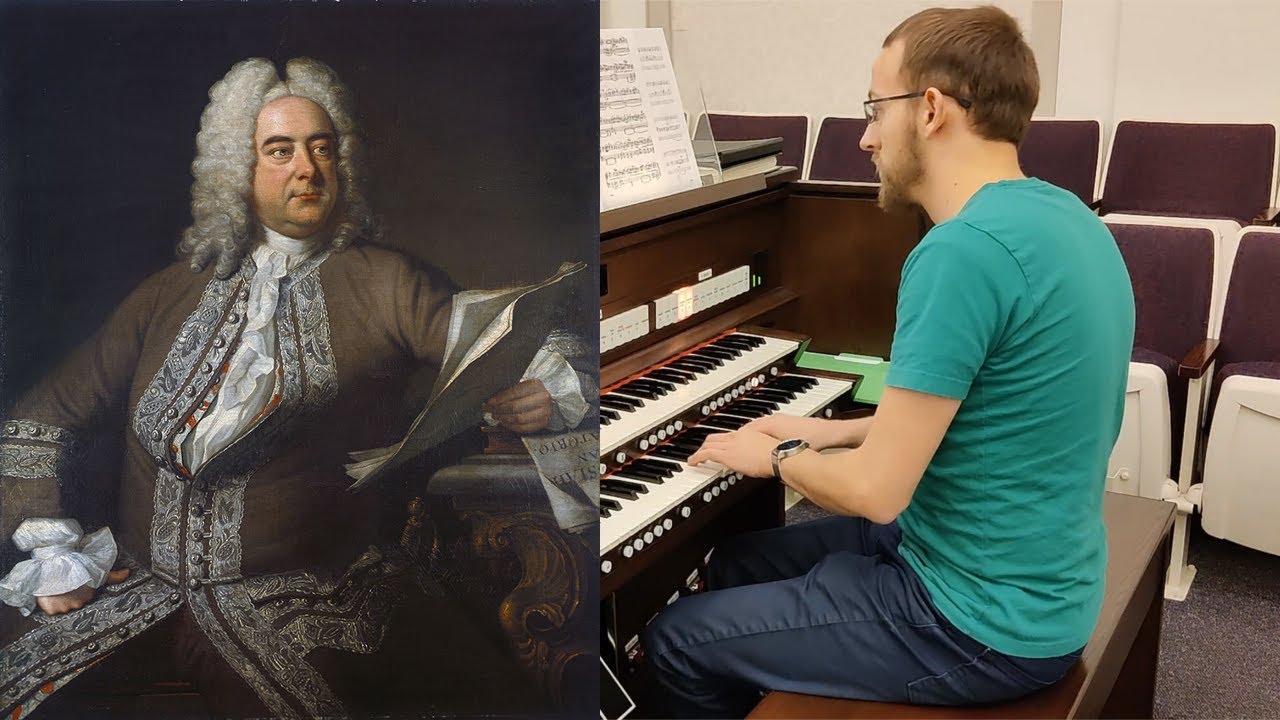
G.F. Handel - Messiah HWV 56 'Pifa' (Pastoral Symphony) - James A Gähres, cond., Ulm Philharmonic
Автор: Wolfgang Wilhelm
Загружено: 2016-10-25
Просмотров: 9583
Описание:
Ulm Philharmonic
James Allen Gähres, conductor
George Frideric Handel (1685–1759)
Messiah, HWV 56
Part one, Scene 4, No.13 (Novello edition, 1959) / No.12 (Bärenreiter edition, 1965)
'Pifa' (Pastoral Symphony)
Larghetto e mezzo piano – C major
Live recorded during open public concert.
Ulm, Germany
G.F. Handel - Messiah HWV 56, No. 44 'Hallelujah!'- James Allen Gähres, cond., Ulm Philharmonic: • G.F. Handel - Messiah HWV 56, No. 44 'Hall...
G.F. Handel - Messiah HWV 56, No.12 'For unto us a child is born' - James Allen Gähres, cond., Ulm Philharmonic: • G.F. Handel - Messiah HWV 56 'For unto us ...
The oratorio was composed at a time when Handel's fortunes were at a low ebb. His final attempt to return to opera with Imeneo (1740) and Deidamia (1741) had proved a failure, and rumor even had it that, having despaired of the London public, he was preparing to leave England. Fortuitously, the clergyman and writer Charles Jennens, Handel's collaborator in Saul, lured Handel back to the idea of English oratorio; at much the same time, the composer received an offer from William Cavendish, Lord Lieutenant of Ireland, to take part in the following season of oratorio performances in Dublin. The libretto offered to Handel by Jennens was based around the birth and Passion of Christ. It was called Messiah. Handel set to work on the libretto on August 22, 1741, completing the score just over three weeks later on September 12. "I did think I did see Heaven before me and the great God Himself!" he muttered to a servant.
The resulting sacred, non-dramatic oratorio was a first for Handel, and, although it heralded the composer's final great phase of oratorio composition, he never wrote one like it again. Messiah is therefore completely atypical within the context of Handel's oratorios, the majority of which relate to Old Testament or Apocryphal stories in dramatized form. As a statement of Christian faith it moves the worldly Handel closer to Bach than any other work of his, although not sufficiently to prevent contemporary accusations of operatic influences. It is also worth recalling that during Handel's day Messiah was more frequently performed in theaters than in churches.
The first performance took place at the New Music Hall in Dublin on April 13, 1742. It was received with huge acclaim, the Dublin Journal proclaiming that "Messiah was allowed by the greatest Judges to be the finest Composition of Music that ever was heard." The following year the triumph was repeated at Covent Garden, when Handel added two more solos. Further revisions took place in 1745 at the famous Foundling Hospital performances, leaving all subsequent conductors with editorial problems as to Handel's 'final' intentions. By the time of the composer's death in 1759 Messiah had already attained an iconic status it has never relinquished.
Alongside its immensely popular choruses – of which the 'Hallelujah' is king – and the outstanding Pifa (Pastoral Symphony) movement, Messiah's primary allure is its effective arias and recitatives for solo voices.
Ever since the London audience belatedly approved Messiah in 1750, it has remained one of the best-known and most widely performed of all musical works. It is the only important piece of Baroque music with an unbroken performance tradition from the time of its creation to our own day. It was heard in America as early as 1770.
For all of its unparalleled popularity, Messiah is an aberration among Handel's oratorios, the least typical of his two dozen works in the form: it is his only oratorio, except Israel in Egypt, whose entire text is drawn from the Bible; his only oratorio without a continuous dramatic plot; the only one based on the New Testament; and his only oratorio presented in a consecrated space during his lifetime, a reflection of the sacred rather than dramatic nature of its content ("I should be sorry if I only entertained them; I wished to make them better," he told one aristocratic admirer); it has more choruses than any of his oratorios except Israel; the soloists in Messiah are commentators on rather than participants or characters in the oratorio's story. None of this, of course, detracts a whit from the emotional/artistic/(perhaps) religious experience of Messiah. (Handel and Jennens never appended the definite article to the title.) Its three parts – The Advent of the Messiah, The Passion of Christ, and His Resurrection – embody the most sacred events of the Christian calendar, yet its sincerity and loftiness of expression transcend any dogmatic boundaries. In the words of George P. Upton, the American musicologist and early-20th-century critic of the Chicago Tribune, "Other oratorios may be compared one with another; Messiah stands alone, a majestic monument to the memory of the composer, an imperishable record of the noblest sentiments of human nature and the highest aspirations of man."
Повторяем попытку...

Доступные форматы для скачивания:
Скачать видео
-
Информация по загрузке: