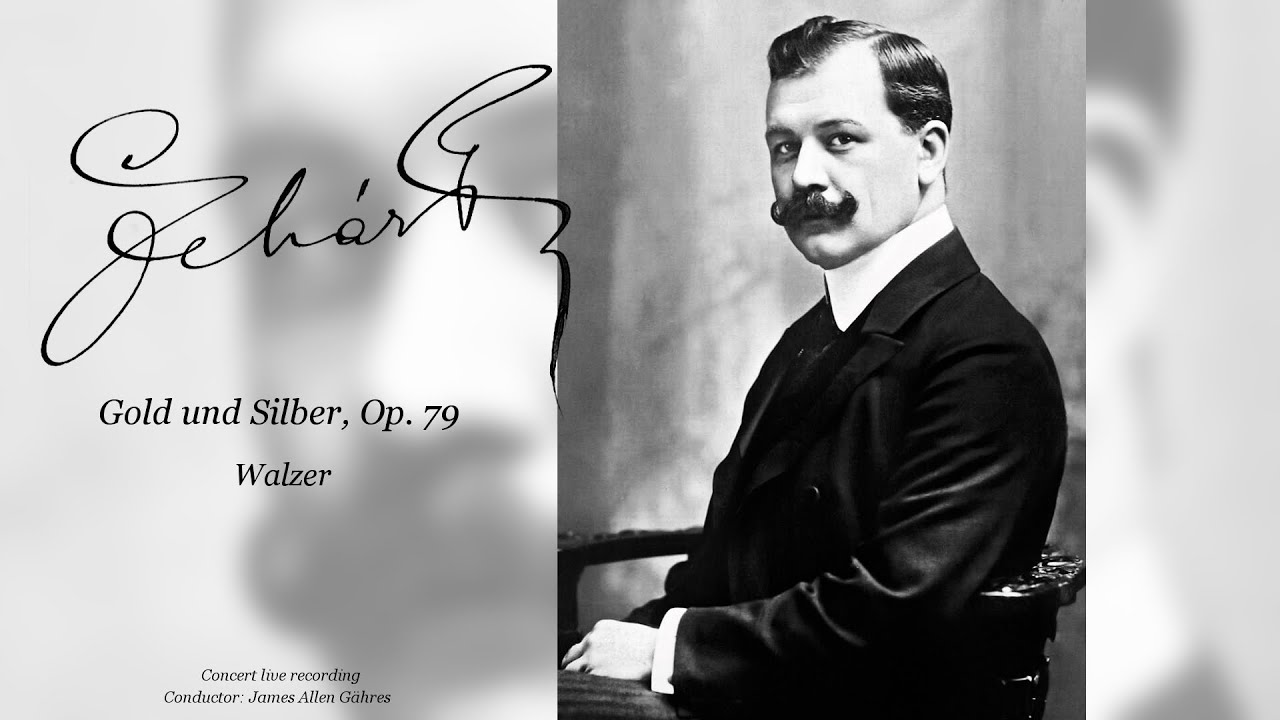
Franz Lehár - Gold and Silver, Waltz, Op. 79 - James Allen Gähres, cond., Ulm Philharmonic
Автор: Wolfgang Wilhelm
Загружено: 2020-03-21
Просмотров: 6410
Описание:
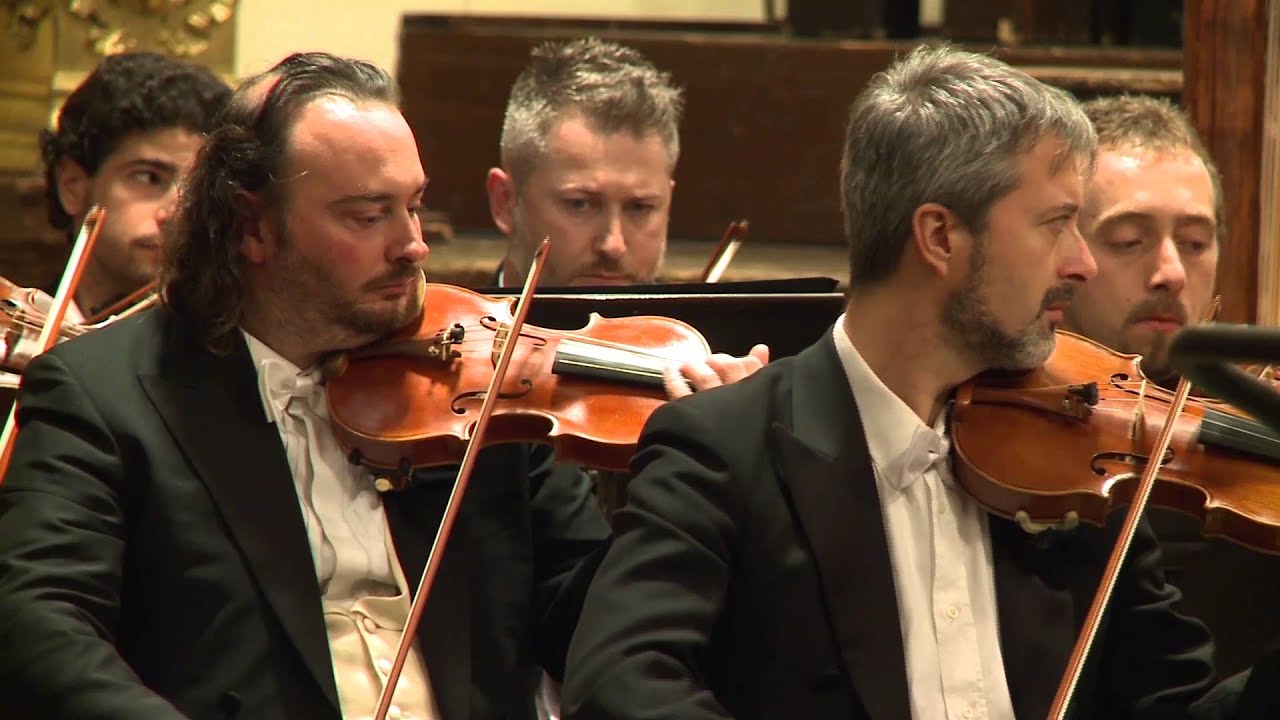
Ulm Philharmonic
James Allen Gähres, conductor
Franz Lehár (1870–1948)
Gold und Silber, Waltz for Orchestra, Op. 79
Live recorded during open public concert.
Ulm, Germany
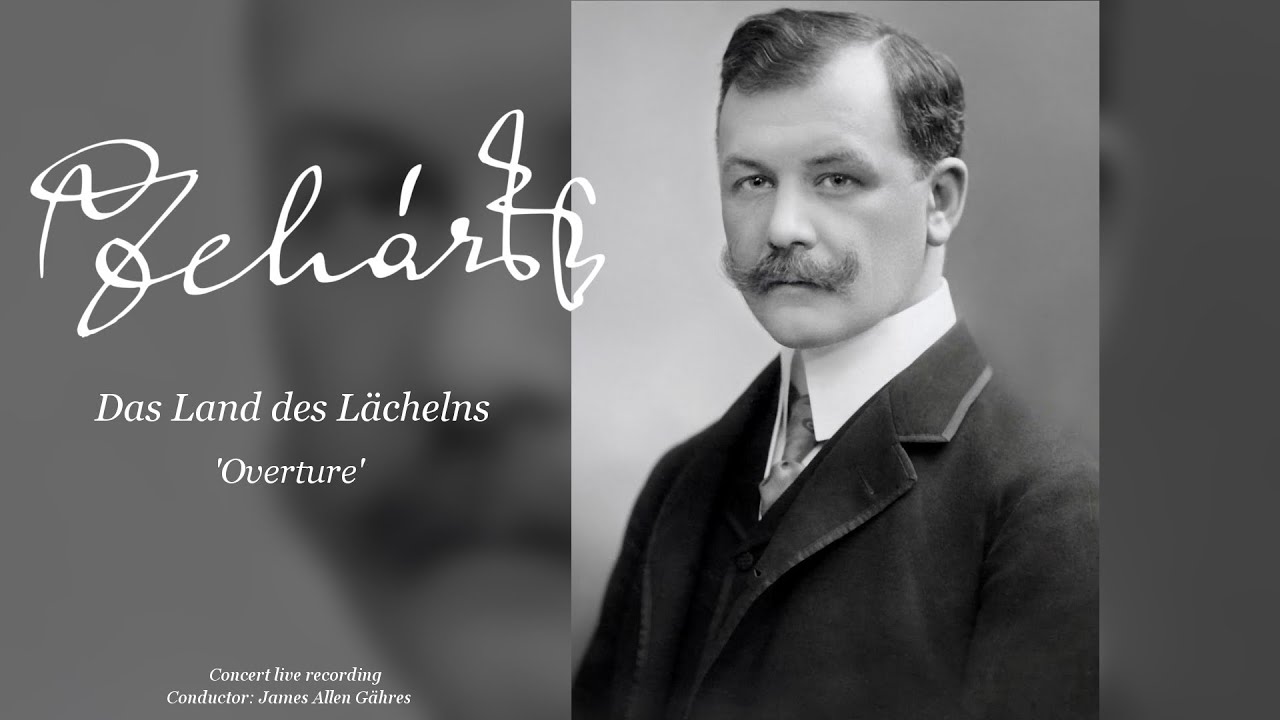
Cover: Photograph of Lehár, c.1905, by E. Bieber, Hofphotograph, Berlin.
Paintings:
– The End of the Ball, c.1915, by Rogelio de Egusquiza (Spanish painter, 1845–1915). Private collection.
– Court Ball at the Hofburg, 1900, by Wilhelm Gause (German-Austrian painter, 1853–1916). Wien Museum Karlsplatz, Vienna, Austria.
– After the Ball, c.1909, by Conrad Kiesel (German sculptor and painter, 1846–1921). Private collection.
– Le bal ou une soirée élégante, c.1890, by Victor Gabriel Gilbert (French painter, 1847–1933). Private collection.
– The Waltz, 1891, Anders Zorn (Swedish painter, 1860–1920). Private collection, Biltmore Estate, Asheville, NC, United States.
Black and white photograph: Lehár in the large parlor in his home in Bad Ischl, Austria. Around 1925. ©Museum der Stadt Bad Ischl.
Score: Musical quotation by Franz Lehár, dated September 21, 1928.
Lehár - Das Land des Lächelns (The Land of Smiles), Overture - James Allen Gähres, cond., Ulm Philharmonic: • Franz Lehár - Das Land des Lächelns, Overt...
The Viennese custom of naming waltzes after ball events, and ball events after waltzes dates back to Joseph Lanner, Johann Strauss Sr. and their contemporaries. Johann Strauss Jr. raised the so-called “name waltz,” which received its title from the important occasion at which it was premiered, to an art. For Franz Lehár it became a welcome source of popularity and income. When Princess Pauline Metternich planned a “Gold and Silver” gala ball for 1902's carnival – after a “white” and a “red and white” one – she reinvigorated the old custom. She commissioned Franz Lehár, the young bandmaster of the 26th regiment, to compose “something especially fine.”
The ball took place in the Sofiensaal, a concert hall located in Vienna, named after Princess Sophie of Bavaria, the mother of Emperor Franz Josef, on Thursday, January 27, 1902. Following the tradition the “name waltz” would be given as the first concert piece (with introduction and coda) of the evening. An instrumental concert work to set the mood before the dancing began. The general dance began after the conducting composer received the applause, and the archduke and the princess have completed the dance of honor.
Although the waltz was to achieve international fame as “Gold and Silver” balls became popular throughout Europe, England, and America, and quickly gained fame for its composer, apparently that first evening it made little impression on the crowd. Every one was dressed in some variety of the theme colors, the ceiling was painted silver with golden stars, and arc lamp lighting highlighted golden palms with silver trunks. But people were antsy and began dancing and talking excitedly right away, drawing attention away from the music. Although the piece was given one encore, it received little notice in the newspapers. Since the success of the waltz “Gold and Silver” was limited, Lehár sold the rights for only 50 guilders to the unknown music publisher Julius Chmel in Vienna's Mariahilfer Straße. The latter sold “Gold and Silver” to Bosworth & Co., in London. The waltz became a global success, and the publisher made an enormous profit in no time, the composer received none of it.
Lehár's waltz is an ideal example of thematic balance and emotional contrast. The first theme ascends and descends within a small range of tones and begins the work with a warm tone colored with birdcall-like grace notes in the woodwinds on beats two and three. A triangle adds a “silvery” quality, and harp arpeggios help the music flow elegantly.
Suddenly, there is a minorish theme which rushes along in the lower string range. An atmosphere of anxious excitement is evoked, accentuated by the trilling winds and the drum rolls. This brief storm begins to subside quickly.
A few staccati as the tempo slows down in anticipation of the main theme. This third theme, 32 measures long in C major, enters with a pickup, and gradually sweeps its way gently upward with dips and turns. It is richly romantic, Viennese, and continental, and floats among the harp arpeggios with constantly singing confidence. At the end there is a gently retreating diminuendo with a glint in its eye.
The fourth motif enters suddenly with a clash of cymbals. This is a bright, lively theme with unison winds answered by the strings. A distant hunting call in the horns leads into a subdued, pastoral fifth motif played by pizzicato strings and horns. Then the sixth motif enters with drum rolls. This coda is replete with ascending trumpet arpeggios in a Wagnerian style (evidently a joke on “Das Rheingold”), and “serious” diminished and minor harmonies resolving into bright major chords. Repeated chordal accents and drum rolls bring the piece to a grand, symphonic conclusion.
Повторяем попытку...
Доступные форматы для скачивания:
Скачать видео
-
Информация по загрузке: