J.S. Bach - Mein Jesu! was für Seelenweh, BWV 487 (orch.) - James A. Gähres, cond., Ulm Philharmonic
Автор: Wolfgang Wilhelm
Загружено: 2019-10-26
Просмотров: 3811
Описание:
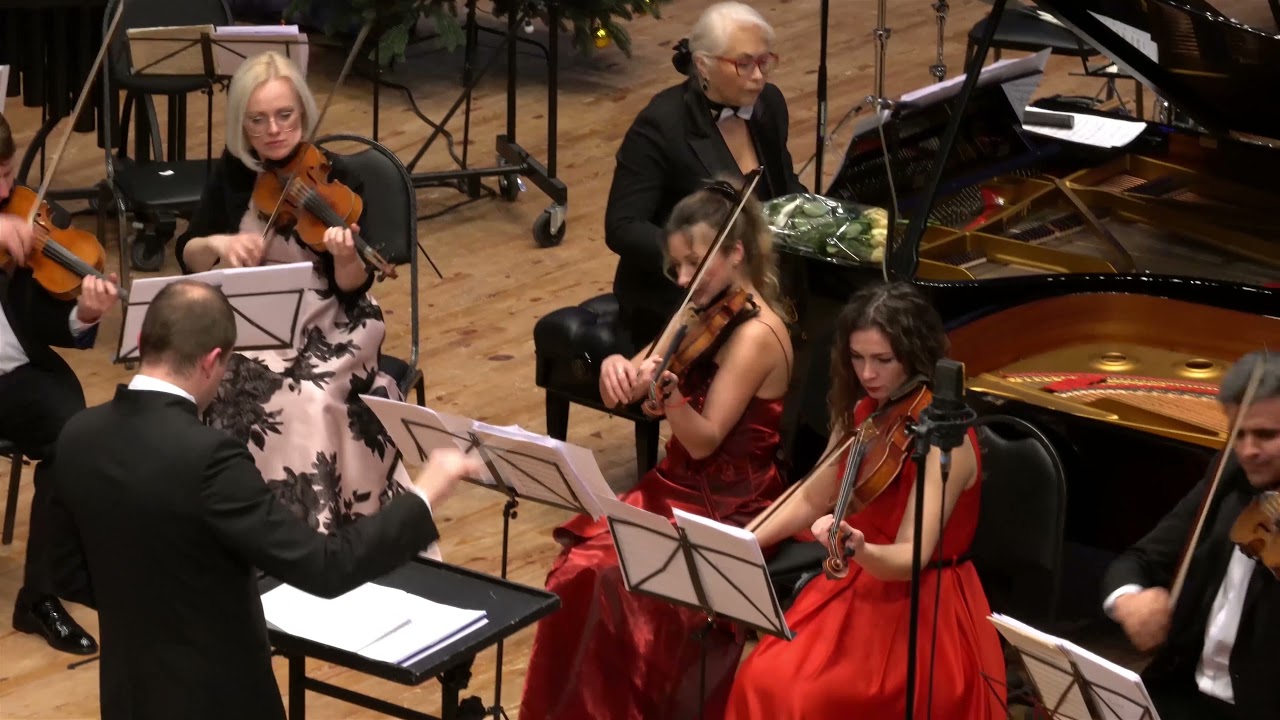
Ulm Philharmonic
James Allen Gähres, conductor
Johann Sebastian Bach (1685–1750)
'Mein Jesu! was für Seelenweh' (My Jesus, oh what anguish), BWV 487 from the Songbook of Georg Christian Schemelli.
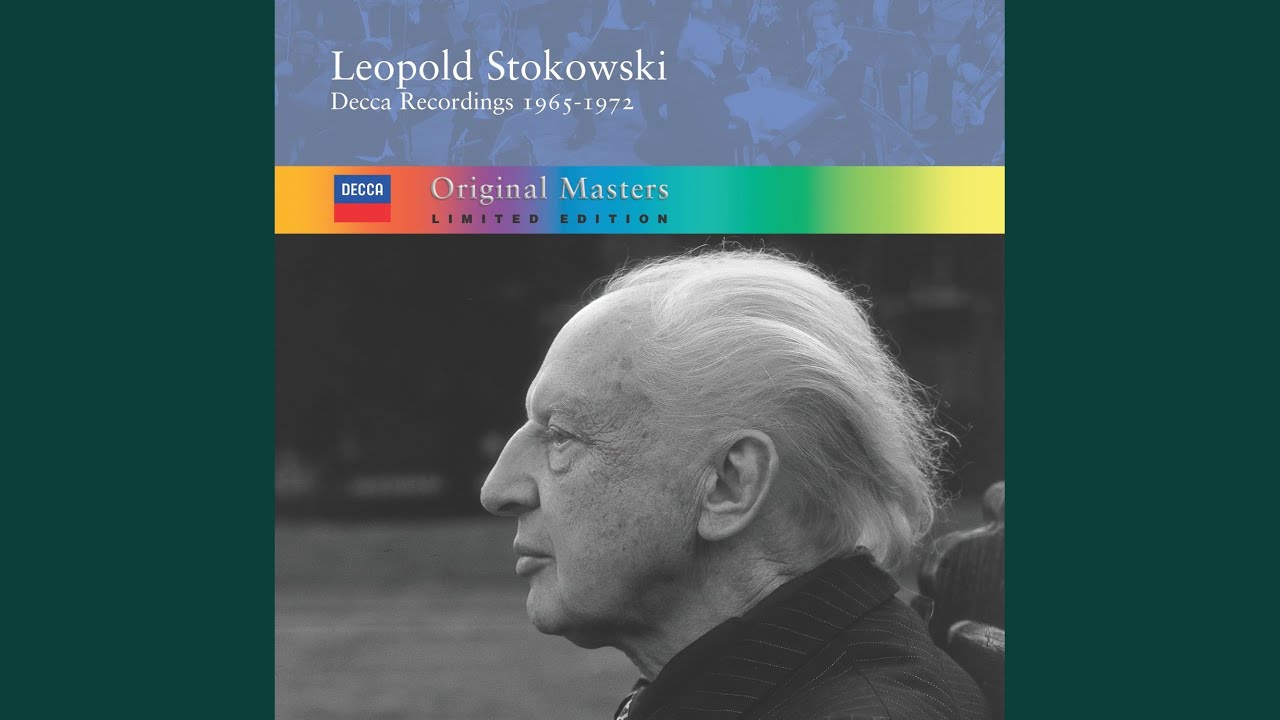
Arranged for orchestra by Leopold Stokowski.
Live recorded during open public concert.
Ulm, Germany
Cover: Portrait of J.S. Bach after an engraving from about 1722. Unknown artist, 19th century, private collection.
– Score, original source: Schemelli's Musicalisches Gesang-Buch (Schemelli's Hymnal), published 1736. Title page, and No. 283, p.189 with score and lyrics of "Mein Jesu, was für Seelenweh." (@Universitätsbibliothek Greifswald)
– Photos taken at St. Thomas Church, Leipzig, Germany. Bach worked here as a Kapellmeister (music director), choir director and Thomaskantor from 1723 until his death in 1750. (Exterior of Thomaskirche / Bach's grave beneath the floor of the choir (sanctuary) of the church / Interior of Thomaskirche with pulpit and Sauer organ (1889) / Bach monument built by Carl Seffner (1908) at the churchyard).
Johann Sebastian Bach was a German composer and organist whose ecclesiastical and secular works for choir, orchestra, and solo instruments drew together the strands of the Baroque period and brought it to its ultimate maturity. Bach enriched established German styles through his mastery of counterpoint, an unrivaled control of harmonic and motivic organization, and his adaptation of rhythms, forms, and textures from abroad, particularly from Italy and France. Bach's compositions include the Brandenburg Concertos, the Goldberg Variations, the Mass in B minor, two Passions, and over three hundred cantatas of which approximately two hundred survive. His music is revered for its technical command, artistic beauty, and intellectual depth.
While Bach's abilities as an organist were highly respected during his lifetime, he was not widely recognized as an important composer until a revival of interest in his music during the first half of the 19th century. He is now generally regarded as one of the greatest composers of all time.
The cantata 'Mein Jesu' was originally written for voice and basso continuo (usually organ and cello), and is part of the Schemelli’s Musicalisches-Gesangbuch (Sacred Song Book/Hymnal). A collection of 954 sacred songs, including sixty-nine pieces "Geistliche Lieder und Arien" (BWV 439-507) contributed by J.S. Bach, published in 1736. Georg Christian Schemelli (c.1678–1762) was a German Protestant church musician, from 1727 he was Hofkantor at the court of Zeitz. For the most part, the majority of the melodies of the collection were already in existence and Bach’s principle task was to add a bass line to each one. He may have altered certain melodic details to render the tunes more suited to his harmonic language. As we know them today, these two-part miniatures offer not only numerous superb melodies, but also a brilliant demonstration of Bach’s contrapuntal and harmonic mastery. Stylistically, the pieces are somewhat related to the four-part chorales, but are more elaborated than the average Lutheran hymn tune. Shared characteristics include relatively short durations, frequent use of AAB form, modulation to closely related keys, and the occasional appearance of modal key-signatures.
In the 1930s, one of the most influential conductors of his generation, Leopold Stokowski (1882–1977), arranged nearly 40 works by Bach for the modern symphony orchestra (the arrangement of 'Mein Jesu' was completed in 1937). Stokowski had progressive views, lurid presence on the concert stage, and innovative approach to music-making. Stokowski embraced everything modern, and synthesized music, art, and dance in ways that were new to the American audiences. His interest in sound reproduction and transmission resulted in pioneering recordings utilizing the latest technological developments. In his pursuit of the perfect balance and blends of color in the concert hall, he often experimented with the placement of players' seating by moving sections of the orchestra to different parts of the stage. Stokowski's unorthodoxy is perhaps his greatest legacy, for it was his willingness to take risks and challenge convention that occasioned his most significant triumphs.
Повторяем попытку...

Доступные форматы для скачивания:
Скачать видео
-
Информация по загрузке: