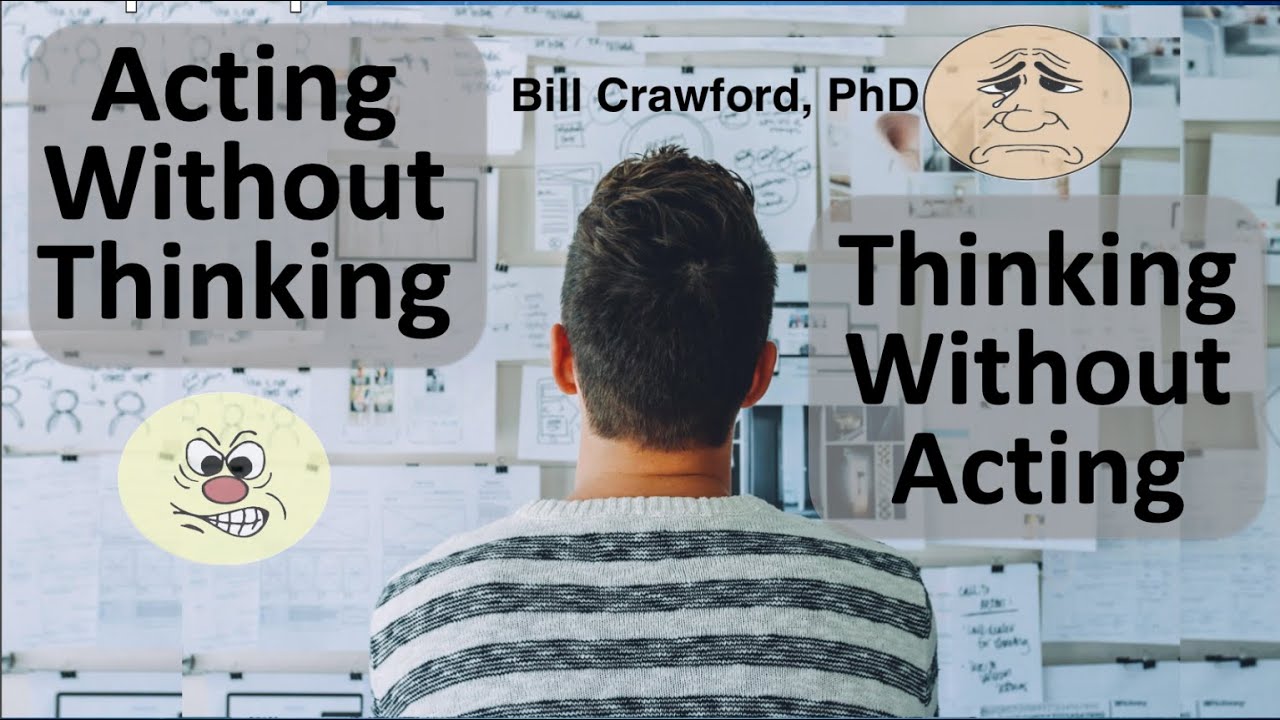
Why People Resist Accountability
Автор: Bill Crawford, Ph.D.
Загружено: 2025-08-25
Просмотров: 496
Описание:
“The way to encourage people to be accountable is to change the meaning to "the ability to be counted upon.” Bill Crawford, Ph.D.
Recently I have been doing a lot of work with leaders, and one concern many speak to is accountability. They just don’t see people being willing to hold themselves accountable for what they do. In fact, when a mistake has been made, they often see those in their organization looking for someone or something else to blame.
Interestingly enough, when I work with employees, they have similar concerns. They see “being held accountable” as being set up to take the fall for some problem that has less to do with them and more to do with a dysfunctional system. Or, those who are extremely self-critical may take the opposite approach and beat themselves up for some mistake to the point where they lose confidence in their ability to do their job.
In other words, it seems that the two reactions most people have to being “held accountable” are blame or shame. For those of you who have heard me speak or read my books, you know that these reactions come from the lower 20% of the brain which is responsible for fight or flight. Shame is "flight" and blame is "flight," but regardless, neither is serving the individual, or the organization.
Therefore, I suggest that we re-examine the concept of accountability in a way that has the potential to be embraced by all. For example, wouldn’t it be fair to say that what we are really talking about here is trust?
Employers want to be able to trust their employees, and the vast majority of employees want to be seen as trustworthy. Oh, sure, there are those few who are just trying to get away with as much as possible, but most people see themselves as worthy of trust, and try their best to do their best.
The problem generally comes when a mistake is made. Employers tend to want someone to take responsibility for the mistake (be accountable) with the idea that this will keep the mistake from happening again. The problem, of course, is that either the employee doesn’t think it was their mistake (blame), or they see accepting responsibility as confirmation of their lack of worth (shame) and thus they resist being “held accountable”.
The solution here is not to look to the past to hold someone accountable, but become engaged in how we as an organization can do this differently in the future. Leaders can trust that employees probably have firsthand information on what didn’t work, and very likely have some ideas on how to fix it so that this doesn’t happen again. One great question leaders can ask is, “Okay, knowing what we know now, how can we do this differently in the future?” The reason for the success of this question is that there is no shame or blame in the future. Notice, this is very different from the standard “Okay, who’s responsible for this mistake?” which is all about the past.
Bottom line, I suggest that leaders draw upon the trustworthy part of their workforce to become partners in problem-solving. This means tapping into the upper 80% of the brain where their employee’s knowledge, intuition, creativity, and problem-solving expertise resides. It also means avoiding shaming or blaming as a way of creating accountability within the organization.
Of course, it is still important for everyone to keep their agreements and follow through with what needs to be done. I just believe that the potential for this type of accountability is enhanced by creating a bond of trust between employers and employees, in an environment where “accountability” is “the ability to be counted upon,” and where you are trusted to do what you say, bring your best to the process, and learn from mistakes in a way that looks to the future and the solution, not the past and the problem.
If this makes sense, and you would like me to create a presentation for your organization on redefining accountability in a way that everyone can embrace, feel free to contact me, and let’s discuss how to make that happen.
Повторяем попытку...

Доступные форматы для скачивания:
Скачать видео
-
Информация по загрузке: