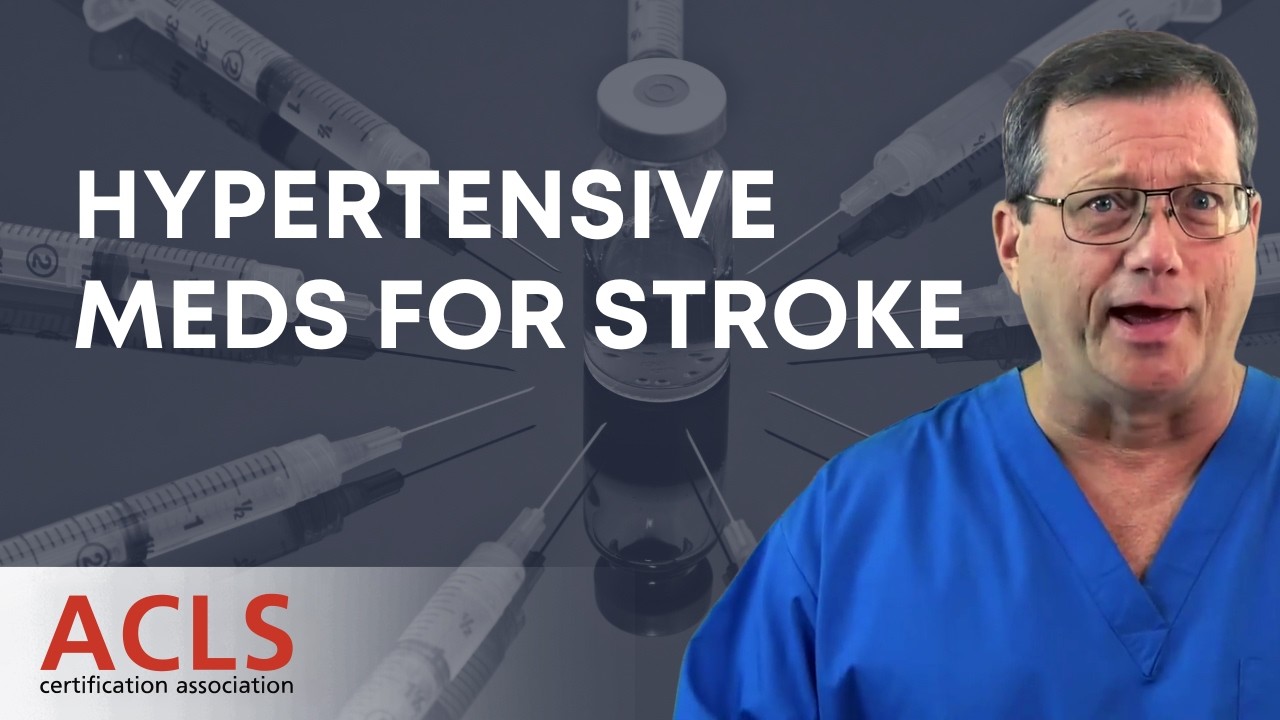
How to Lower BP in Acute Ischemic Stroke: Cardene vs Labetalol | ACLS Certification Association
Автор: ACLS Certification Association
Загружено: 2026-03-11
Просмотров: 174
Описание:
When a stroke patient returns from CT and hemorrhage has been ruled out, blood pressure management can become a critical next step—especially if the patient is otherwise being considered for reperfusion therapy. This lesson reviews labetalol and nicardipine (Cardene), two IV antihypertensive options commonly used when BP lowering is needed in acute ischemic stroke.
In this video, you’ll learn:
▪️Why BP control may matter after non-hemorrhagic stroke is confirmed
▪️How labetalol works as a mixed alpha- and beta-blocker
▪️Why nicardipine/Cardene is used as a calcium channel blocker infusion
▪️The practical dosing reviewed in the lesson:
🔸Labetalol: 10–20 mg IV over 1–2 minutes, may repeat once in 15 minutes
🔸Cardene (nicardipine): 5 mg/hr infusion, titrate by 2.5 mg/hr every 5–15 minutes, up to 15 mg/hr
▪️Why titration should be slow and deliberate
▪️A key safety pearl: avoid labetalol in patients with bronchial asthma because beta-blockade can worsen bronchospasm.
This is a high-yield review for nurses, paramedics, physicians, stroke teams, and anyone preparing for ACLS- or emergency-care-related exams.
💬 Comment below: In your setting, do you see Cardene drips or labetalol pushes used more often for acute stroke BP control?
For more free ACLS lessons or to earn your ACLS certification visit:
https://aclscertification.org/
#Stroke #strokesymptoms #ACLS #IschemicStroke #CPR #ACLSCertification #ACLSCertificationAssociation #CPRdotcom
Повторяем попытку...
Доступные форматы для скачивания:
Скачать видео
-
Информация по загрузке: