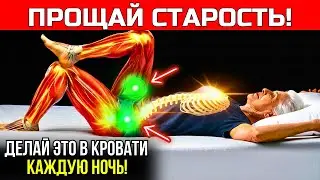
Over 60? 5 EXERCIES FOR POOR LEGS|Simple daily movements restore muscle–brain communication
Автор: junior wellness
Загружено: 2026-01-12
Просмотров: 17
Описание:
There comes a moment in life when the legs we once took for granted begin to speak to us in whispers of fatigue, stiffness, or hesitation. If you are over sixty, these whispers are not signs of failure; they are messages asking for attention, asking to be remembered, asking to be respected. The body is remarkably resilient, even in the face of age, but it thrives on movement, nourishment, and consistency. Poor legs are rarely a sentence written by time; more often, they are a question, a gentle challenge, waiting for you to respond with patience, care, and intentional action. Strength, balance, and endurance can be regained, not overnight, but through deliberate choices that honor both the science of the body and the wisdom of experience.
Movement is the language through which the body communicates, and it does not take extravagance to restore that dialogue. Simple daily exercises, repeated with awareness, can awaken muscles that have grown quiet from years of underuse. The first exercise begins in the most familiar of ways: rising from a chair and returning to a seated position. It may seem ordinary, yet this act engages the thighs, hips, and glutes in a rhythm that mimics life itself. Each rise pushes blood into tissues, strengthens fibers, and reminds the nervous system that these muscles are still necessary. It is a small, achievable challenge that builds both confidence and function. The beauty lies in its simplicity; the body responds not to effort alone, but to attention.
The second exercise calls for the quiet power of the calves. Standing tall, lifting the heels slowly, and letting them fall is deceptively gentle. The calves act as a second heart, helping blood return to the core, reducing swelling, and invigorating tired legs. Each lift is a small victory of circulation, each descent a reminder that motion can be healing. Over time, these repeated contractions reawaken strength, endurance, and the subtle energy that carries us through our days. Circulation is life, and by encouraging it through movement, we honor the body’s design and nurture resilience.
Balance is often feared as we age, yet it is a trainable skill that can transform stability and confidence. Standing on one leg while lightly holding a support engages hidden stabilizing muscles and sharpens neural pathways. The brain thrives on this challenge, learning to anticipate shifts, correct posture, and coordinate micro-adjustments that prevent falls. Each wobble is not a failure but a dialogue between the body and the mind, teaching patience and reinforcing trust. In these moments, we begin to understand that balance is more than posture—it is a metaphor for life itself, the harmony between caution and courage, awareness and motion.
Walking with intention becomes a fourth exercise, yet it is more than mere locomotion. It is a celebration of rhythm, an act of oxygenating tissues, lubricating joints, and synchronizing muscles and nerves. When steps are mindful rather than hurried, each stride strengthens coordination, sharpens reflexes, and gradually restores the endurance that may have faded. Walking connects us to our environment and to ourselves. Every forward step reminds the body and mind that motion is natural, necessary, and restorative, and that age does not limit the capacity for progress, only the willingness to begin.
Finally, the fifth exercise asks for seated leg extensions, straightening the knee and holding the leg in the air for a brief, deliberate moment. This motion strengthens the quadriceps, supports the knee joint, and reinforces the sense of control over the legs. The body responds to consistency rather than intensity, and even a few repetitions can become a foundation of strength when practiced daily. It is an exercise in patience, reminding us that small, deliberate actions accumulate into meaningful change, and that every deliberate effort signals to the body that it is still valued, still capable, and still alive.
Yet movement alone is not enough. Nourishment is a partner in this journey. A diet rich in lean proteins, colorful vegetables, whole grains, and healthy fats fuels muscles, supports circulation, and protects joints. Hydration is equally essential; water is the medium through which nutrients travel, waste is cleared, and tissues remain pliable. Light resistance training or gentle stretching complements walking and balance work, while adequate sleep allows the body to repair, grow stronger, and process each day’s effort. Stress management, whether through meditation, deep breathing, or quiet reflection, protects the nervous system and reinforces the connection between mind and body.
Perhaps the most profound component of all is mindset. Strength is not defined solely by muscle fibers or endurance metrics; it is defined by patience, persistence, and belief.
Повторяем попытку...

Доступные форматы для скачивания:
Скачать видео
-
Информация по загрузке: