Fixed Focal Length Photography Lenses (Prime Lenses) Explained - Lesson 7
Автор: Nick Stubbs
Загружено: 2025-06-21
Просмотров: 323
Описание:
Learn About The Best Lenses for DSLR's and Mirrorless Cameras - Lesson 7
What does “fixed focal length” or prime lens mean?
A lens with fixed focal length means it only has that range or reach. To help illustrate this, a 50mm lens on a full frame-sensored camera is roughly the equivalent to the human eye. So you see the true image though the viewfinder.
Anything smaller than 50mm (35mm, 24mm, 16mm etc) is classified as a wide angle lens meaning you get more in the shot than the eye typically sees.
A lens with anything over 50mm (70mm, 100mm, 200mm etc) is classified as a telephoto lens meaning you brings things closer to you.
Fixed focal length lenses do not have a zoom feature although the camera might.
Is this good or bad?
For most people, it doesn’t matter if you use a zoom lens or fixed focal length lens. As long as you get a clear, clean and well exposed shot, you’re good.
However, there are benefits to using a fixed focal length lens.
For one, it reduces “laziness” as you have to actually walk towards or away from your subject to get the perfect shot rather than zooming in or out. It makes you take your time and think more about the shot.
Secondly, fixed lenses are usually cheaper, they let in more light (good for weddings) and are lighter to carry around.
Also, because there are less glass elements that are also fixed in the lens, the quality can be better. Much better in the case of the more expensive lenses. One example:
Edge Quality
Shooting with a full frame sensor camera means you are using ALL of the sensor to record the image. Some cheaper prime lenses, especially zoom lenses, can lose a bit of quality in sharpness and create a bit of vignetting at the edges.
Smaller sensor cameras, known as APS-C sensors, have what is called a “crop factor”. This means the image taken by the camera crops into the sensor thereby eliminating the edge issue. I used to use a cropped sensor camera with my 70-200mm zoom lens at weddings for this reason.
My Recommendation?
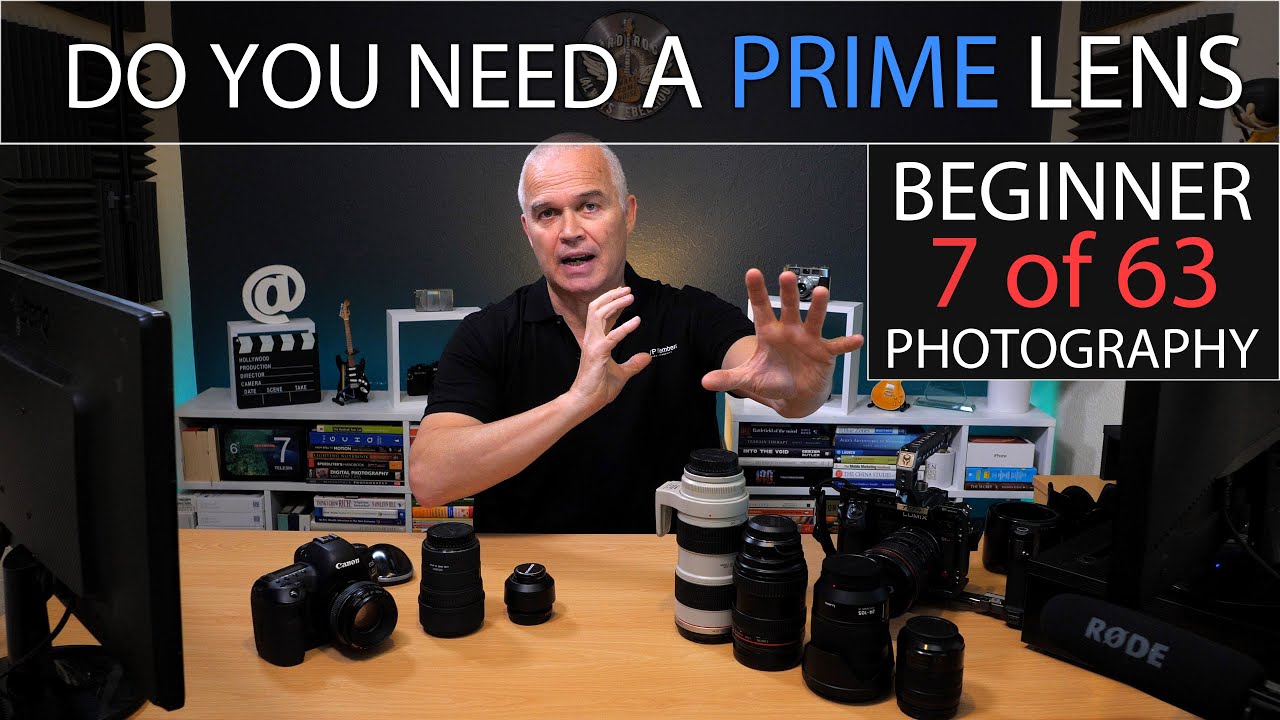
I would highly recommend getting at least one decent fixed focal length lens. I love my Canon EF50mm 1.4 prime lens as it is relatively cheap, has a super wide aperture for lots of light and “bokeh” and gives exceptional quality for the price. It is good for general photography as well as portraits and has very minimal, if any, of the afore-mentioned edge issues.
Nikon, Sony, Olympus etc users look for a similar alternative.
For more professional portraits, look at getting a lens with 70mm, 100mm or 135mm. Having a mid-range telephoto for portraits is good for:
1. Keeping a distance from your subjects so you are not “in their face”
2. Gives a greater “bokeh” or background blur
3. Telephoto lenses are more flattering for the subject as they tend to slim the face
If you are seriously into wildlife and have the funds, look at getting a 400, 500 or 600mm fast lens with an aperture of f2.8. Beware though, these can get mightily expensive. Check out the Sigma 50-500mm zoom lens as a great alternative. We’ll talk more about zoom lenses next.
Повторяем попытку...
Доступные форматы для скачивания:
Скачать видео
-
Информация по загрузке: