ycliper

Популярное

Музыка Кино и Анимация Автомобили Животные Спорт Путешествия Игры Юмор

Интересные видео

2025 Сериалы Трейлеры Новости Как сделать Видеоуроки Diy своими руками

Топ запросов

смотреть а4 schoolboy runaway турецкий сериал смотреть мультфильмы эдисон
Скачать

Inductive Effect Types: +I, –I & Their Mechanistic Influence | Cogitavers GOC Lecture

Inductive Effect

+I Effect

–I Effect

Electron Withdrawal

Electron Donation

Reactivity

Polarity

Organic Mechanism

Stability

GOC

Organic Chemistry Lecture

Cogitavers

CogitaVerse

Acidity

Basicity

SN1

SN2

Alkyl Groups

Electronegative Substituents

Reaction Prediction

Intermediate Stability

Charge Distribution

Competitive Exam Chemistry.

Автор: CogitaVerse-Urdu Hindi

Загружено: 2026-01-08

Просмотров: 7

Описание: The inductive effect is one of the foundational electronic concepts in General Organic Chemistry (GOC), shaping how molecules behave, react, and stabilize charged intermediates. In this Cogitavers session, we explore the different types of inductive effects and how they influence molecular polarity, reaction pathways, acidity, basicity, and overall electronic distribution. Instead of viewing the inductive effect as a static idea, this lecture helps learners understand it as a dynamic electronic influence transmitted through sigma bonds, establishing a predictable pattern for evaluating reactivity across organic systems.

At its core, the inductive effect arises because atoms exhibit different electronegativities, creating unequal electron distribution in bonded frameworks. This shifting of electrons results in two major categories: the negative inductive effect (–I) and the positive inductive effect (+I). Cogitavers explains how –I groups withdraw electron density from the chain, increasing polarity and stabilizing positively charged intermediates, while +I groups donate electron density, stabilizing negative charges and altering reaction selectivity. These effects do not require conjugation or resonance; they operate purely through sigma-bond frameworks, making them essential for predicting behavior even in simple saturated molecules.

The lecture explores common –I groups such as –NO2, –CN, –CF3, –COOH, halogens, and other strongly electronegative substituents. Their electron-withdrawing ability increases acidity, reduces basicity, and stabilizes carbocations through pull-based polarization. On the other hand, +I groups, primarily alkyl substituents, push electron density toward the attached carbon chain, affecting nucleophilicity, basic strength, and the stability of carbanions or radicals. Cogitavers emphasizes that the strength of both –I and +I effects decreases with distance, providing a clear framework for answering conceptual exam questions.

Another key section of this lecture highlights how inductive effects interplay with reaction mechanisms. In SN1 reactions, electron-withdrawing groups can stabilize carbocation intermediates, while electron-donating alkyl groups accelerate the process through stabilization. In acid-base chemistry, –I groups enhance the acidity of carboxylic acids and phenols, while +I groups make the conjugate bases of amines less stable, influencing proton transfer equilibria. Understanding these patterns allows students to predict reaction outcomes with precision rather than memorizing trends blindly.

Cogitavers also clarifies the relationship between inductive effects and other stereoelectronic concepts, such as resonance and hyperconjugation. While inductive effects are distance-dependent and operate through sigma bonds, resonance and hyperconjugation rely on orbital overlap and delocalization. This distinction helps learners avoid common misconceptions and strengthens their ability to analyze hybrid stabilization patterns in complex molecules. By integrating examples, comparisons, and exam-oriented reasoning, this lecture ensures that learners build a strong conceptual foundation.

Students preparing for JEE, NEET, CSIR, and GATE, as well as university-level chemistry courses, will find this lecture particularly valuable for mastering reactivity, stability, and electronic effects. Cogitavers ensures that the inductive effect is understood not just as a definition, but as an essential predictive tool for advanced organic chemistry.

🌐 Website: CogitaVerse.com
📘 Facebook: Facebook.com/cogitaverse
📸 Instagram: Instagram.com/cogita_verse

Не удается загрузить Youtube-плеер. Проверьте блокировку Youtube в вашей сети.
Повторяем попытку...
Inductive Effect Types: +I, –I & Their Mechanistic Influence | Cogitavers GOC Lecture

Поделиться в:

Доступные форматы для скачивания:

Скачать видео

  • Информация по загрузке:
Скачать аудио

Похожие видео

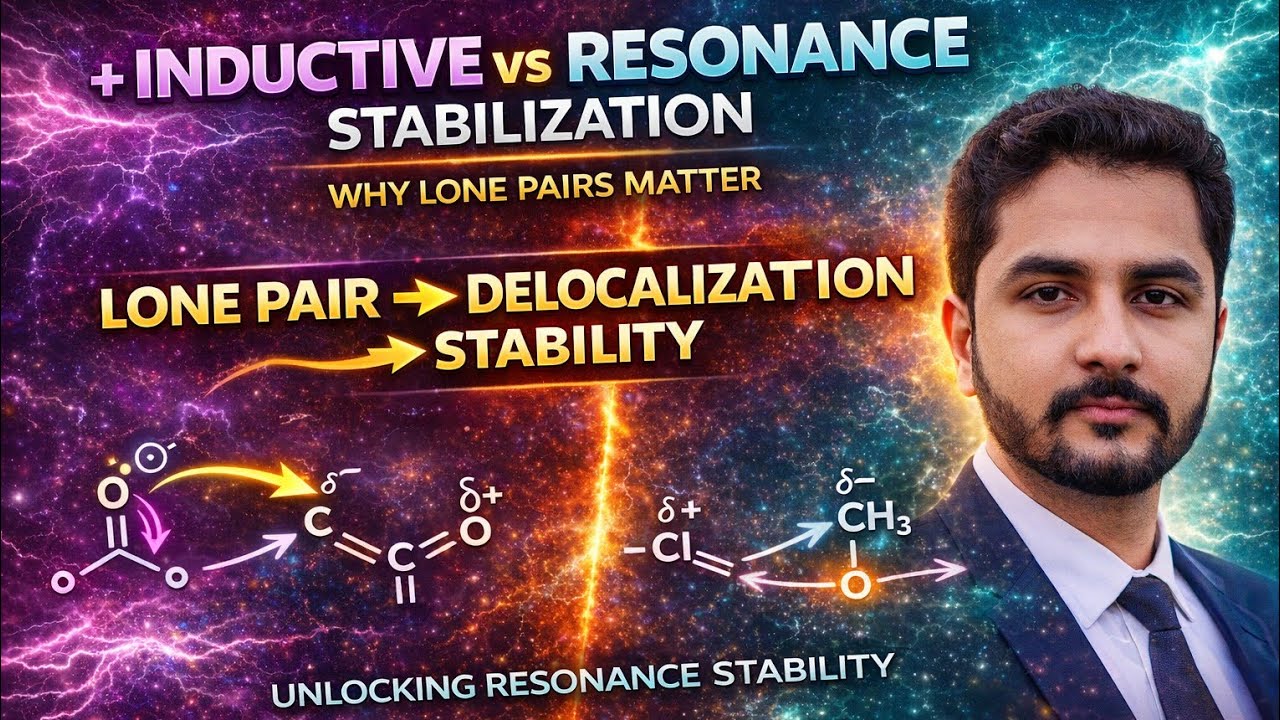
Lone Pairs and Resonance Stabilization | Stability, Mechanism & GOC Explained by Cogitavers

Lone Pairs and Resonance Stabilization | Stability, Mechanism & GOC Explained by Cogitavers

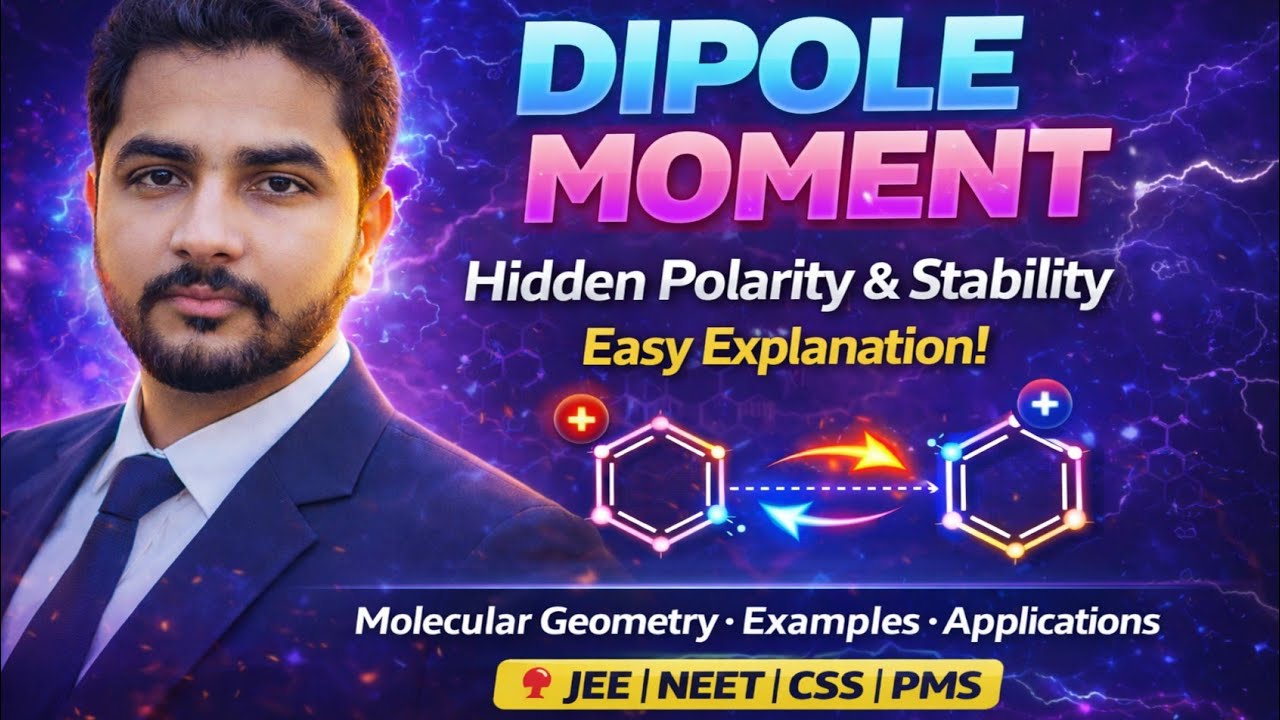
Dipole Moment Examples: Polarity, Structure & Reactivity | Cogitavers GOC Lecture

Dipole Moment Examples: Polarity, Structure & Reactivity | Cogitavers GOC Lecture

Charge Transfer Spectra Explained Simply 🔥 | Coordination Chemistry Masterclass GATE NET Chemistry

Charge Transfer Spectra Explained Simply 🔥 | Coordination Chemistry Masterclass GATE NET Chemistry

John Locke’s Political Philosophy | Foundation of Modern Liberal Democracy | Complete CSS & PMS

John Locke’s Political Philosophy | Foundation of Modern Liberal Democracy | Complete CSS & PMS

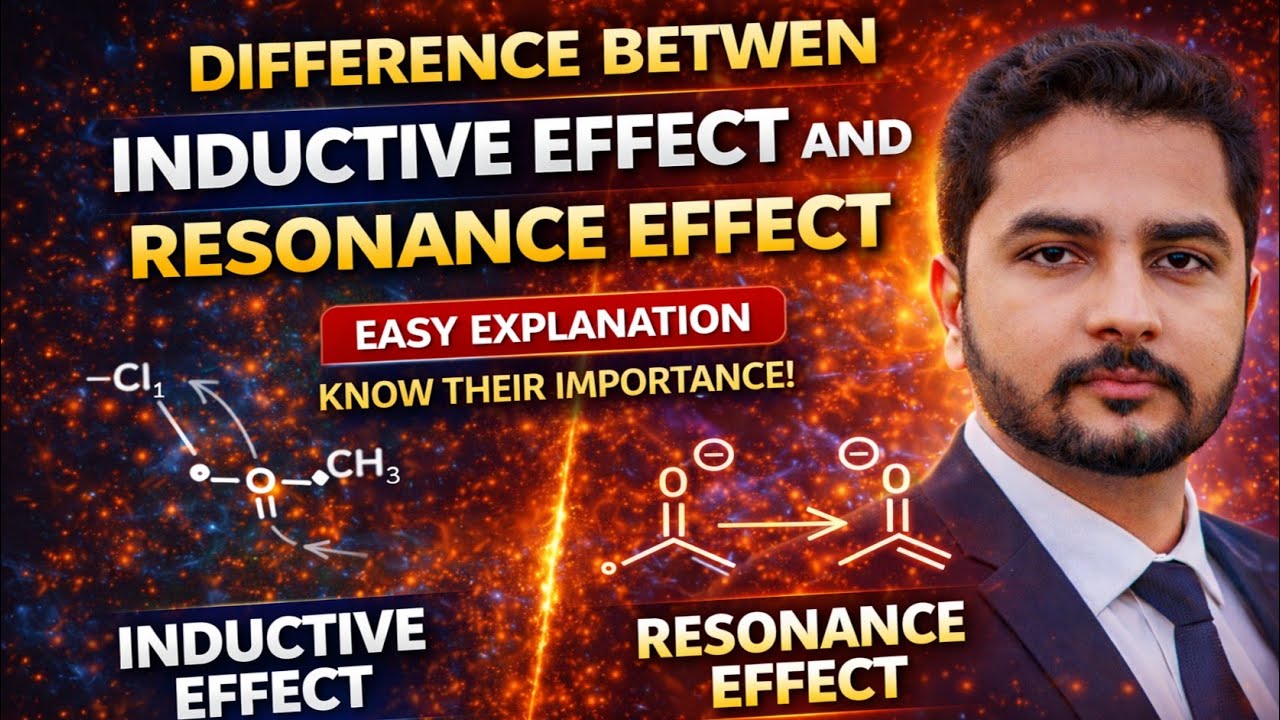
Difference between Inductive Effect and Resonance Effect | Cogitavers

Difference between Inductive Effect and Resonance Effect | Cogitavers

Difference Between Inductive Effect and Electromeric Effect | Cogitavers

Difference Between Inductive Effect and Electromeric Effect | Cogitavers

Unbelievable Smart Worker & Hilarious Fails | Construction Compilation #19 #fail #construction

Unbelievable Smart Worker & Hilarious Fails | Construction Compilation #19 #fail #construction

Забудьте о Зубрежке: 3 Техники, Которые Изменят Ваше Обучение

Забудьте о Зубрежке: 3 Техники, Которые Изменят Ваше Обучение

🔥 Hybridization: Types, Mechanism & Molecular Geometry | Cogitavers GOC Lecture 🔥

🔥 Hybridization: Types, Mechanism & Molecular Geometry | Cogitavers GOC Lecture 🔥

India-Pakistan Relations 2026: Critical Analysis for CSS/PMS/UPSC

India-Pakistan Relations 2026: Critical Analysis for CSS/PMS/UPSC

Фридман Ошарашил Анализом Перелом Уже Произошёл  Но Его Ещё Не Видят

Фридман Ошарашил Анализом Перелом Уже Произошёл Но Его Ещё Не Видят

Alkene Complete Lecture in Urdu | CSS, PMS, UPSC Chemistry | Preparation, Properties & Reactions

Alkene Complete Lecture in Urdu | CSS, PMS, UPSC Chemistry | Preparation, Properties & Reactions

Enzymes (Types, Functions & Mechanism) / Biomolecules / CSS Chemistry / Lec 86

Enzymes (Types, Functions & Mechanism) / Biomolecules / CSS Chemistry / Lec 86

Визуализация гравитации

Визуализация гравитации

Why pKa, pKb and pKw Matter | Acid–Base Equilibrium Simplified |CogitaVerse

Why pKa, pKb and pKw Matter | Acid–Base Equilibrium Simplified |CogitaVerse

ЦЕМЕНТАЦИЯ СТАЛИ! В чем СЕКРЕТ прочности шестерен и валов в машиностроении?

ЦЕМЕНТАЦИЯ СТАЛИ! В чем СЕКРЕТ прочности шестерен и валов в машиностроении?

Откуда в ядерном реакторе появляется плутоний

Откуда в ядерном реакторе появляется плутоний

Английский за Полгода - ПОТРЯСАЮЩИЙ МЕТОД

Английский за Полгода - ПОТРЯСАЮЩИЙ МЕТОД

Как путин ГОДАМИ готовился к вторжению в Украину. Такого никто не ожидал!

Как путин ГОДАМИ готовился к вторжению в Украину. Такого никто не ожидал!

Для Чего РЕАЛЬНО Нужен был ГОРБ Boeing 747?

Для Чего РЕАЛЬНО Нужен был ГОРБ Boeing 747?

© 2025 ycliper. Все права защищены.


  • Контакты
  • О нас
  • Политика конфиденциальности


Контакты для правообладателей: [email protected]