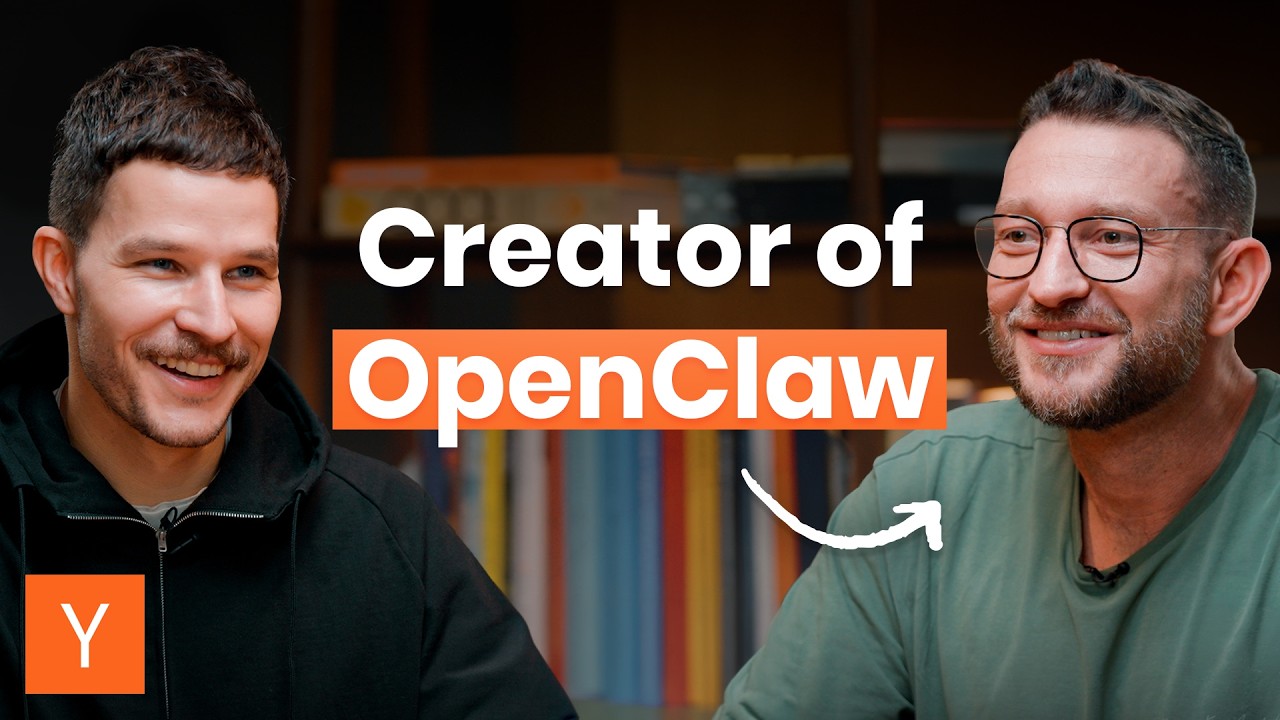
How AI Learns to Critique Its Own Failures
Автор: SciPulse
Загружено: 2026-02-02
Просмотров: 14
Описание:
Can AI learn more from a "Why" than a "No"? Explore how Self-Distillation Policy Optimization (SDPO) transforms rich textual feedback into a dense learning signal for superior LLM reasoning.
The Deep Dive Current Reinforcement Learning with Verifiable Rewards (RLVR) is often throttled by a "credit-assignment bottleneck," where models only receive a binary or scalar success/fail signal. In this analysis, we examine Self-Distillation Policy Optimization (SDPO), a novel framework that leverages the latent reasoning capabilities of Large Language Models to interpret rich feedback—such as compiler errors or judge critiques—without requiring an external teacher.
By conditioning the model on its own failures and the associated feedback, SDPO treats the current policy as a self-teacher, distilling feedback-informed predictions back into the base model. This methodology significantly improves sample efficiency across LiveCodeBench and scientific reasoning tasks. Most notably, SDPO demonstrates that even in environments with binary rewards, successful rollouts can serve as implicit feedback to accelerate the discovery of solutions in complex, high-dimensional search spaces.
This episode provides a technical summary and analysis of the research paper "Reinforcement Learning via Self-Distillation" for educational and informational purposes. While we strive for high fidelity in our explanations, viewers are encouraged to consult the original peer-reviewed manuscript for full experimental data, proofs, and methodological nuances.
Original Paper: https://arxiv.org/abs/2601.20802
#MachineLearning #ArtificialIntelligence #ReinforcementLearning #LLM #ComputerScience #SDPO #AIResearch #SelfDistillation #CodeGeneration #NeuralNetworks #SciPulse #STEM #AcademicResearch #DeepLearning #AlgorithmOptimization
Повторяем попытку...
Доступные форматы для скачивания:
Скачать видео
-
Информация по загрузке:










![[Подкаст] DeepSeek-OCR 2: Искусственный интеллект читает как человек](https://imager.clipsaver.ru/M0pXWoPUQNg/max.jpg)