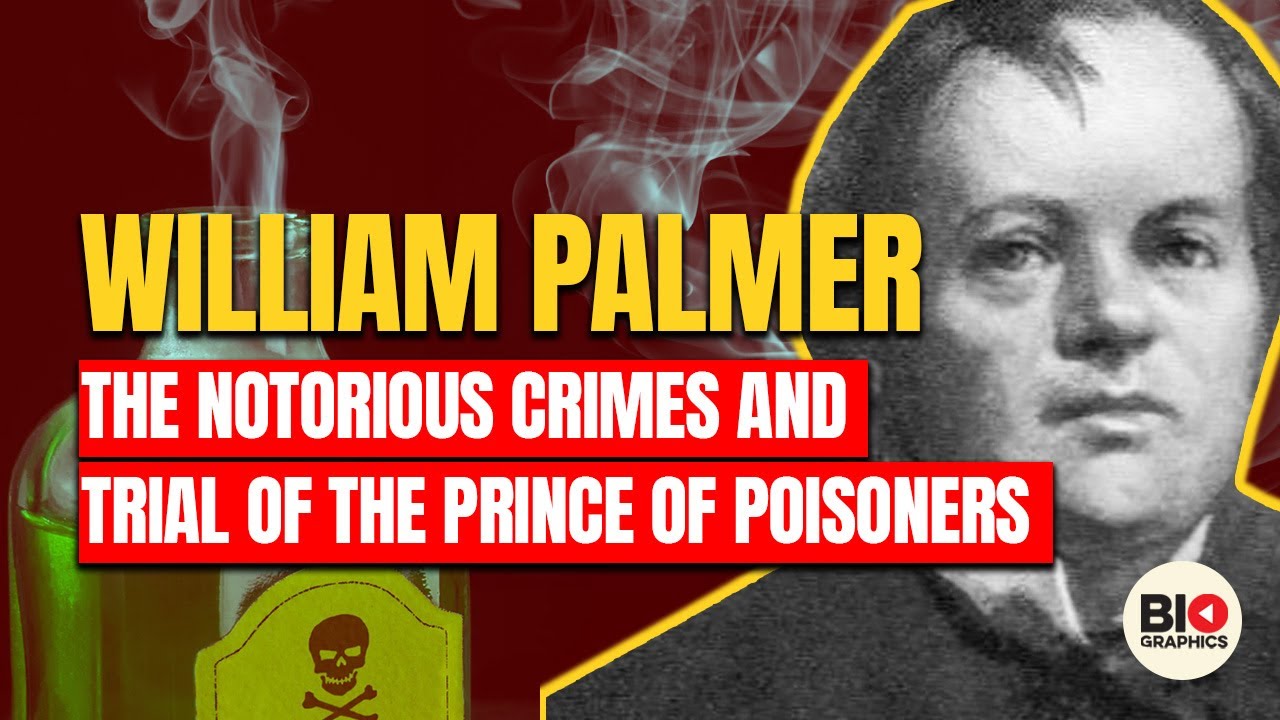
The Rugeley Poisoner
Автор: Johno's Graveyard Jaunts
Загружено: 2024-03-20
Просмотров: 328
Описание:
William Palmer was an English Doctor born to wealthy parents at Church Croft House in Rugeley, Staffordshire on August 6th, 1824.
Palmer was the 6th of 8 children of Sarah and Joseph Palmer.
At 17 Palmer was an apprentice at a Liverpool Chemist and was dismissed after 3 months, after an allegation he stole money.
Palmer then went on to study Medicine in London and qualified as a Physician in August of 1846.
After returning to Staffordshire later that year Palmer met plumber and glazier George Abley at the Lamb and Flag public house in Little Haywood, and challenged him to a drinking contest.
Abley accepted, and an hour later was carried home, where he died in bed later that evening; nothing was ever proved, but locals noted that Palmer had an interest in Abley's attractive wife.
Palmer was also suspected of poisoning many other people over his years as a doctor, including his brother, mother-in-law and four of his children, who died in infancy.
Palmer also profited financially from the deaths of his wife and brother, after setting them up with life insurance policies.
Palmer was known throughout Rugeley to be hugely interested in Horse racing and he in turn borrowed money from a man whom he met at the races by Leonard Bladen.
Bladen lent Palmer a large sum of money, but soon afterwards died at Palmers House in mysterious circumstances on May 10th, 1850.
By 1854 Palmer was in huge debt, mainly due to his extensive gambling, he began to forge his Mother’s signature, in order to defraud her of money. His Mother had incidentally inherited the Princely sum of £70,000 on the death of her husband’s and Williams’s father’s death.
With his life and debts spiralling out of control, he planned the murder of his erstwhile friend John Parson’s Cook.
John Parson’s Cook
John Parsons Cook was a wealthy young man, inheriting a fortune of £12,000. He loved the thrill of gambling and was friends with William Palmer, a fellow gambler.
The two attended the Shrewsbury Handicap Stakes in November 1855, where Cook won £3,000 by betting on "Polestar," while Palmer lost heavily by betting on "the Chicken."
After the race, the pair celebrated at a local drinking establishment, the Raven. However, Cook soon fell ill, complaining that his gin had burnt his throat.
Palmer made a scene, insisting that there was nothing wrong with Cook's glass. But Cook was violently sick, suspecting that Palmer had dosed him.
Cook returned to Rugeley and booked a room at the Talbot Arms, where he met with Palmer again.
Palmer took responsibility for Cook's well-being, and Cook's solicitor sent over a bottle of gin.
A chambermaid took a sip of the gin and fell ill, while Cook's vomiting became worse.
Palmer began collecting Cook’s bets, he collected a total of £1200.
He then went to Dr Salt's surgery and purchased three grains of Strychnine and put them into two pills, which he administered to Cook.
On November 21st, Cook died in agony, screaming that he was suffocating.
Cook's stepfather arrived to represent the family, and Palmer informed him that Cook had lost his betting books, which were of no use as all bets were cancelled once the gambler had died.
Palmer obtained a death certificate listing the cause of death as 'apoplexy.'
A post-mortem examination took place, overseen by Dr Harland, medical student Charles Devonshire, and assistant Charles Newton.
Palmer interfered with the examination, taking the stomach contents off in a jar for 'safe keeping.'
The jars were sent off to Alfred Swaine Taylor, who complained that the samples were of poor quality.
Palmer also wrote to the coroner himself, requesting that the verdict of death be given as natural causes, enclosing a £10 note.
Taylor found no evidence of poison but still believed that Cook had been poisoned. The jury at the inquest delivered their verdict, stating that Cook was poisoned by Palmer.
Arrest and Trial:
Palmer was subsequently arrested on the charge of murder and forgery. He was arrested because a creditor had told Police Palmer had been forging his Mother’s signature)
Circumstantial evidence also came to light:
That as Cook was dying, he accused Palmer of murder.
Charles Newton told the jury that he had seen Palmer purchasing strychnine.
Chemist Mr Salt admitted selling Palmer strychnine in the belief that he was using it to poison a dog. He also admitted that he had failed to record the sale in his poisons book as required by law
Charles Roberts, another chemist, also admitted selling Palmer strychnine without noting the sale in his poisons book.
After the Jury deliberated for an hour, due to all of the circumstantial evidence, Palmer was found guilty and Lord Campbell handed down a death sentence, which Palmer received without any reaction.
Execution:
Approximately 30,000 people were at Stafford prison on 14 June 1856 to see Palmer's public execution by hanging at the hands of George Smith.
Повторяем попытку...

Доступные форматы для скачивания:
Скачать видео
-
Информация по загрузке: