How to Build Integrations with Platforms Bigger Than You Without Getting Stuck at the Bottom of t...
Автор: Pandium
Загружено: 2026-03-05
Просмотров: 1
Описание:
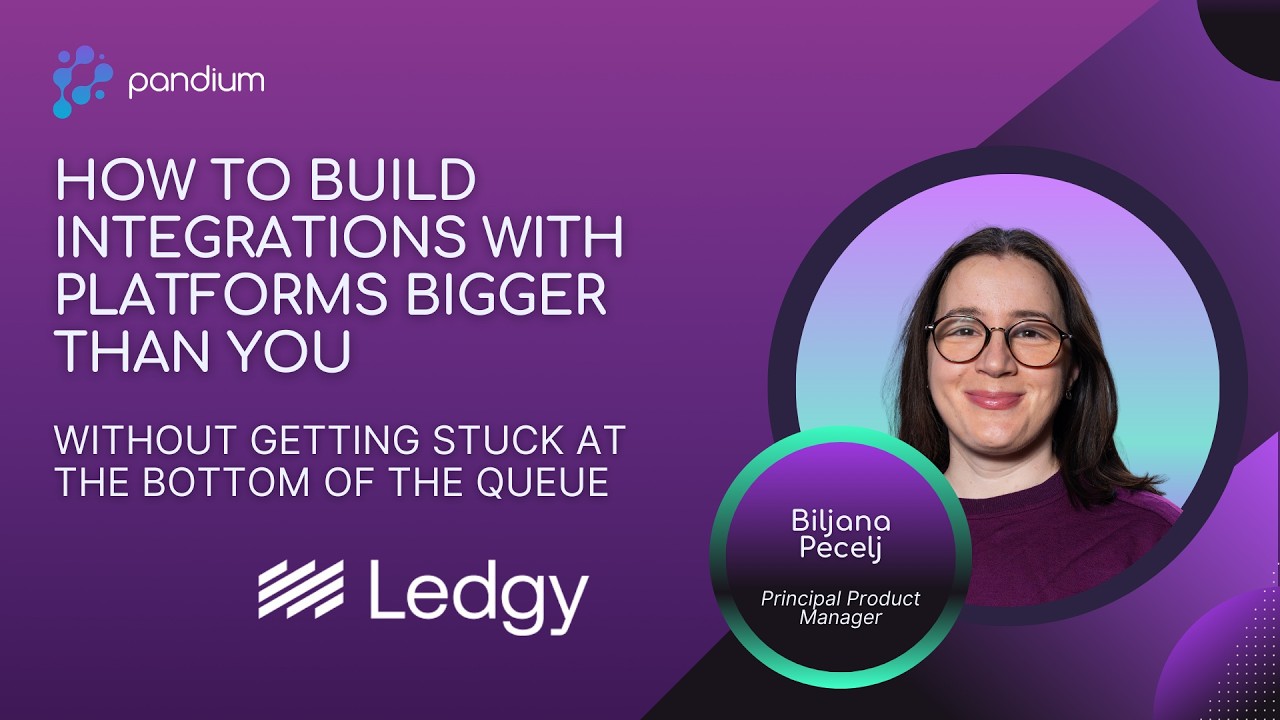
In this episode of Between Product and Partnerships (https://www.pandium.com/podcast) , Biljana Pecelj ( / biljanapecelj ) joins Cristina Flaschen ( / cristina-flaschen ) to explain how smaller teams successfully ship integrations with larger platform partners. She makes the case that leveraging usage data and performance metrics is the key to proving your integration's value, giving you the necessary influence to move up a major partner's priority list.
Biljana shares lessons from her experience managing integrations at Hootsuite during major platform shifts, including the rise of Instagram Business APIs and the emergence of new features like Stories that didn’t always come with immediate API support. She also details the process of aligning internal stakeholders to ensure integration features actually ship despite shifting external APIs.
The conversation also covers the operational side of integrations, this includes why observability needs to be built early, how teams detect silent failures before customers do, and how to structure internal alignment when integration work touches engineering, legal, partnerships, and revenue.
Who we sat down with
Biljana Pecelj is a Principal Product Manager at Ledgy with deep experience building integrations inside platform-heavy environments. She has worked extensively on partnership-driven product initiatives where execution speed depends on navigating both technical constraints and external partner relationships.
Biljana brings expertise in:
• Building integrations in environments where APIs and features evolve asynchronously
• Designing for observability and proactive monitoring
• Navigating asymmetric partner relationships
• Aligning roadmap priorities across product, partnerships, legal, and engineering
• Managing tradeoffs between beta opportunities and engineering capacity
Key Topics
• Why integration product work is relationship work
Technical execution matters, but alignment with partners determines whether integrations actually ship and scale.
• Building in ecosystems you don’t control
APIs change. Features launch without endpoints. Roadmaps shift. Successful teams anticipate uncertainty rather than assume stability.
• The importance of observability from day one
Silent failures are common in integrations. Without monitoring, teams often learn about outages from customers instead of systems.
• Roadmap tradeoffs when beta opportunities arise
New partner features can require immediate shifts in engineering priorities. Negotiation and resource reallocation become core product skills.
• M&A and integration complexity
Brand consolidation rarely means backend integration. Teams often inherit layered systems that remain technically independent long after acquisition.
Episode Highlights
01:55 – How integration product management differs from core product work
04:40 – Navigating power imbalances with large platform partners
07:15 – Using data to strengthen partner conversations
10:30 – Building observability when resources are limited
13:45 – Handling silent integration failures
17:50 – Managing beta features and roadmap shifts
21:30 – Aligning cross-functional teams around integration priorities
24:45 – Why relationships accelerate integration execution
28:10 – Lessons learned from building inside platform ecosystems
--
For more insights on partnerships, ecosystems, and integrations, visit www.pandium.com (http://www.pandium.com/)
Повторяем попытку...
Доступные форматы для скачивания:
Скачать видео
-
Информация по загрузке:







![How To Protect Your Brand With Trademarks w/ Lauren Bercuson [SFBS Vault Training]](https://imager.clipsaver.ru/bvEEQmju8WU/max.jpg)