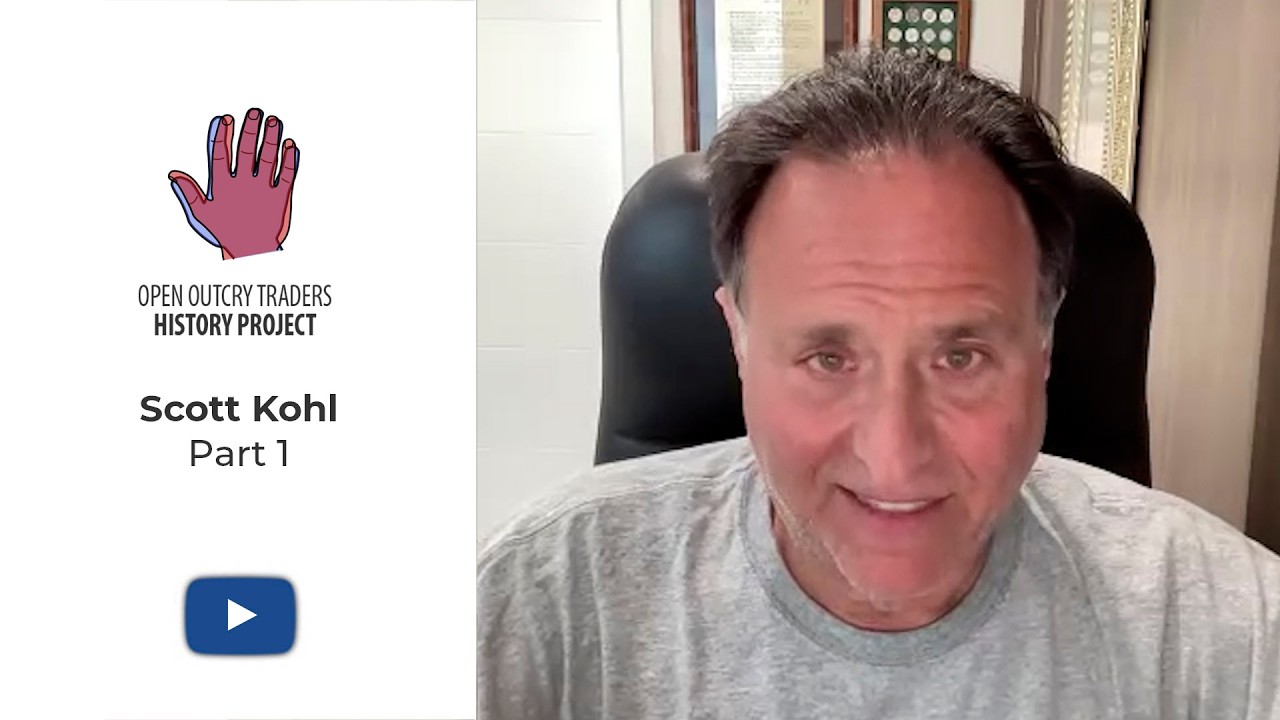
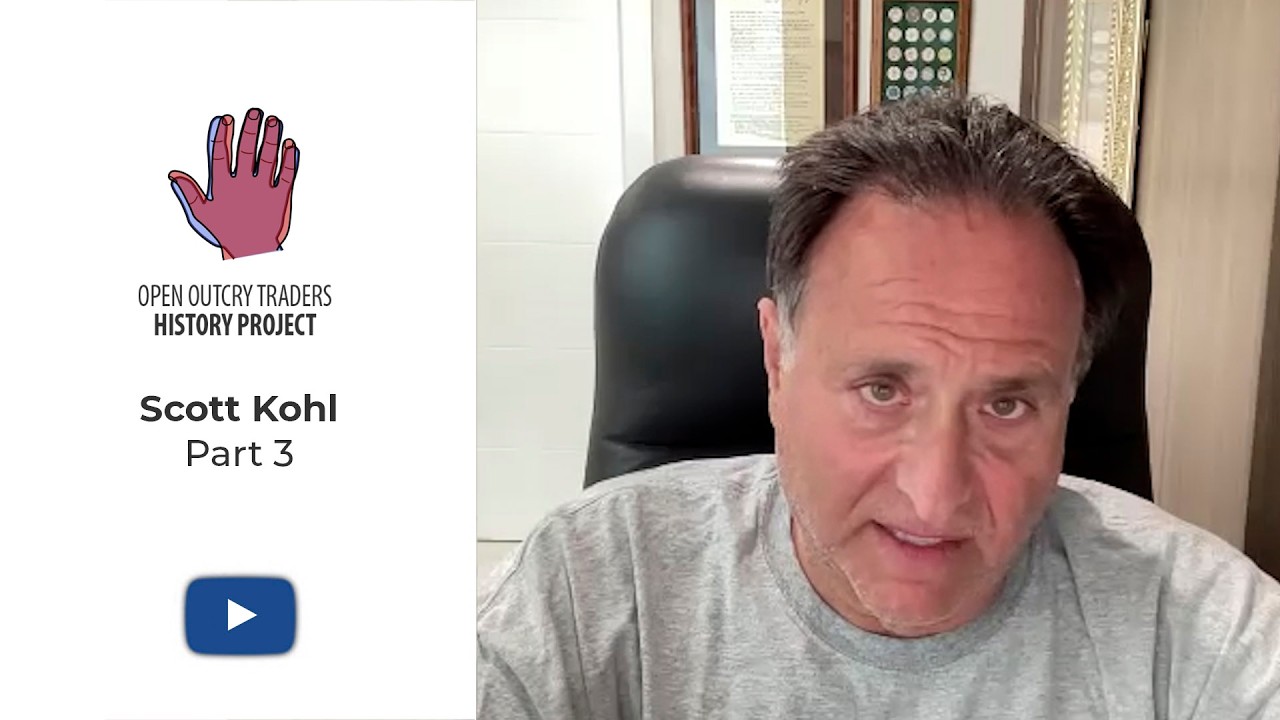
Veteran CME Trader Scott Kohl Says Money Was Trophy, Not Target, as Pits Gave Way to Screens
Автор: John Lothian News (JLN)
Загружено: 2026-02-18
Просмотров: 44
Описание:
Open Outcry Traders History Project interview finds former S&P pit local wary of financial power, proud of floor culture, and clear-eyed about the algorithmic future
ELMHURST, IL (JLN) — February 18, 2026 — Veteran CME local Scott Kohl says the money he made in the S&P pit bought more than cars and watches; it bought independence in a world where a handful of powerful people could quietly end a trader’s career.
In the third installment of his Open Outcry Traders History Project interview with John Lothian News, Kohl recalls being warned early on that influence at the Chicago Mercantile Exchange could be wielded with a few well-placed phone calls. One call could spark a regulatory inquiry, he was told. Three calls could cut off a trader’s brokers or clearing firm. The message, as he heard it: Make enough of your own money so no one can push you around.
Kohl said that for locals in the pit, money was both the only hard measure of performance and, paradoxically, not the ultimate value. The daily scoreboard was simple: you either made or lost money, and there was no such thing as “nailing” a sideways market without a P&L to show for it. But he insists that being right about the market, in direction, timing, and sizing, mattered more to many traders than the dollars that followed. “The money was like a trophy,” he said, likening a Rolex or a new car to the corporate gold watch or bonus that signaled success in an office career.
The culture, Kohl added, ran counter to the public’s caricature of floor traders as reckless or crooked. He joked that if you locked thousands of lawyers, accountants, insurance executives, or bankers in a box, their percentage of “bad guys” would be higher than among the pit locals. What mattered on the floor, he said, was that you could trade and that you honored your word. A friend who blew out was still a friend; a buddy who made eight figures was still just another guy in a jacket.
That ethos was captured in the sayings pit traders lived by: “There is no such thing as too high. There is no such thing as too low. Bulls make money, bears make money, hogs get slaughtered.” The code rewarded discipline and punished greed, reinforcing the lesson that overstaying a trade was often more dangerous than being wrong.
Kohl’s skepticism about the broader financial system was forged in that environment. Standing shoulder to shoulder in the pit, he said, meant hearing a steady drumbeat of worst-case scenarios, every few seconds someone muttering that if a certain event hit, “we’re dead” or “it’s over.” That background noise left him an optimist in life but deeply distrustful of financial products and institutions.
He observed that disconnect again when he entered the media as an on-air commentator. In his first appearance on CNBC in the early 1990s, he recalled telling a producer during a commercial break that the market was going to get “killed” that day. The producer suggested he instead frame it as “buying opportunities ahead.” Kohl’s reaction was that those opportunities might only exist “in a month,” highlighting the tension between traders’ blunt assessments and the more upbeat language expected on television.
Working alongside his father at the Merc was both the fulfillment of a childhood dream and a minefield of perceptions. Ted Kohl was a well-known figure — a successful trader and exchange leader — and his son arrived in the pit under the unspoken label of “trust fund kid.” Scott said he wanted to shout that he was on his own financially and taking the same risks as everyone else, but doing so would have exposed his father’s struggles at the time. Instead, he kept his head down, traded his way into his own reputation and, eventually, found himself in a position to help his father when the roles briefly reversed.
“That’s how it should be,” he reflected, noting how often fathers help sons in the industry. “If that role reverses for a few years, so what?” The experience reinforced his belief that beneath the bravado, a strong current of family duty and loyalty ran through the multigenerational trading community at the CME.
Kohl was also among the locals who spotted early signs that open outcry would not last. Before full-screen trading took over, he watched as the S&P 500 futures expanded to nearly round-the-clock sessions and the Merc launched its Globex platform.
Why was having a lot of money important?
What were some of the sayings in the pit?
What was it like working at the exchange with your father?
What were the signs we were transitioning to electronic trading?
00:00:00 - Introduction and Importance of Money
00:00:48 - Perception of Traders and the Value of Money
00:02:00 - Trading as a Competition and Trophies
00:02:41 - Sayings in the Pit and Market Commentary
00:04:04 - Working at the Exchange with Father
00:05:36 - Transition to Electronic Trading
00:07:30 - Impact of Electronic Trading
Повторяем попытку...
Доступные форматы для скачивания:
Скачать видео
-
Информация по загрузке: