America Had No Banks Until 1863 — This Is What They Replaced
Автор: Erased Century
Загружено: 2026-02-18
Просмотров: 90636
Описание:
Carpenters' Company of Philadelphia, Thomas Jefferson denied, guild system, Rule Book 1724, National Banking Act 1863, Homestead Act 1862, company towns, Pullman Strike 1894, Amish economy, 1870 census wall — why did America have no national banks until 1863, and what system did they replace? In this episode, we trace the economy that built Independence Hall, lasted three centuries, and had to be made illegal before it would disappear.
In 1817, Thomas Jefferson requested a copy of the Carpenters' Company Rule Book. He was refused. The former president, author of the Declaration of Independence, architect of Monticello, could not access a pricing guide used by Philadelphia craftsmen. That book contained the formulas used to build Independence Hall, Christ Church, Carpenters' Hall itself. Not trade secrets in the commercial sense — proof that fairness could be systematized. That communities could regulate themselves. That you didn't need a bank between every transaction.
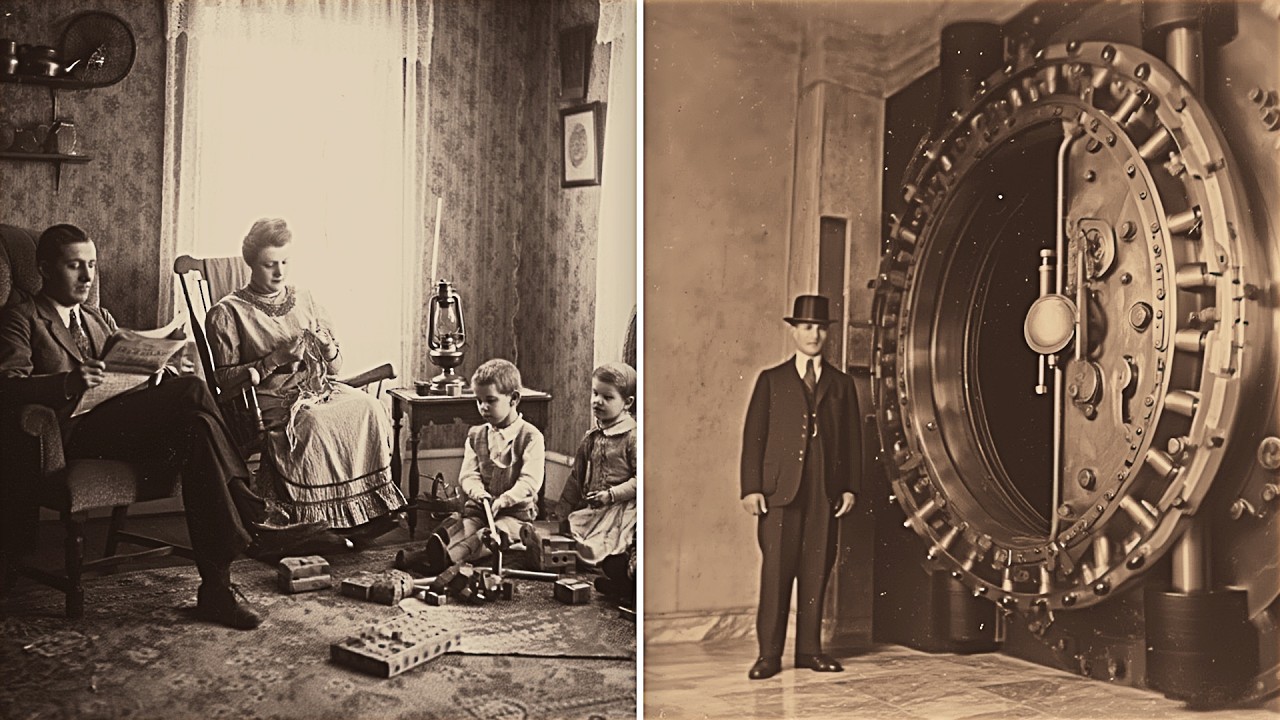
The guild system didn't operate the way we assume workers have always operated. No hourly wages. No loans for materials. Master Builders combined the roles we now split between architects, engineers, and contractors. Their Rule Book established unit pricing — every stage of construction had a standardized fair price, determined by experienced measurers working in teams of at least two. Extended credit between community members could be held open for months, even years. Work exchanged for food, services, raw materials. The Bureau of Labor Statistics described colonial America plainly: a system of barter existed throughout the first century of settlement.
Then came 1862 and 1863. The Homestead Act offered 160 acres of free land for an $18 filing fee. But historians estimate homesteading actually cost $1,000 to $2,500 when you factor in tools, seed, livestock, and building materials. The National Archives states it plainly: comparatively few laborers and farmers could afford to build a farm. Nine months later, the National Banking Act passed the Senate by two votes. It created the first national banking system — and the lenders who would finance what the free land required.
What rose in place of guilds tells us something uncomfortable. By the 1880s, approximately 2,000 company towns existed across America. Workers paid in scrip that could only be spent at company stores. The Social Welfare History Project documents what happened: workers built up large debts they were required to pay off before leaving. 75% of all scrip was issued by coal companies in Kentucky, Virginia, and West Virginia. The Pullman Strike of 1894 involved 150,000 workers across 27 states. A national commission called the system un-American. But by then, the replacement was complete.
The Amish still use contribution-based economy. When someone has a medical bill, they stand up in church and the community covers it. No external institution extracting profit. They had to fight Congress for years to maintain this system. They were granted exemption from Social Security in 1965. They must file IRS Form 4029 to opt out. The fact that they had to fight proves the old system was made illegal. The fact that they still function proves it worked.
My grandmother left me an oak chair from the 1840s. Nearly two centuries old. Still perfectly level. Made by someone probably paid in provisions, trained through seven-year apprenticeship, who never signed a loan application in their life. The buildings made under the guild system still stand. The furniture still holds together. And every American family tree hits a wall in the 1870s — the same decade the banking system consolidated, the same decade the census became comprehensive, the same decade the company towns expanded.
The material on this channel presents exploratory interpretations of history and imaginative speculation, conveyed through narrative storytelling rather than precise historical documentation. Viewpoints and visual representations are dramatized or intentionally constructed to support alternative narrative exploration. Visual elements may at times be created using automated or generative tools. The content shared should not be considered factual.
The pattern continues. Subscribe so you don't miss what comes next. / @erasedcentury
#guildsystem #carpenterscompany #thomasjefferson #rulebook #nationalbankingact #homesteadact #companytowns #pullmanstrike #amisheconomy #1870census #independencehall #masterbuilders #scrip #debteconomy #hiddenhistory #erasedhistory #beforebanks #colonialamerica #craftsmen #forgotteneconomy
Повторяем попытку...

Доступные форматы для скачивания:
Скачать видео
-
Информация по загрузке: