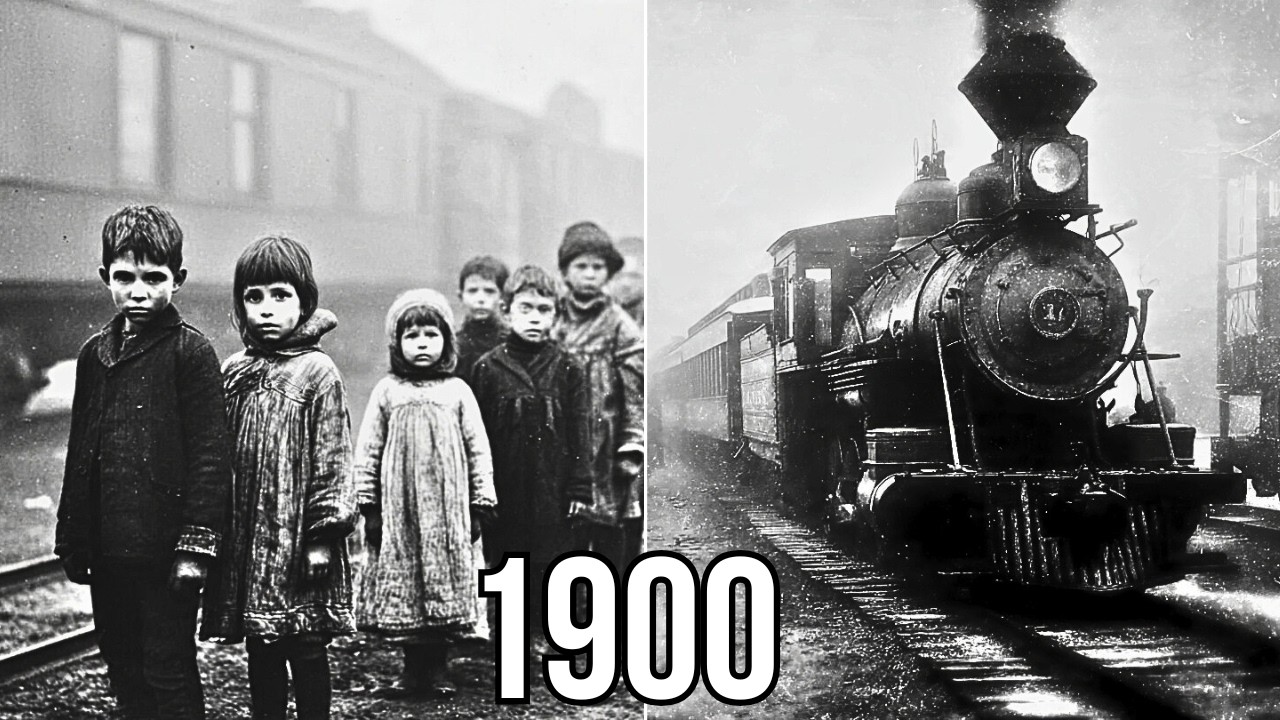
250,000 Children With No Parents — The Orphan Trains Nobody Can Explain (1854-1929)
Автор: Erased Century
Загружено: 2026-02-09
Просмотров: 4493
Описание:
Orphan Trains, 1854–1929, 250,000 children, sealed adoption records, indenture contracts, 1890 Census destroyed, Charles Loring Brace, Children’s Aid Society, New York Foundling Hospital, platform “auctions,” Great Chicago Fire era gaps all collide in one question: where did a quarter-million “orphans” come from, and why do the records keep disappearing?
In this episode, we follow the official timeline and watch it start to wobble. Between October 1, 1854 and 1929, children were loaded onto trains and redistributed across 47 states, often with no birth certificates, no verified origins, and names that changed mid-journey. The story you are told is a rescue mission: overflowing eastern tenements, disease and poverty, street kids, and a reformer’s plan to place them with “wholesome” farm families. Some placements were loving. Some riders rose to prominence. I’m not here to deny that.
I’m here for the math.
New York City’s reported homeless child numbers balloon while institutions multiply. Immigration paperwork exists, ship manifests exist, yet the supposed pipeline produces hundreds of thousands of children whose origins cannot be traced. Then the pattern expands beyond the U.S.: the British Home Children program runs in parallel decades with parallel methods, and a huge share of those children were not true orphans either. Different countries, same era, same outcomes: kids relabeled, moved, renamed, and filed into systems that do not preserve the trail.
And when the trail should be clearest, it goes dark.
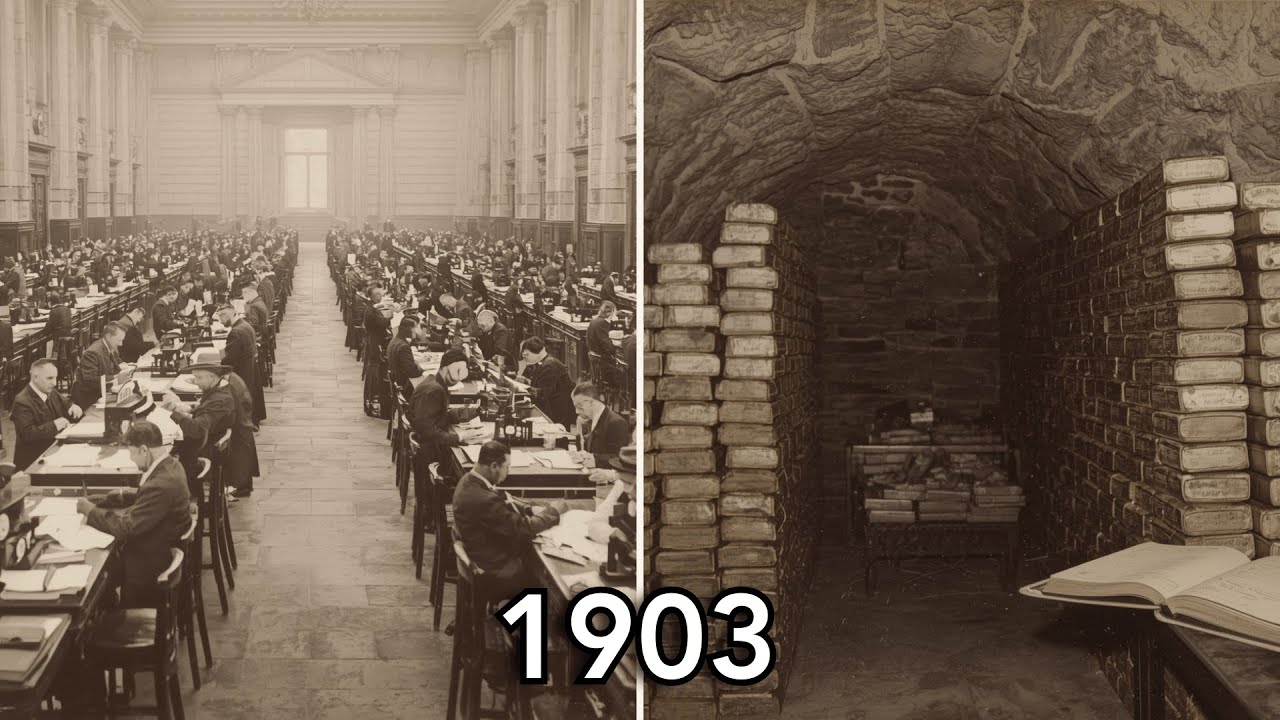
The 1890 U.S. Census was the most genealogically valuable snapshot America ever took, landing directly on the peak decade of orphan train placements. It should have captured where these children lived, who claimed them, and what their stated origins were. Instead, it becomes the census that burns, sits damaged for years, then is authorized for destruction in 1933, with no local backup copies by design. For a quarter-million displaced children, the single best paper mirror of their identities is removed from the record.
Then there’s the part that doesn’t feel like “adoption” at all.
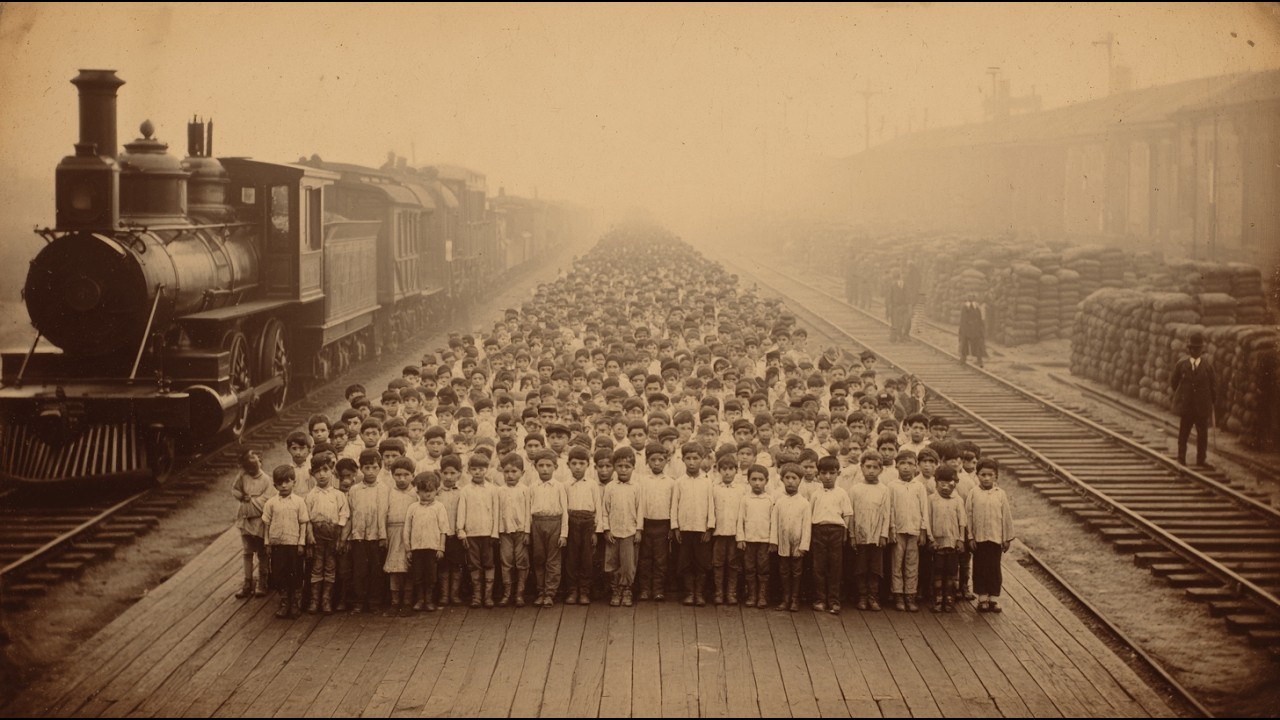
Town by town, the children are displayed in courthouses, church halls, opera houses, and on platforms. Flyers announce their arrival. People inspect teeth, hair, size, and “suitability.” Siblings are split. The unchosen get back on the train and repeat the process. Legal paperwork often calls it “indenture.” Critics at the time call it what it resembles: a labor market dressed up as charity, with religious and cultural conversion accusations openly argued in public.
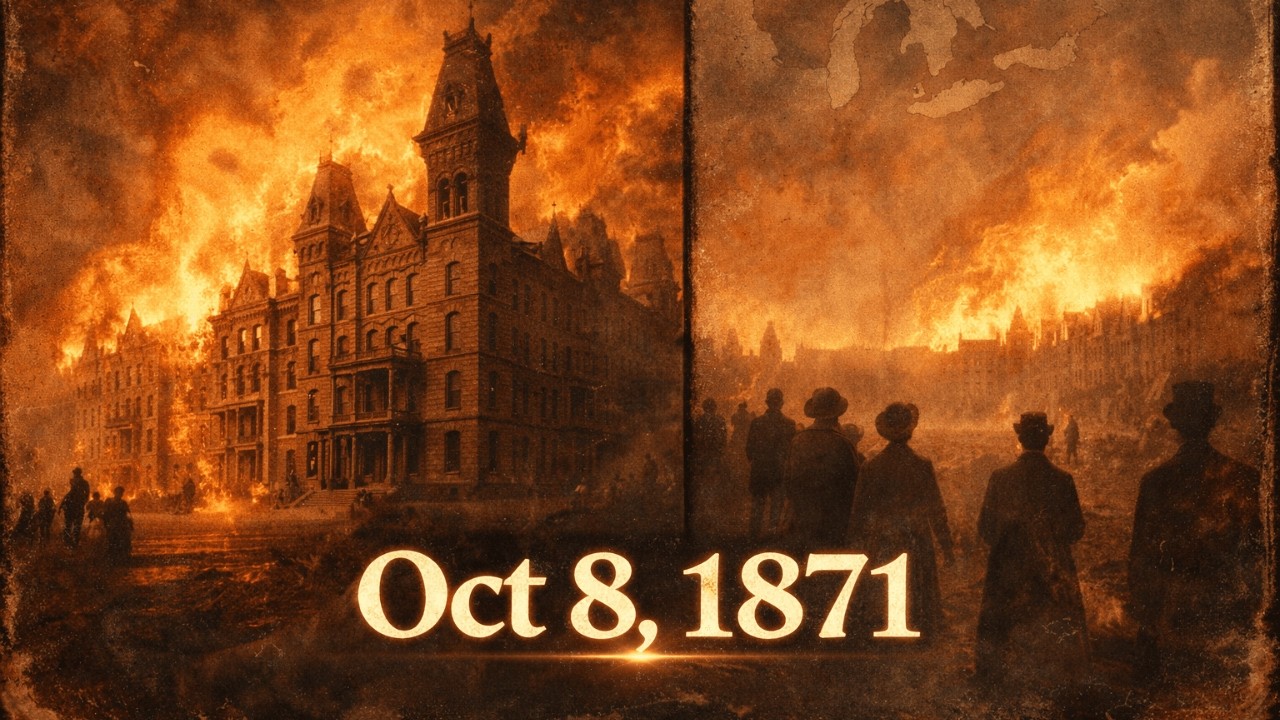
And the connective tissue keeps showing up in the same late-1800s window: catastrophic multi-city fires, obliterated local records, displaced communities, and a steady flow of children entering systems that do not standardize documentation. Add in the strange exhibition culture of the era, including “living babies in incubators” displayed at fairs, anonymous infants, and institutions that protect archives behind restricted access even now, and you start to see why the story feels less like a footnote and more like a missing chapter.
Maybe it’s all bureaucracy and chaos. Maybe it’s poverty and paperwork failures. Maybe it’s coincidence stacked on coincidence.
But if it is, why do the gaps line up so cleanly, so often, right where identity should be easiest to prove?
The records won’t tell you. The institutions offer summaries, not documents. Descendants still hit walls. And the question doesn’t go away:
What generated a quarter-million children with no verifiable origins in the most documented era of American history, and what is still being protected inside sealed archives?
The material on this channel presents exploratory interpretations of history and imaginative speculation, conveyed through narrative storytelling rather than precise historical documentation. Viewpoints and visual representations are dramatized or intentionally constructed to support alternative narrative exploration. Visual elements may at times be created using automated or generative tools. The content shared should not be considered factual.
/ @erasedcentury
#orphantrains #losthistory #1890census #genealogy #americanhistory #childmigration #childlabor #adoptionhistory #recordgaps #erasedhistory #hiddenhistory #nineteenthcentury #greatchicagofire #identityerasure
Повторяем попытку...
Доступные форматы для скачивания:
Скачать видео
-
Информация по загрузке: