Piston–Cylinder Thermodynamics Problem | Force, Pressure, and Work
Автор: The Equation Station
Загружено: 2026-02-02
Просмотров: 55
Описание:
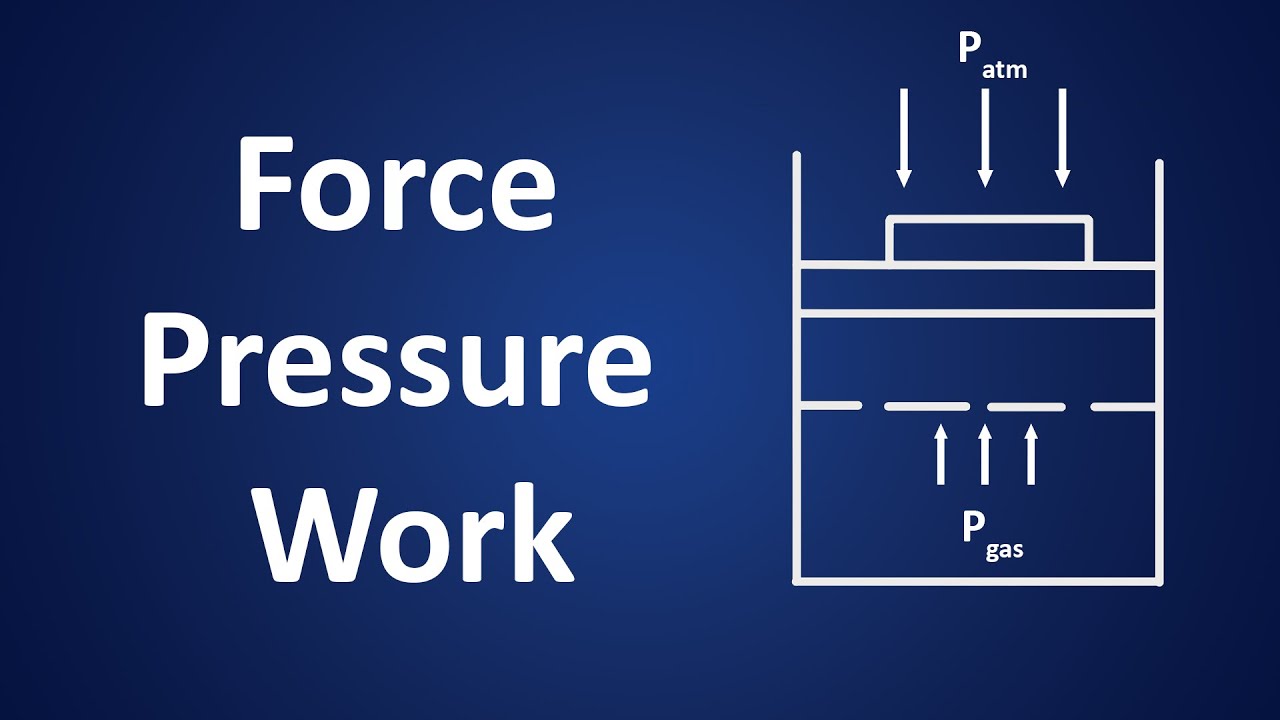
In this video, we walk step by step through a piston–cylinder thermodynamics problem, focusing on force balance, absolute pressure, and boundary work. This type of problem shows up all the time in Thermodynamics I and is a great way to connect mechanics with energy concepts.
Problem Statement
A gas is contained in a vertical cylindrical chamber capped by a frictionless piston.
Given:
Cylinder diameter: 1.25 ft
Combined mass of the piston and load: 250 lbm
Local gravitational acceleration: 32.169 ft/s²
Atmospheric pressure: 30.12 in Hg
Find:
The total downward force applied to the gas due to the atmosphere, piston, and load
The absolute pressure of the gas (psia)
If the gas is heated and the piston rises 1.7 ft, determine:
The work done by the gas
The corresponding change in gravitational potential energy of the piston–load system
👉 What you’ll learn in this video:
How to convert mass (lbm) into force (lbf) using local gravity
How atmospheric pressure contributes to force on a piston
How to calculate gas pressure from force balance
How boundary work is calculated for a moving piston
Why the work done by the gas equals the change in gravitational potential energy
This video is part of my Thermodynamics Practice Problems series — clear, worked examples designed to help you actually understand the material, not just memorize formulas.
🔔 Subscribe for more worked STEM problems: / @theequationstationyt
💬 Comment below: Which thermodynamics topic should I cover next, or one way I can improve these videos.
Повторяем попытку...
Доступные форматы для скачивания:
Скачать видео
-
Информация по загрузке: