Asteraceae - UK wildflowers - Five-minute families
Автор: Five-minute families
Загружено: 2020-07-13
Просмотров: 27841
Описание:
Learn how to identify common plant families in (more or less) five minutes.
In this series, I aim to give you a quick introduction to some of the common plant families found in the UK. Learning to identify plant families is a great help in identifying individual plant species you come across – if you know the family, then you know where to start looking for the species in a guide, and identifying the family is an achievement in itself. Plants are classified into families based on characteristics that they share; this is then narrowed down further into genera and then into species. So, the way to identify a plant’s family is to know these characteristic features.
I’m starting today with the Asteraceae, also known as the daisy or sunflower family. This is the largest plant family in the world, with around 23,000 or more species. The family is sometimes still called Compositae, an older name referring to the plants’ flowers. Members of the Asteracaeae are found pretty much everywhere except Antarctica. They may be either annual or perennial and are mostly herbaceous or shrubby plants.
The Asteraceae includes species used for food, like the sunflower (Helianthus annuus) and lettuce (Lactuca sativa); as ornamentals, like Chrysanthemum and Dahlia; for medicine, such as arnica (Arnica montana) and chamomile (Chamaemelum nobile); and, of course, wildflowers like dandelions (Taraxacum), thistles (Cirsium) and the daisy (Bellis perennis). Many of these last are often regarded as weeds, but give them a break – they are part of our natural flora, they are good for pollinating insects and a lot of them are attractive. I defy you not to be at least a little bit cheered to see your first yellow dandelion in spring.
In the UK, Asteraceae is the second-largest family (that accolade goes to the grasses, Poaceae). Most of the UK species are herbaceous. There are several hundred UK species, even more including microspecies found in things like dandelions and hawkweeds (Hieracium).
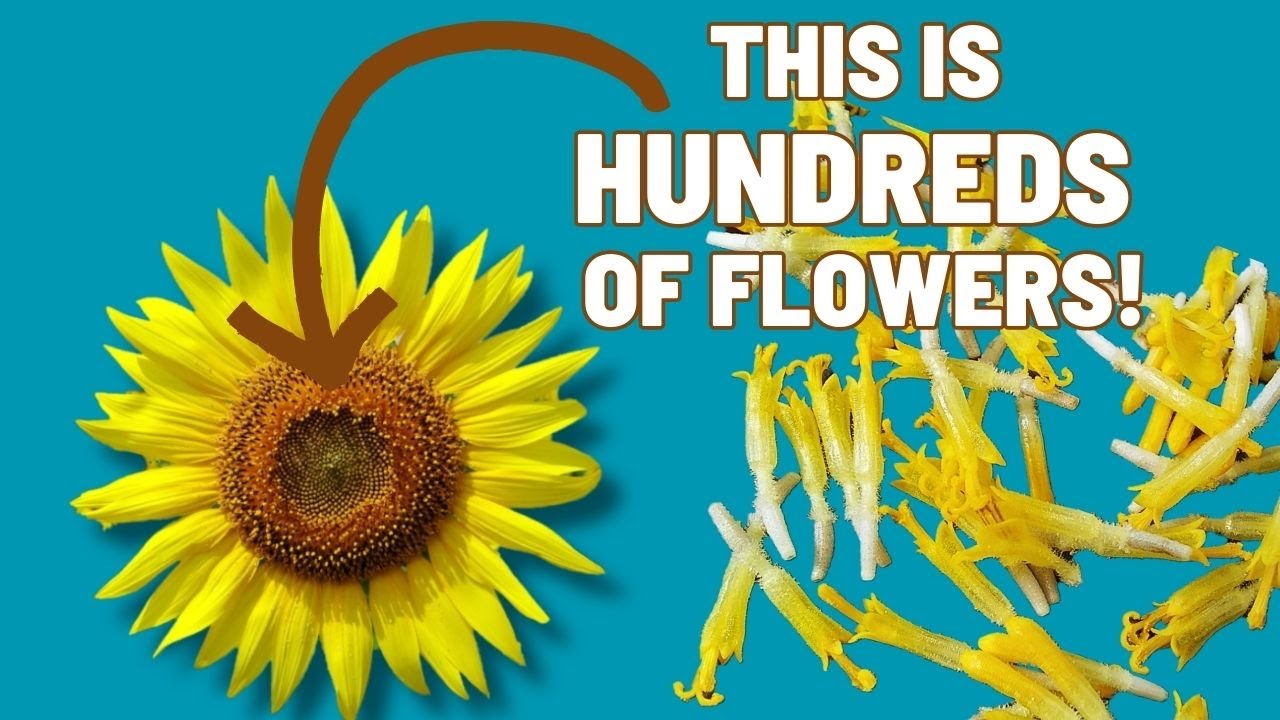
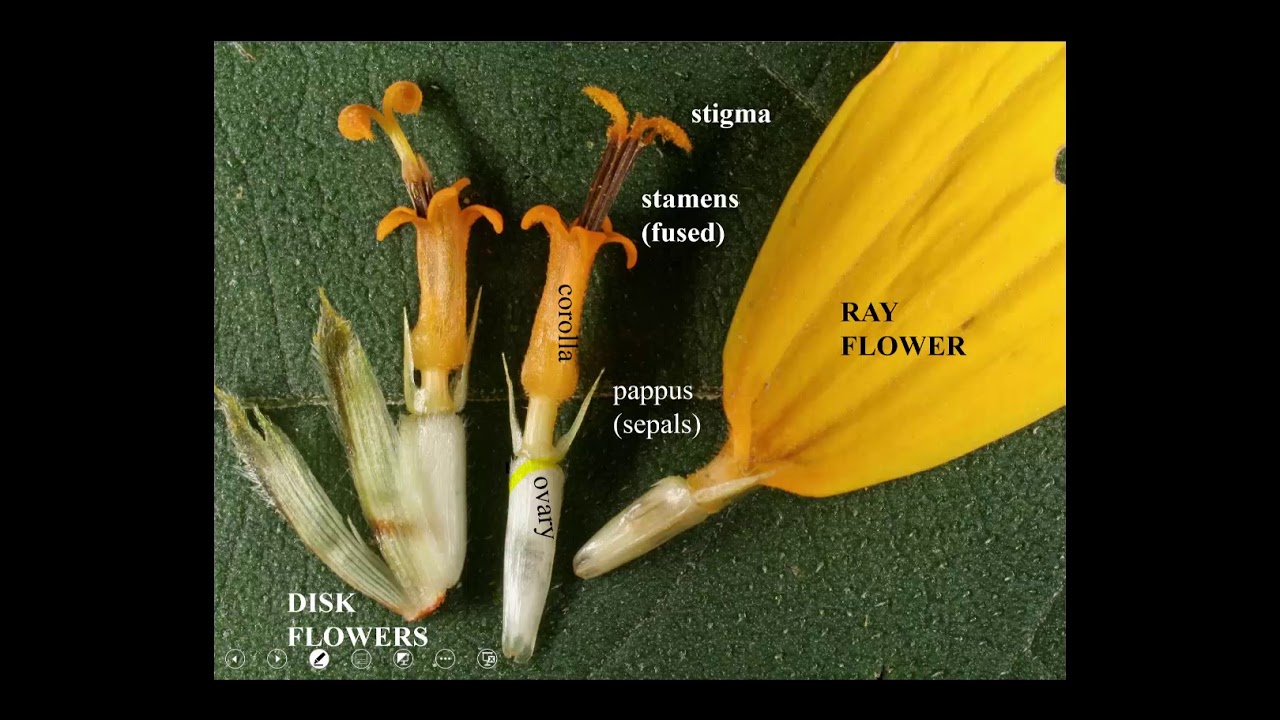
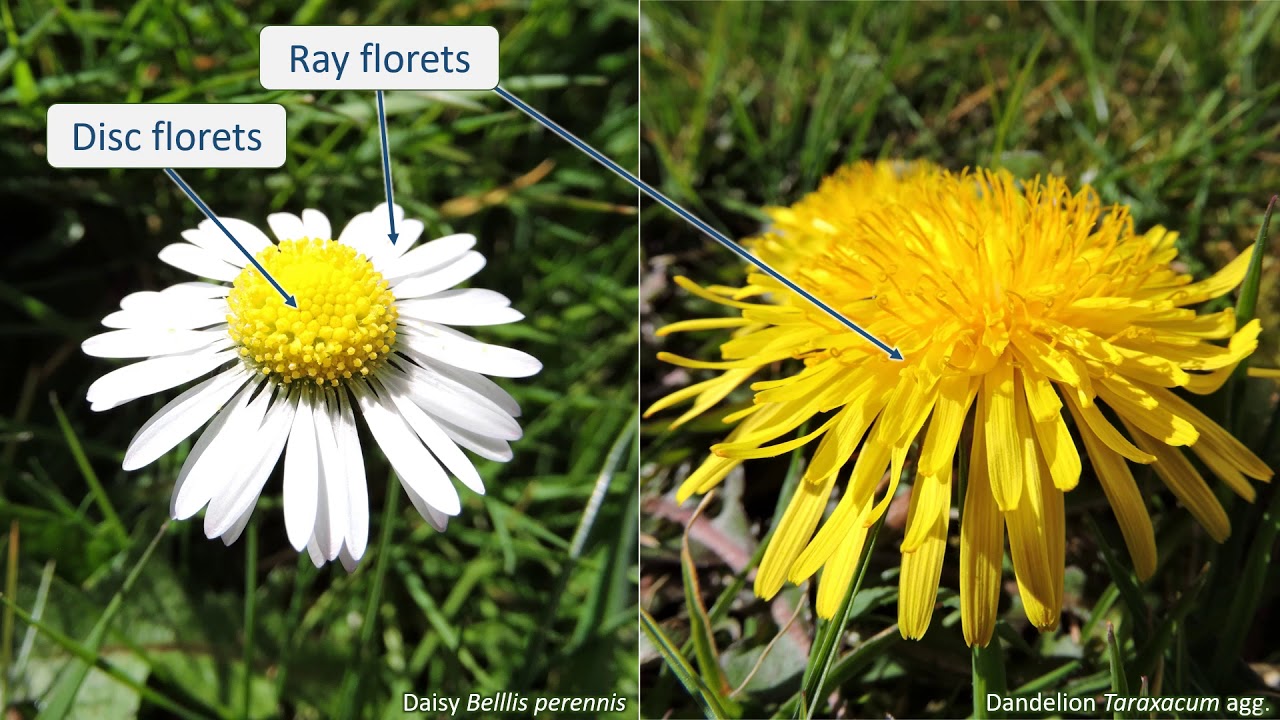
So, the main feature of this family are its inflorescences: the distinctive, often large, daisy-like flowerheads. Anything that looks at all like a daisy is almost certainly in the Asteraceae. These flowerheads are actually made up of dozens of tiny flowers called florets, all arranged on a base. These compound inflorescences are known as capitula. One capitulum, two capitula. Each of these tiny florets has five petals, five stamens fused into a tube and a stigma and style in the middle, but here’s where it gets interesting. Asteraceae flowers come in different forms, known as disc florets and ray florets. Ray florets are much showier than disc florets and serve to attract pollinators – the majority of Asteraceae species are insect-pollinated.
In the daisy, the disc florets are the ones packed into the middle and the ray florets are the ‘petals’ around the outside. The five petals of both disc and ray florets are fused together, but they are all there. Although the ray florets look like they only have single petal, if you look closely at the tip of this you will see five tiny ‘teeth’ – these are the tips of the fused petals. Some species, like daisies, have both disc and ray florets. Others may only have ray florets, like dandelion, or only disc florets, like groundsel (Senecio vulgaris).
The capitulum is surrounded by protective bracts, called phyllaries, known collectively as the involucre. The number, position and appearance of these phyllaries is often important for identifying individual species.
The ovary of each floret contains one seed that turns into a dry fruit called an achene. You might be wondering what has happened to the calyx, the ring of sepals around the flowers, in all this. Well, the calyx may be absent or reduced but is frequently modified to form a collection of hairs or a kind of parachute attached to the fruit, called a pappus. This pappus enables the seeds to be dispersed by the wind – this is what you see in dandelion clocks and thistle fluff. Other species, like burdock (Arctium minus), have hooks on their fruits that allow them to attach themselves to animal fur or people’s clothes.
The leaves of Asteraceae are very variable, some with smooth margins, some with lobes, but are generally alternate and often take the form of a basal rosette, like in dandelions.
So, remember: if it has a capitulum (daisy-like flowerhead) with an involucre (protective bracts), you have yourself an Asteraceae.
Keep an eye out for these three species in your garden or your street:
• Dandelion (Taraxacum)
• Daisy (Bellis perennis)
• Groundsel (Senecio vulgaris)
[Note, botanical names should always be written in italics (or underlined if handwritten)]
Повторяем попытку...
Доступные форматы для скачивания:
Скачать видео
-
Информация по загрузке: