No More Fake Witnesses? How E-Chargesheet & Aadhaar Linking Can Transform Indian Courts
Автор: The Social Studies by Vineet Sharma
Загружено: 2026-02-19
Просмотров: 32
Описание:
📌 Video Description
India’s criminal justice system continues to struggle with structural loopholes such as:
Fake or planted witnesses
Suppression of material facts
Delayed service of chargesheets
Non-transparent cognizance process
Lack of real-time access to case documents
Identity manipulation during investigation
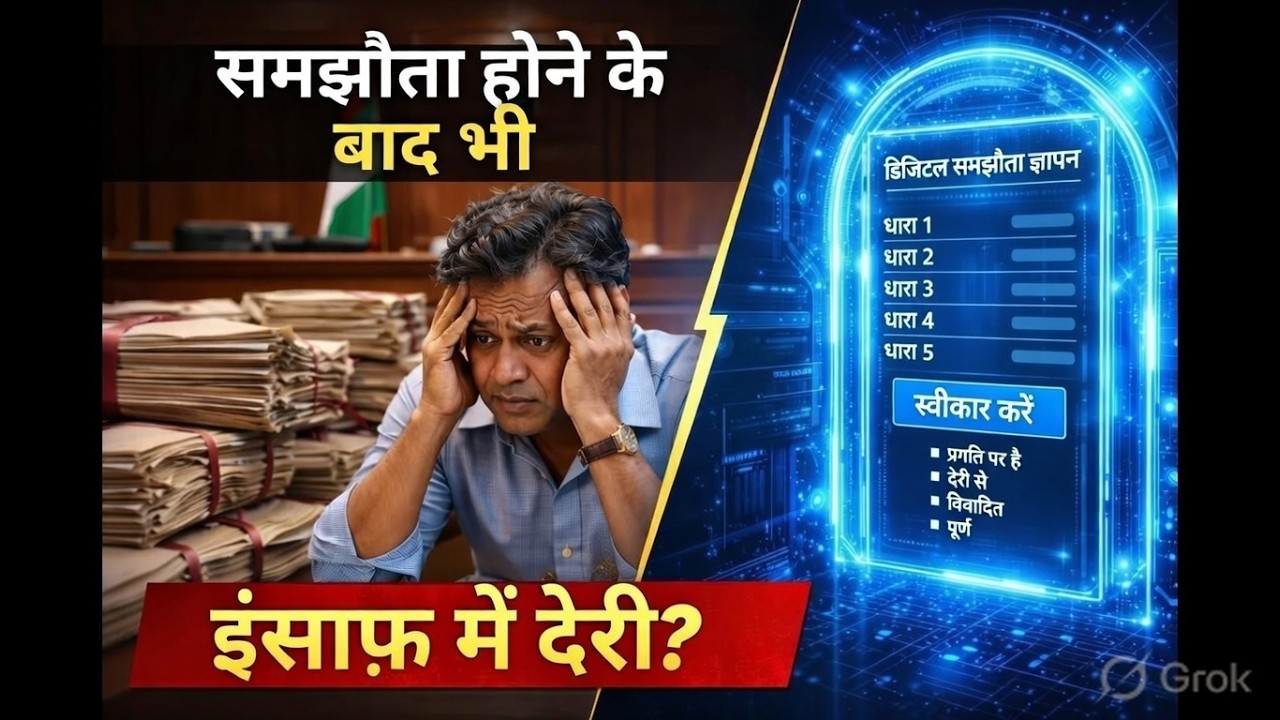
In this video, I have demonstrated my proposed Aadhaar-integrated E-Chargesheet System, where every party to a case — whether complainant, accused, or witness — is digitally mapped to the FIR number through verified identity credentials.
Under this model:
✔ Every witness is Aadhaar-authenticated before being included in the chargesheet.
✔ The court, at the time of e-cognizance, can view the complete verified profile of each party.
✔ The moment e-cognizance is taken, the e-chargesheet becomes instantly visible to all concerned parties.
✔ No physical delivery manipulation.
✔ No false claims of service.
✔ No hidden witnesses introduced later without traceability.
I have also explained how this system can integrate matrimonial data such as:
Stridhan custody records
Gift exchange declarations
Marriage terms and conditions
Pre-nuptial agreements
Digital background verification
This video builds upon our previous discussions on:
Aadhaar-FIR integration
Digital summons delivery
Real-time investigation logging
Geo-tagged evidence collection
Transparent prosecution workflow
The objective is not to target any institution but to propose a transparent, accountable, technology-driven criminal justice architecture that reduces procedural abuse and increases judicial efficiency.
⚖ This is a conceptual reform model aimed at eliminating loopholes — especially the menace of fake witnesses and document manipulation.
If implemented responsibly with privacy safeguards, such a system can:
Strengthen due process
Protect innocent persons
Reduce false implications
Increase judicial transparency
Build public trust in the justice system
This is Part ___ of the ongoing reform series.
Watch till the end for a complete demonstration.
⚠️ Disclaimer
This video is created purely for academic, educational, research, and public policy discussion purposes.
The concepts, demonstrations, system models, and digital integration proposals discussed in this video are hypothetical reform suggestions aimed at improving transparency, accountability, and procedural efficiency in the criminal justice system of India.
Nothing in this video should be interpreted as:
1) Legal advice
2) Allegations against any specific individual, court, police officer, or institution
3) A claim that the existing judicial system is entirely ineffective
4) An assertion that fake witnesses are universally present in all cases
5) The discussion is issue-based and systemic in nature, not person-specific.
The proposed Aadhaar-linked e-chargesheet model is a conceptual technological framework intended to eliminate procedural loopholes such as identity misrepresentation, document suppression, and service irregularities. Any implementation of such a system would require:
Legislative approval
Constitutional compliance
Data protection safeguards
Privacy impact assessment
Judicial oversight
The creator does not encourage misuse of Aadhaar data or violation of privacy laws. Data protection, consent, and cybersecurity would be fundamental pillars of any real-world implementation.
Viewers are advised to independently verify legal provisions and consult qualified legal professionals before forming opinions or taking action.
This video is part of a broader reform-oriented educational series focused on strengthening due process, digital governance, and judicial transparency in India.
Повторяем попытку...

Доступные форматы для скачивания:
Скачать видео
-
Информация по загрузке: