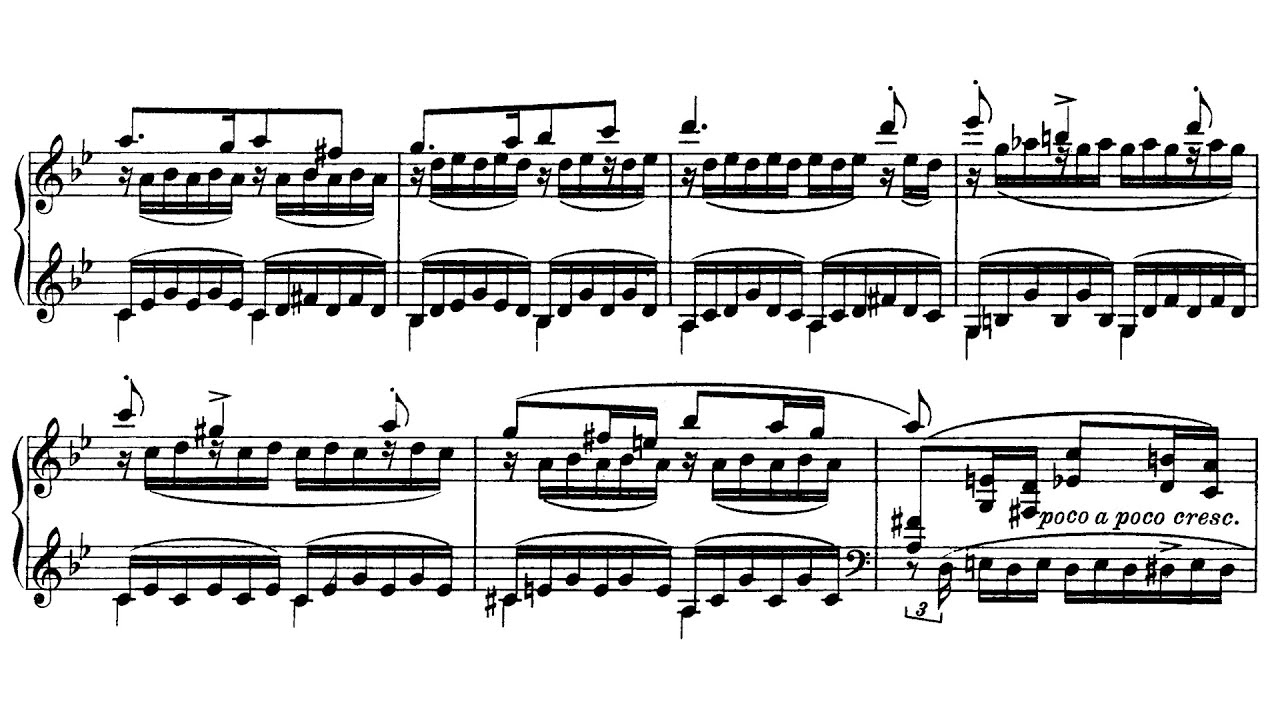
Henryk Melcer-Szczawiński - Variations on a Folk Theme (Asikainen)
Автор: Polish Scores
Загружено: 2022-01-08
Просмотров: 1331
Описание:
Henryk Melcer-Szczawiński - Wariacje na temat ludowy na fortepian
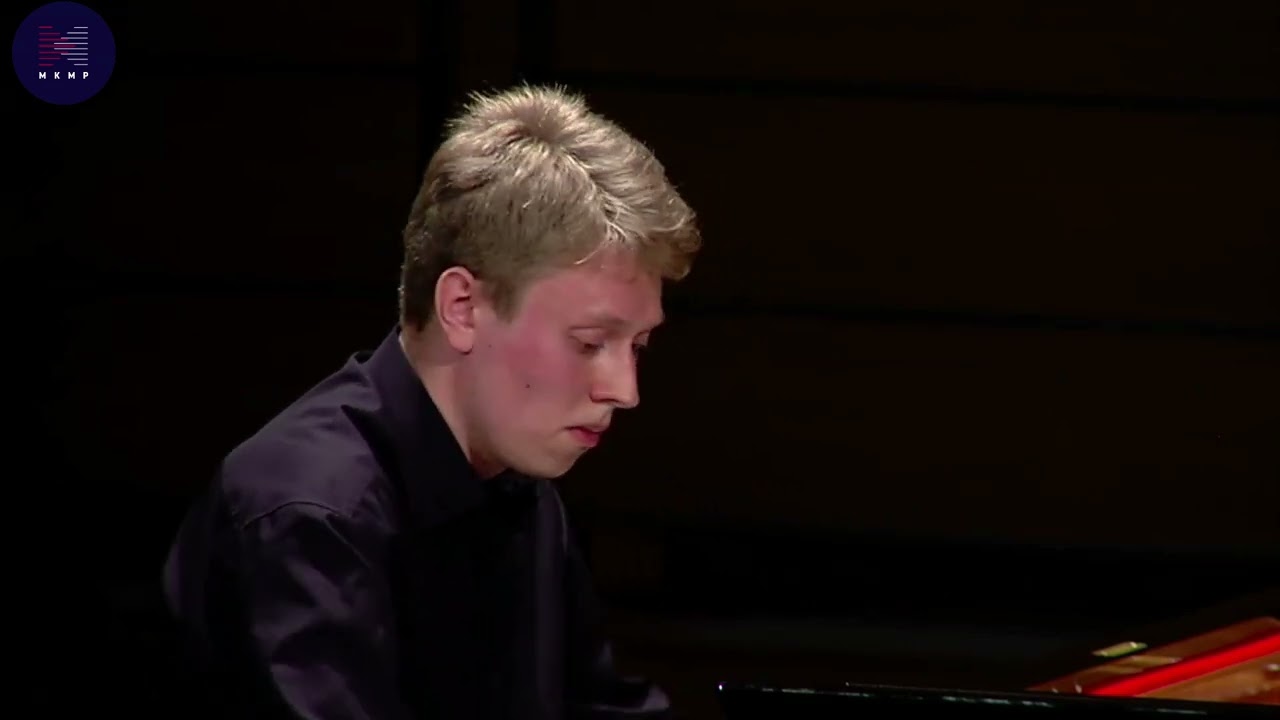
Pianist: Matti Asikainen
Published in 1925
0:00 - Lento
2:42 - Allegro risoluto
4:28 - Allegro
4:55 - L'istesso tempo
5:31 - Vivo
6:02 - L'istesso tempo
6:32 - Andante cantabile
8:35 - Vivace
9:08 - Allegro energico
10:33 - Allegro scherzando
11:27 - Moderato
13:19 - Allegro
14:35 - Vivacissimo
Biography
Henryk Melcer-Szczawiński (1869-1928) was born into a musical family at the northern outskirts of Warsaw. His talent was discovered early on, and both his father and his relative's grandmother taught him piano when he was little. His father, Karol Melcer, was a violinist, a conductor, and a composer, so Henryk had an abundance of early education. His gave his first public performance when he was only 8 years old.
Later, he studied mathematics at the University of Warsaw before enrolling at the Musical Institute of Warsaw. He studied piano technique with Rudolf Strobla and composition with Zygmunt Noskowski. Interestingly, he began his early career as an accompanist. Melcer-Szczawiński's victory at the Rubinstein Competition in 1895 changed his professional trajectory.
Melcer-Szczawiński was an incredibly talented composer, winning the Rubinstein Competition for his 1st Piano Concerto, his Piano Trio, and three Character pieces. He would later be awarded at the Ignacy Jan Paderewski Competition for the 2nd Piano Concerto, and he would later win the Warsaw Philharmonic's composition competition for his opera "Maria". These awards opened the door for Melcer-Szczawiński to teach at institutions from Helsinki to Lviv to Łódź and even Vienna. He also gave concerts throughout Europe.
Through the rest of his life, he would take hard stances on issues that arose in common musical life and in the life of Poland. While working as the director of Opera, he protested giving performances of German Composers while they occupied Warsaw in the 1st World War. He also drew hard lines on issues like defending the autonomy of students at the Warsaw Conservatory. He went so far as to resign as director of the conservatory over this issue. Later in life, he stopped giving concerts because of his health problems, dying in the Warsaw Conservatory in the middle of a lecture.
This piece was among Melcer-Szczawiński's last, so it is interesting to compare this to some of his earlier works like the character pieces. What we see is a style that remains mostly the same but has picked up a few ideas along the way.
Lento - From the first few bars, we see a wintery atmosphere with bell-like sounds emanating outward in high registers. The 2/4 - 3/4 time signature suggests an Oberek, which comes to life once the time signature switches. This is where the theme gets introduced, but it maintains the atmosphere of the introduction.
Allegro risoluto - After the slow, cold feel of the lento section, the allegro risoluto variation bursts forth with energy. Tomasz Kaczmarek (who wrote the booklet for the CD) thinks that the single system is a callback to a folk violin. The repeated use of 5ths (look at those parallel 5ths!) and 4ths are very reminiscent of folk music.
Allegro - A continuation of the allegro risoluto with some percussive elements added in the left hand.
L'istesso tempo - With the intense chromaticism and modulation, we start to head away from the folk atmosphere and back into Melcer's colorful musical idiom.
Vivo - More chromaticism and some very decorative dissonances adorn the folk melody here. This type of thing has been done before at this point, but it is still interesting to see folk ideas clash with more progressive ideas.
L'istesso tempo - A colorful transition back to a more lyrical folk atmosphere to prepare for the andante cantabile.
Andante cantabile - Finally, the folk melody appears with that rich, post-romantic presentation that is so satisfying. There is some outstanding counterpoint to note here as well.
Vivace - A nice little transition that sounds vaguely like a scherzo.
Allegro energico - Some very interesting use of triplets here. If you're playing the Melcer drinking game, take a shot at 10:18.
Allegro scherzando - An unusual scherzo in 2/4 with tons of color, chromaticism, and playful dissonance.
Moderato - The folk mood of the 3/4 section of the lento returns in the A section before giving way to an explosive B section.
Allegro - A very showy transition from the folk mood of the previous variation to the vivacissimo.
Vivacissimo - This is probably the most shocking variation of the set. The introduction seems pretty progressive, but it rapidly returns to established norms.
Biographical info:
https://pl.wikipedia.org/wiki/Henryk_...
https://culture.pl/pl/tworca/henryk-m...
Повторяем попытку...

Доступные форматы для скачивания:
Скачать видео
-
Информация по загрузке:


![Ferruccio Busoni: 3 Morceaux; Op 4, 5, 6. [BV 197] (Harden)](https://imager.clipsaver.ru/hERfRaISFJ0/max.jpg)