How Microcultures and Mental Fitness Are Redefining People Strategy
Автор: People Managing People
Загружено: 2026-01-22
Просмотров: 71
Описание:
You can count system uptime down to six decimal places and predict when a machine will fail — but when it comes to your employees, you’re flying blind. You track turnover, burnout rates, engagement scores — but those are all lagging indicators, the wreckage after the crash. You’ve no real idea what’s happening beneath the surface: who’s sliding into despair, clutching exhaustion, or on the edge of burnout. If you wait until the metrics hit “bad,” it’s already too late.
Today’s guest, John Moore, pulls back the curtain: “state of mind” isn’t fuzzy, academic fluff — it’s the most predictive risk factor you’ve been ignoring. And if you treat your workforce like a homogeneous mass, you’ll keep missing the parts that matter: the micro‑cultures. Because what actually shapes behavior is not enterprise‑wide culture slogans, but the day‑to‑day dynamic between a manager and their team.
What You’ll Learn:
Why traditional HR metrics — turnover, engagement surveys, burnout rates — are all lagging indicators, and rarely help you prevent problems.
What “state of mind” really means — and how fluctuations in psychological fitness directly impact performance, safety, and long‑term mental health.
Why micro‑culture (the relationships and norms within individual teams) matters far more than top‑down enterprise culture statements.
How real‑time measurement — appropriately anonymized and aggregated — can provide leading indicators of team health.
Where AI and modern data tools might finally give leaders a chance to care for human beings as seriously as they care for machines.
Key Takeaways:
Treat “state of mind” as a first‑class risk metric. Don’t wait for someone to quit, burn out, or crash. If you notice a decline in psychological fitness across a team, act — even if nothing appears “wrong” on paper.
Focus on micro‑culture, not broad culture declarations. The real unit of change is the team: manager‑to‑direct‑reports relationship, peer dynamics, everyday behavioral norms. Generic “culture programs” rarely move the needle at that level.
Get data often — and put it in the hands of team leaders. Annual surveys don’t cut it. Continuous, real‑time (or near real-time) inputs — with strong privacy protections — let leaders sense trouble early, and intervene meaningfully.
Use anonymity to build trust. If employees fear their mental‑health data could be traced back to them, participation collapses. Use token‑based or aggregated data approaches to enable honesty without risk.
Blend psychological safety and resilience training with structural change. Teaching individuals coping skills matters — but so does shaping the work environment so it doesn’t constantly drain their reserves.
See human capital as seriously as machine uptime. The same discipline, tools, and urgency we use for system performance should apply to people performance. Because if ignored, the cost — human and business — is just as real.
Chapters:
00:00 – The metrics that matter most
01:43 – State of mind as a risk factor
02:38 – How mindset drives safety and performance
05:40 – Who’s most at risk?
07:26 – Why microcultures matter more than culture
11:17 – Why HR programs miss the mark
11:47 – Using AI to support teams
14:03 – Scale vs relevance
18:28 – Psychological safety and global standards
23:00 – Spotting early warning signs
27:44 – Real-time data and leadership impact
31:24 – Privacy, trust, and participation
33:56 – Where to start with data
34:32 – The end of one-size-fits-all
39:00 – Final thoughts on human-centered leadership
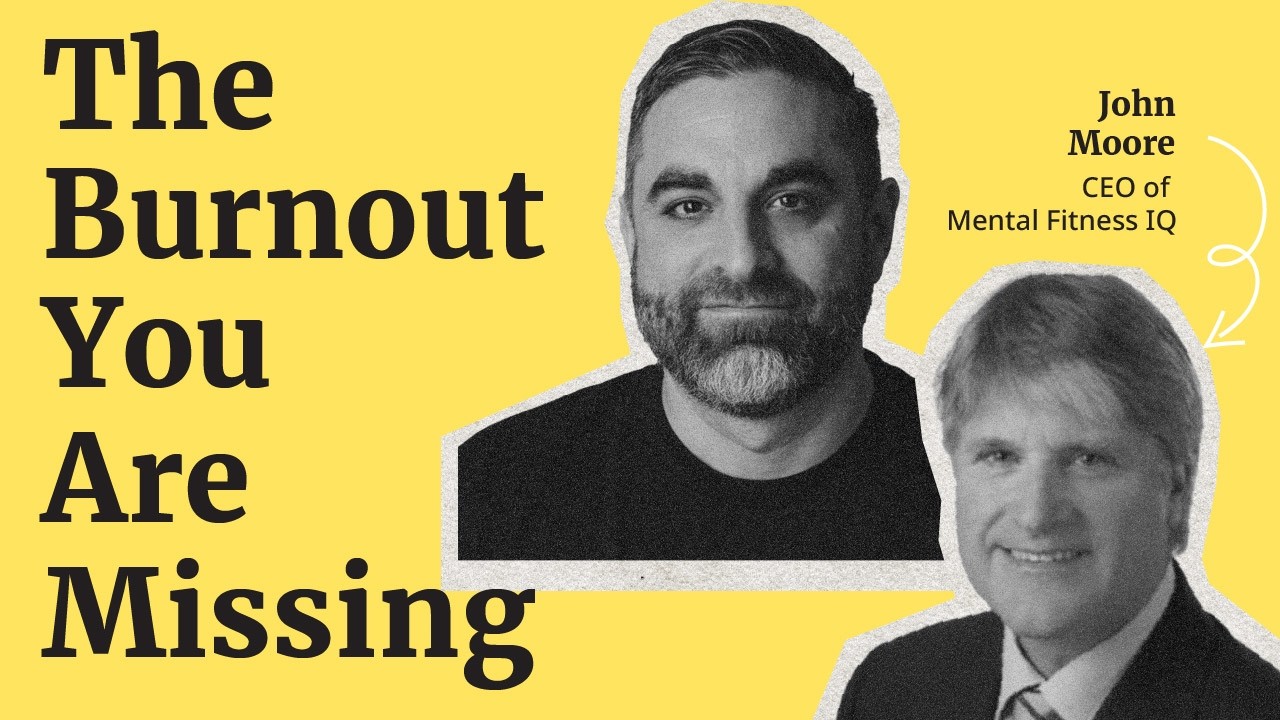
Meet Our Guest:
John Moore is the CEO of Mental Fitness IQ, a performance-focused organization dedicated to helping individuals and teams build resilience, sharpen cognitive agility, and strengthen overall mental wellbeing. With a background spanning leadership development, behavioral science, and high-performance coaching, John has guided executives, athletes, and organizations in cultivating the mental skills needed to thrive under pressure. He is a passionate advocate for redefining mental fitness as a strategic advantage, and his work blends evidence-based practices with practical frameworks that empower people to think clearer, recover faster, and perform at their best.
Learn more: https://peoplemanagingpeople.com/peop...
Повторяем попытку...
Доступные форматы для скачивания:
Скачать видео
-
Информация по загрузке: