ASI2024 01 Introduction
Автор: Michele Piecucci
Загружено: 2026-03-01
Просмотров: 6
Описание:
• 1. Introduction
• ASI 2024
00:00 - Intro
11:06 - Course outline
13:28 - Labs
17:35 - Tech stack
28:45 - Learning resources
32:32 - Project ideas
35:34 - Organization
1. Course Introduction
Instructor introduces himself (Andrzej Wodecki) with 10+ years of AI experience, specializing in generative AI and implementing AI technologies in mid/large corporations
2. Course Outline
Overview of the full curriculum
3. Labs
Hands-on practical sessions
4. Tech Stack
Tools and technologies that will be used
5. Learning Resources
Materials and references for the course
6. Project Ideas
Suggested projects to apply the concepts
7. Organization
How the course is structured
The course teaches architectures and implementation methodologies of artificial intelligence - specifically how to deploy and maintain AI models in production environments. It's a practical course bridging the gap between building ML models and making them work in real-world production systems.
---
This video is the introductory lecture for a course titled "Architectures and Implementation Methodologies of Artificial Intelligence" (ASI 2024), taught by Andrzej Wodecki.
The primary focus of the course is not just building AI models, but the engineering and architectural challenges involved in deploying and maintaining those models in real-world production environments [00:39].
The 5% Rule: Wodecki emphasizes that the actual machine learning code is often only about 5% of a total project. The remaining 95% consists of configuration, automation, data collection, feature engineering, and serving infrastructure [06:15].
Production Challenges: While a model can be trained in a few lines of code, real production involves handling massive data sources (databases, Hadoop), feature engineering, hyperparameter tuning, and integration with APIs or BI systems [03:52].
Good Architecture: Defined as being functional, secure, and "future-proof" (scalable and flexible) without being overbuilt for current needs [09:17].
The curriculum is divided into three main pillars [11:12]
Core Processes
ML life cycles, serialization, and pipelines.
Fine-tuning & Automation
Experiment tracking (Weights & Biases), handling model drift, and AutoML (AutoGluon).
Operationalization (MLOps)
Infrastructure management, containerization (Docker/Kubernetes), and CI/CD pipelines.
Lab Projects & Tools
The instructor outlines a team-based project where students must deploy a model online [13:45].
Recommended tech stack
OS
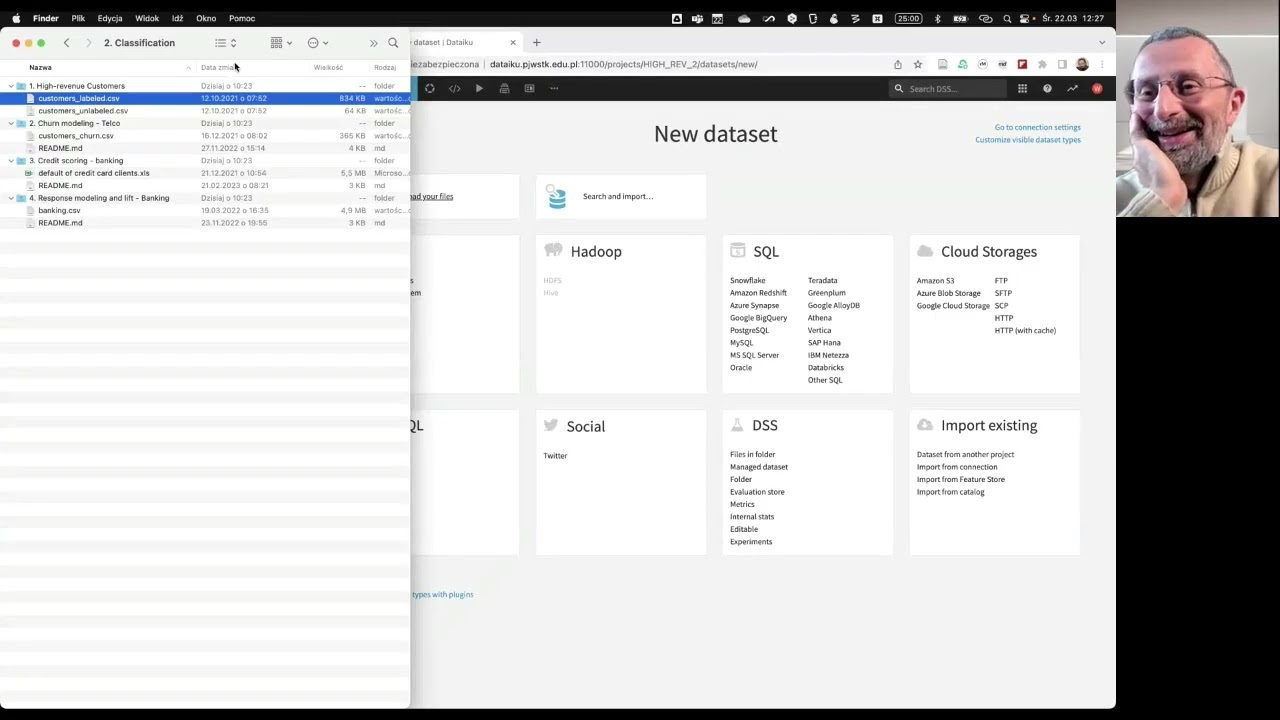
Ubuntu or macOS (Linux-based systems are preferred for deployment) [18:07].
IDE/Coding
VS Code with Copilot, GitHub/GitLab, and Miniconda for environment management [18:44].
Libraries
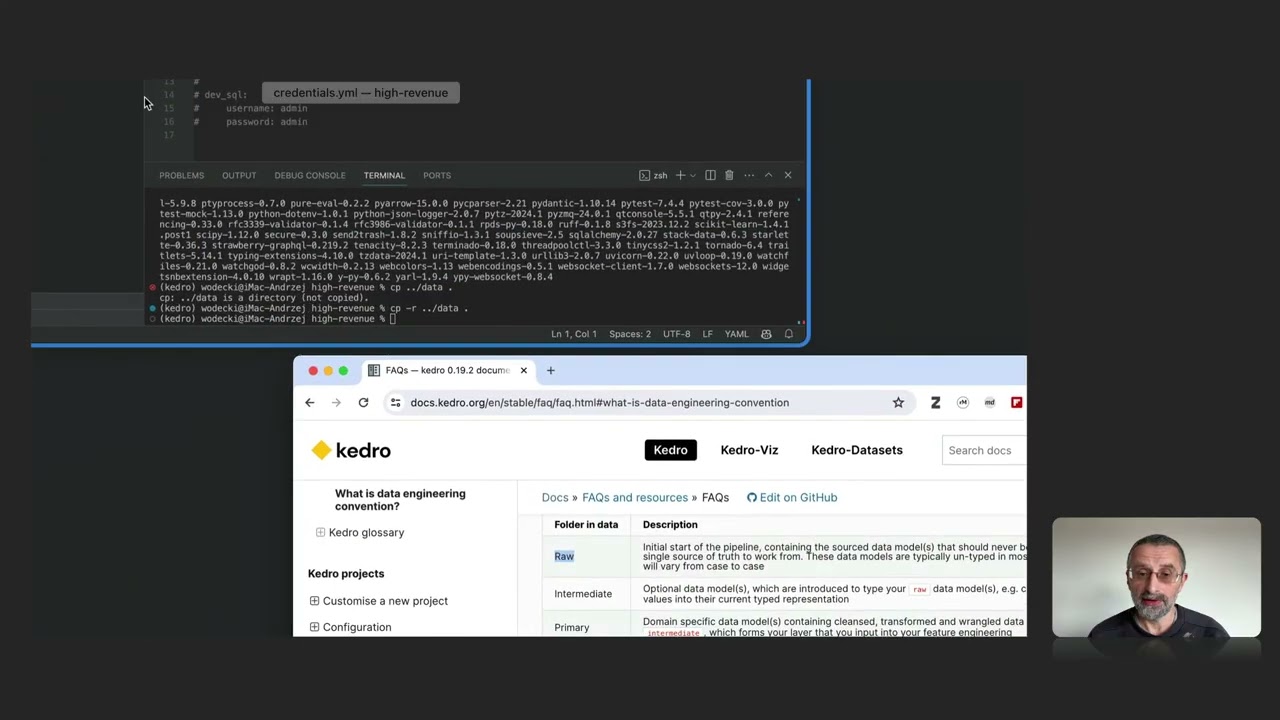
Kedro for pipelines, Weights & Biases for experiment tracking, and DVC (Data Version Control) [19:48].
Important advice
students are urged to avoid "ambitious" deep learning models for their projects. Instead, they should use "toy examples" that train in seconds so they can focus on the deployment and pipeline architecture [32:00].
The course highlights three key roles [09:46]:
System Architect designs the high-level system and integration (the most time-consuming role).
Data Scientist focuses on feature engineering and model training.
ML Engineer responsible for taking the model into production.
Повторяем попытку...

Доступные форматы для скачивания:
Скачать видео
-
Информация по загрузке:











![🔴 EXPRESS BIEDRZYCKIEJ | PAWEŁ ŚLIZ, PIOTR WOŹNIAK [NA ŻYWO]](https://imager.clipsaver.ru/sQHxLwb_9Xo/max.jpg)