Destroyer Emmons's Longest Day | Channel Markers
Автор: Bearing Straight
Загружено: 2025-08-14
Просмотров: 1796
Описание:
What’s not well-known about D-Day is that the assault plan for the Normandy Invasion was not as sophisticated as those being executed by the well-oiled US Navy, Marines, and Army amphibious team in the Pacific. There, among other features, the pre-invasion bombardments lasted much longer, often days, and ground forces could always rely on plenty of effective close-air support from carrier aircraft when they went ashore in broad daylight.
The operational plan for Normandy, however, was a hybrid plan meant to achieve surprise, so naval bombardment didn’t begin until D-Day itself. Unfortunately, the American assault on Omaha Beach unraveled quickly, largely because the pre-invasion air and naval bombardment was ineffective. At Omaha, US forces assaulted a well-entrenched, veteran German infantry division, which held the bluffs overlooking the beach, and were caught by 88s, mortars, and dozens of machineguns in enfilading fire. They raked the beaches and pinned down surviving troops in a small area behind well-designed and deadly minefields. Many tanks and much of the artillery, which were expected to cover the infantry’s advance, never made it ashore. As the casualties piled up, threatening the success of the landing, the Navy ordered its destroyers to steam as close as possible to the beach, even at the risk of grounding, to support the men who were struggling to get ashore, establish a foothold, and advance inland. If you've watched the assault sequence in Saving Private Ryan (1998), then you have a sense of how badly the assault went.
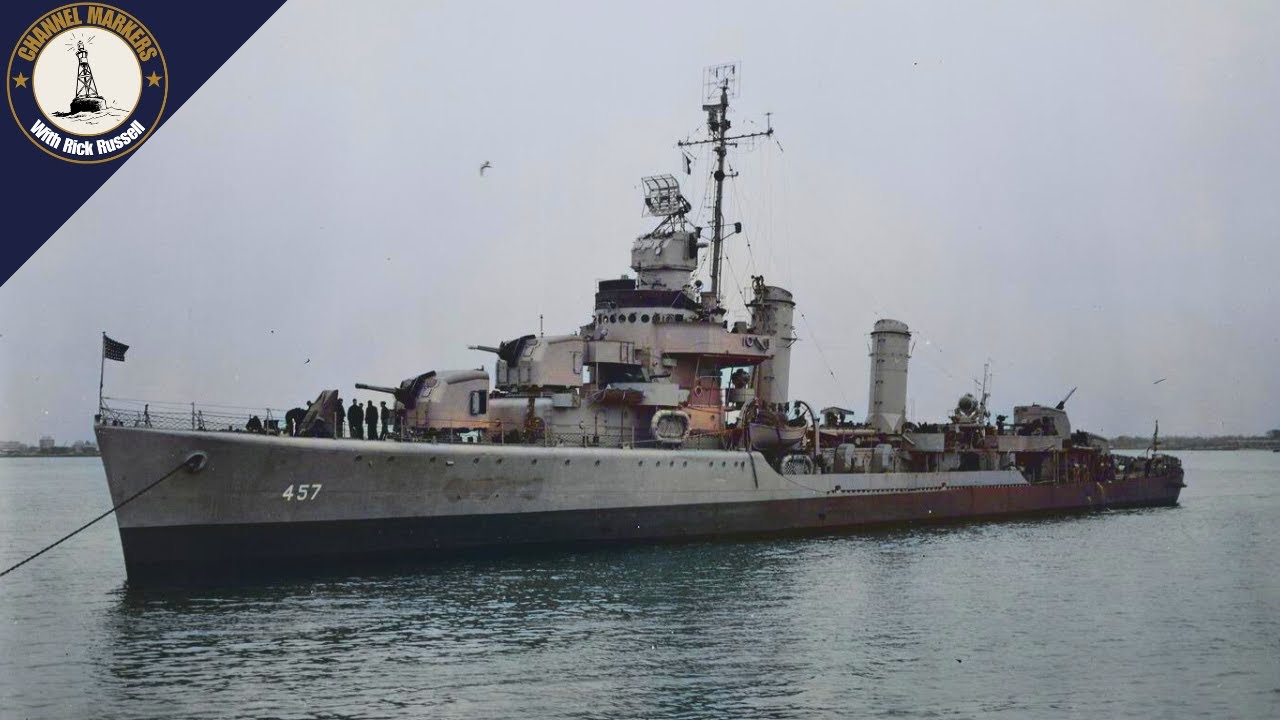
The topic of today's video is the GLEAVES-class Destroyer EMMONS (DD-457), the brightest star among several Navy stars during D-Day, 6 June 1944, which intervened directly, more or less as floating artillery for the Army, and helped save the day and send the liberation of Europe on its way. Thanks to viewer @briancooper2112 who recommended we take a closer look at EMMONS.
Follow us on Facebook: Facebook.com/BearingStraightMarketing
For the further reading, Rear Adm. (Ret.) Edward Baxter Billingsley's The Emmons Saga: A History of the USS EMMONS (DD457-DMS22), which was published by the USS EMMONS Association in 2005, is a good place to start. Billingsley was in command of EMMONS on D-Day. For a well-researched look at what went wrong at Omaha Beach, please see Adrian R. Lewis, Omaha Beach: A Flawed Victory (Chapel Hill, NC and London: University of North Carolina Press, 2001). Also, Samuel E. Morison covers the actions of EMMONS and the other Navy destroyers ordered to close the beach in Volume 11 (The Invasion of France and Germany) of his History of United States Naval Operations in World War II (Boston: Little, Brown & Company, 1953; reprinted 2011 by the Naval Institute Press, Annapolis, MD).
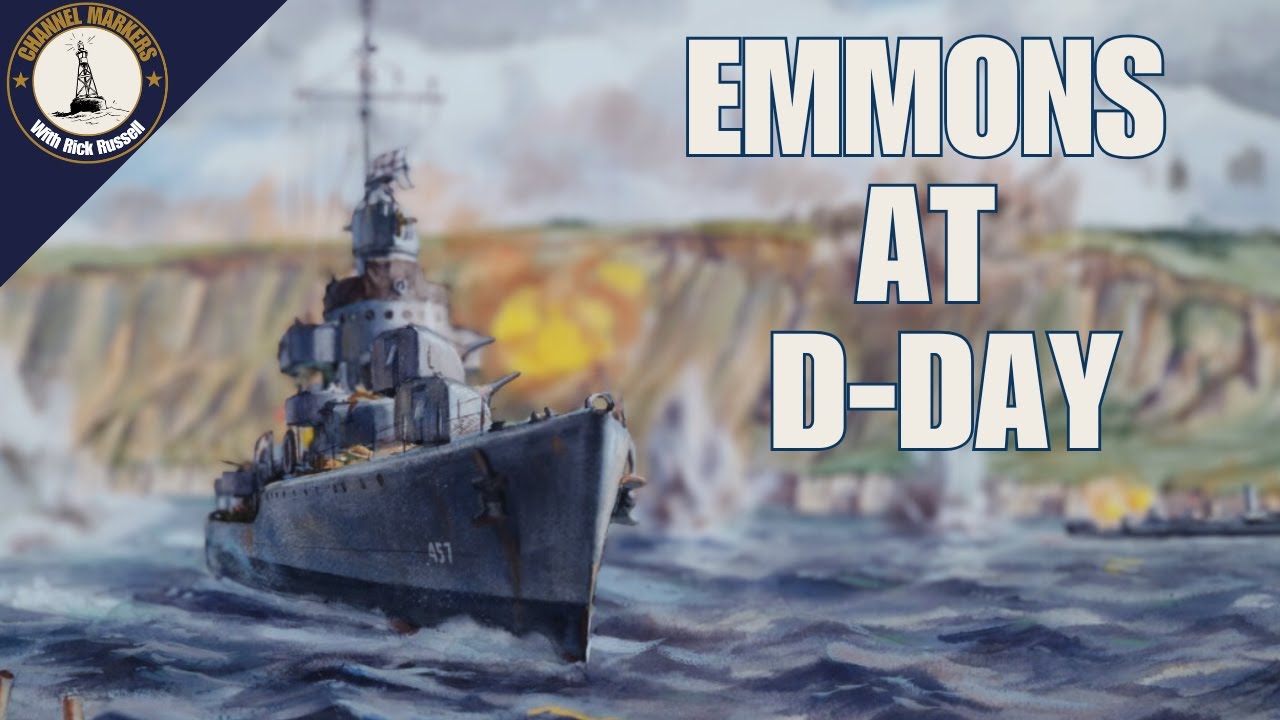
The thumbnail image is from an original painting by Dwight C. Shepler, who was a commissioned naval officer and combat artist covering D-Day in person, and depicts EMMONS firing on the bluffs overlooking Omaha Beach on D-Day. It's one of seven paintings that illustrates EMMONS's epic performance during 6 June 1944.
Photo and Film Credits: United States Naval Institute, US National Archives, US Naval History & Heritage Command, as well as The Longest Day (20th Century-Fox, 1962) and Saving Private Ryan (DreamWorks Pictures / Paramount Pictures, 1998).
Channel Markers, Ep. 24 | "Emmons's Longest Day"
Повторяем попытку...
Доступные форматы для скачивания:
Скачать видео
-
Информация по загрузке:





![Operation Torch [Tunisian Victory, 1944] | A Channel Markers Feature](https://imager.clipsaver.ru/8v9SxYUCXTE/max.jpg)