JLPT N5 Japanese Grammar Song Particles に ni, で de, へ he (English Subtitles)
Автор: Japanese Songs for Language Learners
Загружено: 2026-01-10
Просмотров: 157
Описание:
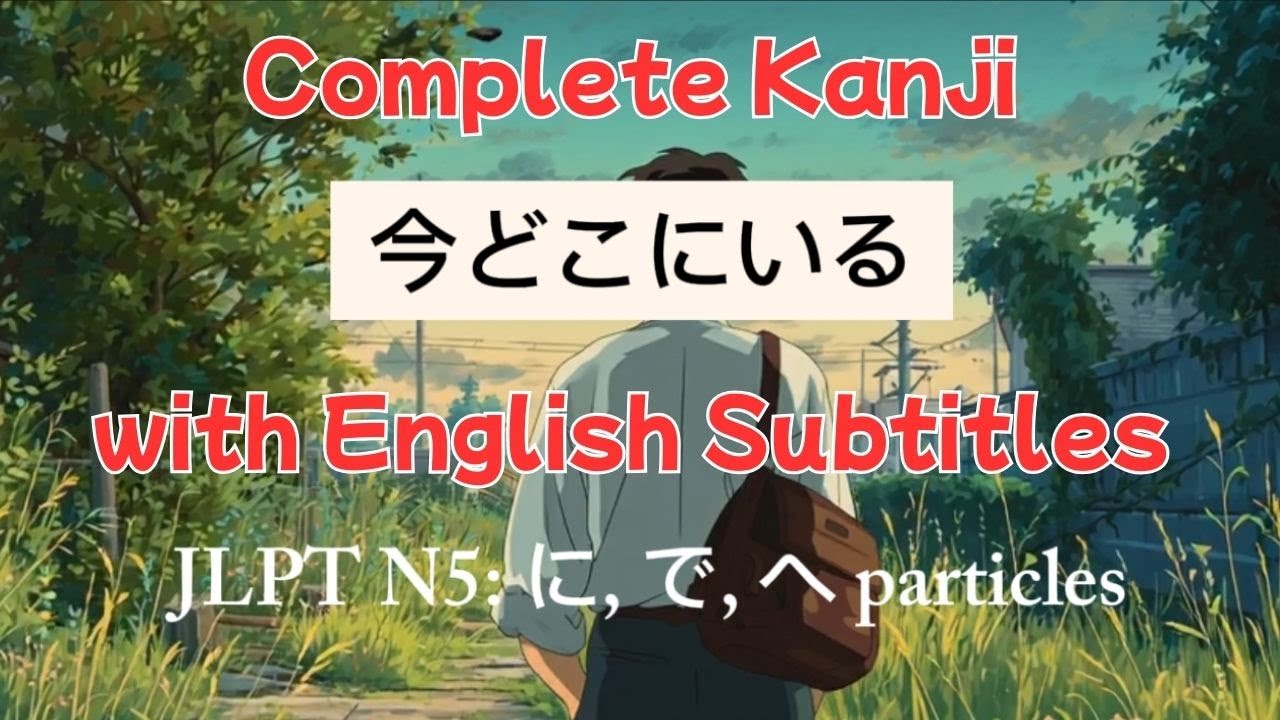
今、どこにいるの?(Where Are You Now?) - JLPT N5 Location Particles Song
This Version includes full kanji and English subtitles.
For the version with N5 Level kanji only, please go to @japanesesongsforlearners
Study Japanese location particles に, で, and へ through this nostalgic ballad about first love and memories.
📚 What You'll Learn:
This song teaches the essential JLPT N5 location particles through natural usage in both past and present tense:
に - Static location (where someone/something is or was)
で - Location of action (where an activity happens)
へ - Direction (toward a destination)
🎵 About This Song:
"今、どこにいるの?" tells the story of a man reminiscing about his first love from ten years ago, wondering where she is now and what she's doing. Through gentle memories and heartfelt questions, you'll learn how to use location particles naturally in conversation.
The song contrasts past memories (学校にいた - were at school, 図書館で勉強した - studied at the library) with present wondering (東京にいる? - are you in Tokyo?, カフェで働いてる? - are you working at a café?), helping you understand particle usage in different tenses.
🎯 Helpful for:
JLPT N5 students
Beginners learning Japanese particles
Anyone struggling with に vs で vs へ
Learners who enjoy story-based content
Fans of Japanese ballads
💡 How to Use This Song:
Listen while reading the lyrics to connect sound with meaning
Pay attention to which particle appears with each location
Notice the pattern: に (being/existing), で (doing), へ (going toward)
Practice by substituting your own locations
Sing along to internalize the patterns naturally
🎼 Particle Patterns Explained:
に (ni) - Use with いる/ある (to exist) or destination verbs like 行く/来る/帰る
Example: 学校にいる (I'm at school) / 公園に行く (go to the park)
で (de) - Use when describing WHERE an action takes place
Example: 図書館で勉強する (study at the library) / カフェで働く (work at a café)
へ (e) - Use to show direction or destination (more abstract than に)
Example: 海へ行く (go to the sea) / 北へ向かう (head north)
💬 Share your story: Have you ever wondered where an old friend is now? Comment in Japanese using に, で, or へ!
Example: 昔の友達は今、どこにいるかな?(I wonder where my old friend is now?)
🔔 Subscribe for more Japanese learning songs covering grammar, vocabulary, and particles!
👍 Like if this helped you finally understand に vs で vs へ!
Повторяем попытку...
Доступные форматы для скачивания:
Скачать видео
-
Информация по загрузке: