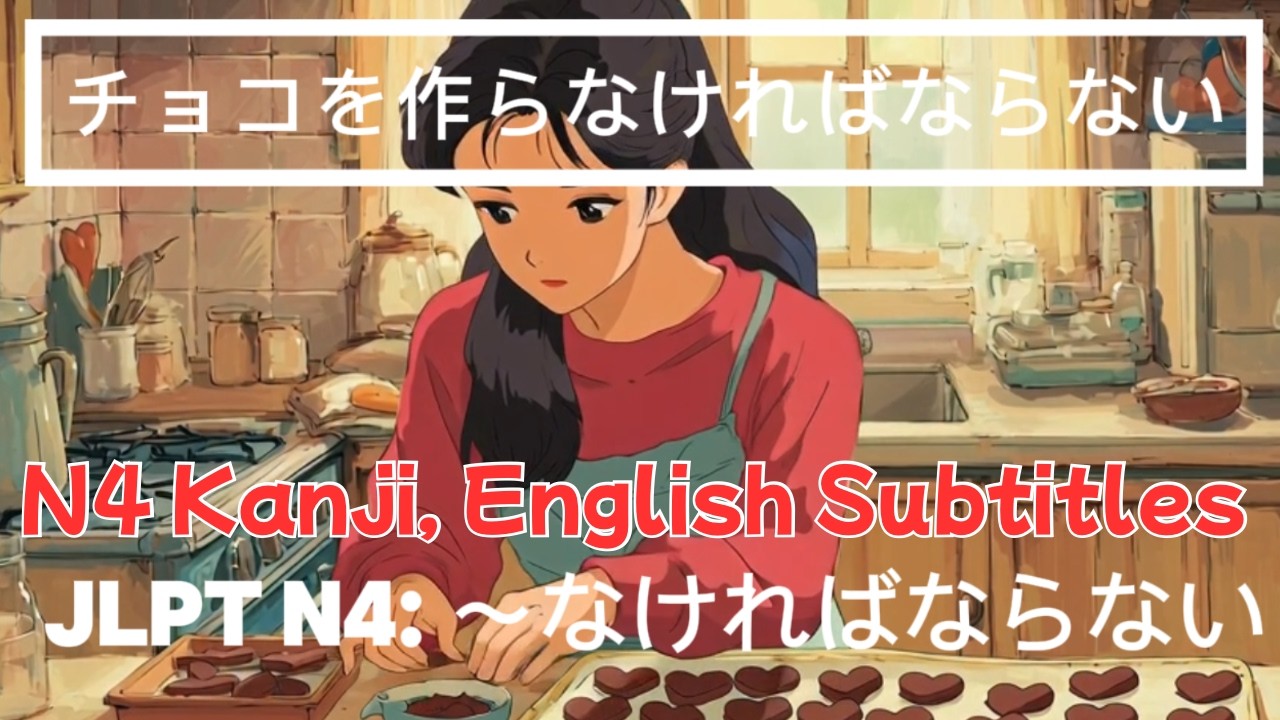
JLPT N4 〜なければならない Must/ Have to Valentine’s Day Chocolate Japanese Grammar Song N4 Kanji & Hiragana
Автор: Japanese Songs for Language Learners
Загружено: 2026-02-10
Просмотров: 38
Описание:
チョコを作らなければならない (I Have to Make Chocolate) - JLPT N4 Grammar Song
Learn the Japanese obligation grammar 〜なければならない through this hilariously honest song about Valentine's Day giri-choco culture! Experience the exhaustion of obligation chocolate while mastering "must" and "have to" in Japanese.
📚 What You'll Learn:
The JLPT N4 obligation pattern: ~なければならない - must / have to (strong obligation)
How to express things you're required to do
Shortened casual forms: なければ, なきゃ, なくちゃ
Real workplace and social obligations in Japanese
🍫 Cultural Context: Understanding Japanese Valentine's Day
義理チョコ (Giri-choco) - Obligation Chocolate
What it is:
Chocolate given to male coworkers, bosses, and platonic friends
NOT romantic - purely social obligation
Expected in some Japanese workplaces as part of maintaining harmony
The Rules:
Must give to ALL male colleagues (forgetting someone causes problems)
Should be equal quality/size to avoid office politics
Must clearly communicate it's giri-choco to prevent romantic misunderstandings
Often handmade to show effort (but ironically, not affection)
Can be expensive and time-consuming
Common phrases:
"みんなにあげてます" (I'm giving to everyone)
"いつもありがとうございます" (Thank you always for your work)
These clarify it's NOT a romantic gesture
本命チョコ (Honmei-choco) - True Love Chocolate
What it is:
"本命" (honmei) = favorite/true feeling
Chocolate given to romantic interests or boyfriends/husbands
Made with love and care
Usually homemade and higher quality
Can be accompanied by a confession of feelings
ホワイトデー (White Day) - March 14th
What it is:
One month after Valentine's Day (March 14)
Men give return gifts to women who gave them chocolate
Traditional gifts: white chocolate, marshmallows, cookies, candies (hence "White" Day)
Expected to give back gifts worth 2-3 times the value received (called 三倍返し sanbai-gaeshi)
The Rules:
If you received giri-choco, you should return something (but it can be simple)
If you received honmei-choco and reciprocate feelings, the return gift should be significant
Some men stress about this just as much as women stress about Valentine's
Why This System Exists:
Japanese culture highly values social harmony and group cohesion. Valentine's giri-choco maintains workplace relationships and shows appreciation for colleagues - but as the song illustrates, this can feel burdensome, especially when it's expensive, time-consuming, and purely performative. Many young Japanese women today question this custom, and some workplaces have even banned it to reduce the burden!
🎯 Best For:
JLPT N4 students
Intermediate Japanese learners
Anyone learning obligation grammar
People interested in Japanese workplace culture
Students studying in Japan (you might experience this!)
🎼 Grammar Pattern Explained:
〜なければならない (nakereba naranai) = must / have to
Formation:
Take verb negative form: 作らない (don't make)
Remove ない: 作ら
Add なければならない: 作らなければならない (must make)
Examples from the song:
チョコを作らなければならない (I have to make chocolate)
配らなければ (I have to distribute)
Shortened forms in casual speech:
なければならない → なければ (common in speech)
なければならない → なきゃならない (casual)
なければならない → なきゃ (very casual - "gotta")
Alternative: なくてはならない → なくちゃ
Example:
Formal: チョコを作らなければなりません
Standard: チョコを作らなければならない
Casual: チョコを作らなきゃ
Very casual: チョコ作んなきゃ
😅 The Song's Obligations:
Making the Chocolate:
レシピを調べなければ (have to look up recipes)
材料を買わなければ (have to buy ingredients)
きれいにラッピングしなければ (have to wrap it prettily)
徹夜しなければならない (have to pull an all-nighter)
Distribution:
職場のみんなにあげなければならない (have to give to everyone at work)
平等に配らなければ (have to distribute equally)
誰も忘れてはいけない (must not forget anyone)
Social Performance:
「手作りです」と言わなければ (have to say "it's handmade")
本当の気持ちは隠さなければならない (have to hide true feelings)
「面倒くさい」なんて言ってはいけない (must not say "this is annoying")
Money & Time:
お金を使わなければ (have to spend money)
会社に行かなければ (have to go to work)
💬 Share your obligations using 〜なければならない!
Work obligations:
毎日__しなければならない (Every day I have to...)
仕事で__しなければならない (At work I have to...)
Life obligations:
早く起きなければならない (I have to wake up early)
勉強しなければならない (I have to study)
🔔 Subscribe for more Japanese grammar songs with cultural insights!
👍 Like if you've ever experienced giri-choco culture
🎯 Challenge: How many different obligations can you count in this song?
Discussion Question:
Does your culture have similar obligation gift-giving? Share in Japanese or English!
Study Tip:
なければならない is heavy - it's STRONG obligation (must, have to).
For lighter advice, use:
〜たほうがいい (should, it's better to)
〜といい (it would be good if)
Compare:
チョコをあげたほうがいい (You should give chocolate - advice)
チョコをあげなければならない (You must give chocolate - obligation)
#LearnJapanese #JLPTN4 #なければならない #JapaneseGrammar #ValentinesDay #GiriChoco #JapaneseCulture #JapaneseSong #LanguageLearning #日本語 #StudyJapanese #JPop #WhiteDay #JapaneseWorkplace #japaneselisteningpractice
Повторяем попытку...
Доступные форматы для скачивания:
Скачать видео
-
Информация по загрузке: