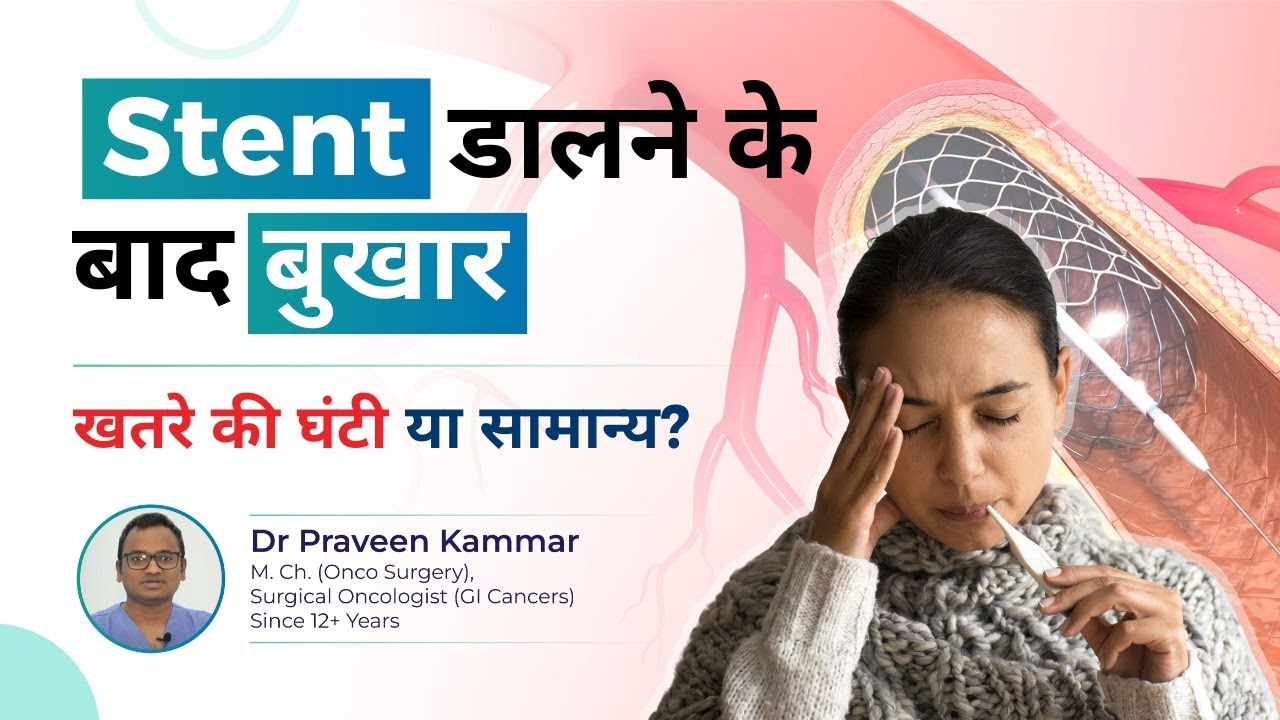
Stent डालने के बाद बुखार: A Warning Sign or Just Normal? | Stenting After Jaundice | Dr Kammar
Автор: Dr Praveen Kammar - GI & Gynaec Cancer Surgeon
Загружено: 2024-10-05
Просмотров: 9449
Описание:
Hello Everyone! I’m Dr Praveen Kammar, a Cancer Surgeon specializing in digestive system and gynecological cancers. Today, we’re discussing an important issue many patients face: fever after stent placement. If you or someone you know has had a stent placed and is experiencing fever, this video will explain the possible
_______________________
📌For any queries, contact us at the given number or visit our website!
Contact - 9372392003
Website:- https://drpraveenkammar.com/
CLINIC LOCATIONS : (A) Borivali Health Care, Lancelot Apartments, A wing, 4th floor, 401, Swami Vivekananda Rd, Shastri Nagar, Sumer Nagar, Borivali West, Mumbai, Maharashtra 400092
(B) SSO Hospital, ABOVE Bellevue Multispecialty Hospital, New Link Road, 2 floors, Opp. D.N. Nagar Metro Station gate no 3, Next to Audi Showroom, New Link Rd, opp. Star Bazaar Extension, Andheri West, Mumbai, Maharashtra 400053
_______________________
causes and treatments.
Why Does Fever Occur After Stent Placement?
Stents are often placed in patients with conditions like bile duct cancer to relieve obstructions and allow bile to flow properly. This can be done through two procedures: ERCP (Endoscopic Retrograde Cholangiopancreatography) or PTBD (Percutaneous Transhepatic Biliary Drainage). These procedures aim to restore bile flow, either before surgery or when surgery isn’t possible.
However, after a stent is placed, some patients develop a fever. Fever can occur for various reasons, but in the case of stent placement, two primary causes are cholangitis (infection and inflammation of the bile ducts) and pancreatitis (inflammation of the pancreas). Both conditions may result in fever, and the pancreatitis may be either with or without infection.
Causes of Inflammation and Infection
During stent placement, whether through ERCP or PTBD, the body’s natural structures are disturbed. Introducing a foreign object, like a stent, into the body often triggers a natural response of swelling and inflammation, especially in sensitive areas such as the pancreas. If the swelling becomes excessive, it can lead to pancreatitis, which may sometimes be serious.
In addition to swelling, there’s also a risk of bacterial infection. The stent acts as a tube connecting the bile duct to the intestine, which contains bacteria from food. When the natural valve that prevents bacteria from entering the bile and pancreatic ducts is disturbed, bacteria can enter these ducts, causing infections like cholangitis. This can further lead to complications like liver abscesses (pockets of pus) if left untreated.
Diagnosis and Testing
When a patient develops a fever after stent placement, we start by testing their blood for signs of infection, such as elevated white blood cell (WBC) counts. We also check serum amylase and lipase levels to diagnose pancreatitis. Additionally, a liver function test helps us determine if the stent is blocked, which can cause cholangitis.
In some cases, an ultrasound or CT scan may be necessary to assess the stent’s function and the extent of any swelling. These imaging tools allow us to visualize any blockages or complications in the bile ducts or pancreas and guide the treatment plan.
Treatment Options
Video Flow:
0:00 Introduction by Dr. Praveen Kumar
0:04 Explanation of stent placement and fever after the procedure
0:11 Introduction to Dr. Praveen Kumar’s specialization in digestive and gynecological cancers
0:38 Discussion of bile duct cancer and stenting
0:50 Causes of fever after stent placement (cholangitis and pancreatitis)
1:18 Explanation of inflammation and bacterial infection due to stent placement
2:03 Diagnosis methods (blood tests, liver function tests, and imaging)
3:00 Treatment options (antibiotics, stent exchange)
5:46 Importance of addressing complications to avoid delays in cancer treatment
6:00 Closing remarks and call to action
6:22 Encouragement to subscribe and reach out for guidance
6:35 Conclusion
_______________________
About Dr. Praveen Kammar
Dr Praveen Kammar is a surgical oncologist practicing in the city of Mumbai.
He completed his MCh course in surgical oncology at the reputed Tata Memorial Centre, Mumbai, one of the premier cancer care centres in the country. He also holds a fellowship in colorectal surgery from Yopnsei Cancer Centre, Seoul, South Korea. Dr Praveen’s main areas of focus is colorectal and GI oncology, gynaecological cancers, minimal access surgeries for abdominal and thoracic malignancies, transanal surgeries, and sphincter-saving surgeries for rectal cancer, cytoreductive surgeries, and HIPEC for advanced abdominal cancers.
#StentPlacement #FeverAfterSurgery #CancerTreatmentSupport #BileDuctCancer #CholangitisAwareness #PancreatitisCare #ERCPProcedure #PTBDProcedure #CancerSurgeryComplications #StentComplications #InfectionAfterStenting #LiverFunctionTests #AntibioticsForInfection #StentExchange #CancerCareJourney #DrPraveenKammar
Повторяем попытку...
Доступные форматы для скачивания:
Скачать видео
-
Информация по загрузке: