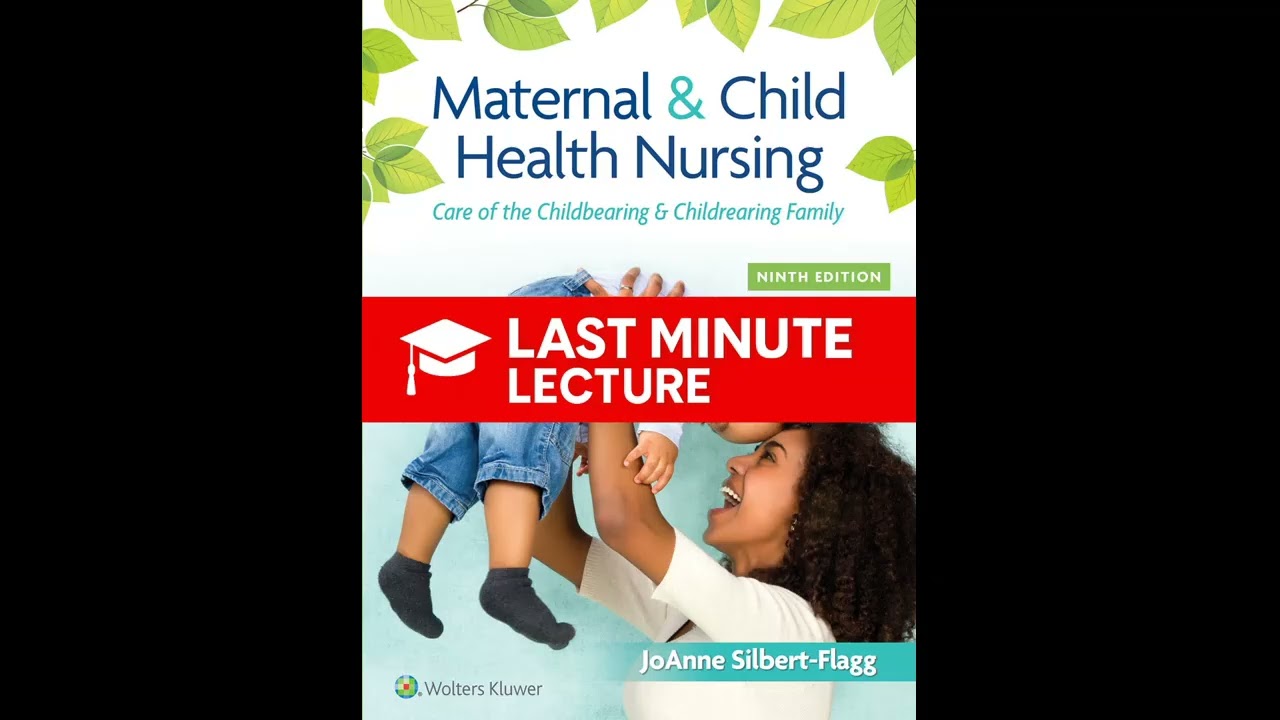
High-Risk Newborn Nursing Care | Chapter 26 – Maternal & Child Health Nursing (9th)
Автор: Last Minute Lecture
Загружено: 2025-12-16
Просмотров: 6
Описание:
This chapter provides essential knowledge for nursing care of high-risk newborns, defined as infants who are ill or born with significant variations in gestational age (GA) or weight, emphasizing strategies to safeguard their immediate and future health. Infants are classified by their size relative to gestational age, including Small for Gestational Age (SGA), Large for Gestational Age (LGA or macrosomia), and Appropriate for Gestational Age (AGA), as well as by timing of birth: preterm (early or late), term, and postterm. Priority care focuses on establishing effective respiration and circulation, fluid and electrolyte balance, thermoregulation, nutrition, waste elimination, infection prevention, parent-infant bonding, and appropriate developmental care. Since most neonatal deaths occur shortly after birth due to respiratory failure, rapid neonatal resuscitation is paramount, starting with establishing an airway, ensuring lung expansion, and initiating ventilation, sometimes advancing to chest compressions if the heart rate remains below 60 beats per minute despite adequate positive-pressure ventilation. Preterm infants, who often lack sufficient lung surfactant until approximately 34 weeks, are highly susceptible to Respiratory Distress Syndrome (RDS), which leads to alveolar collapse and severe acidosis. Treatment involves synthetic surfactant replacement and respiratory support methods like Continuous Positive Airway Pressure (CPAP) or positive end-expiratory pressure (PEEP). Preterm babies are also vulnerable to conditions such as Acute Bilirubin Encephalopathy (ABE) from hyperbilirubinemia, Periventricular Leukomalacia (PVL) or Intraventricular Hemorrhage (IVH), and Anemia of Prematurity. SGA newborns, often resulting from Intrauterine Growth Restriction (IUGR), face high risks of birth asphyxia, polycythemia (increased blood viscosity), and severe hypoglycemia due to low glucose stores. LGA infants, often associated with maternal diabetes, are vulnerable to birth trauma like shoulder dystocia and rebound hypoglycemia. Newborn complications also include transient tachypnea of the newborn (TTN) caused by retained lung fluid, Meconium Aspiration Syndrome (MAS) following fetal hypoxia, and apnea (a pause in respirations longer than 20 seconds), which can be related to SIDS risk. Hyperbilirubinemia, caused by red blood cell destruction (hemolytic disease), frequently requires phototherapy or, rarely, an exchange transfusion to prevent brain damage. Developmental care emphasizes minimizing adverse stimuli (such as bright lights and loud noises), maximizing rest, using nesting techniques, and incorporating parents through skin-to-skin contact to promote bonding. The chapter concludes by addressing risks posed by maternal infections (GBS, HSV-2) and maternal conditions like diabetes and substance use, which can lead to complications such as Neonatal Abstinence Syndrome (NAS).
📘 Read full blog summaries for every chapter:
https://lastminutelecture.com
📘 Have a book recommendation? Submit your suggestion here:
https://forms.gle/y7vQQ6WHoNgKeJmh8
Thank you for being a part of our little Last Minute Lecture family!
⚠️ Disclaimer: These summaries are created for educational and entertainment purposes only. They provide transformative commentary and paraphrased overviews to help students understand key ideas from the referenced textbooks. Last Minute Lecture is not affiliated with, sponsored by, or endorsed by any textbook publisher or author. All textbook titles, names, and cover images—when shown—are used under nominative fair use solely for identification of the work being discussed. Some portions of the writing and narration are generated with AI-assisted tools to enhance accessibility and consistency. While every effort has been made to ensure accuracy, these materials are intended to supplement—not replace—official course readings, lectures, or professional study resources. Always refer to the original textbook and instructor guidance for complete and authoritative information.
Повторяем попытку...
Доступные форматы для скачивания:
Скачать видео
-
Информация по загрузке: