Brock's Operation 3D Medical Animation
Автор: Dr. Vishal V Bhende
Загружено: 2023-03-18
Просмотров: 9022
Описание:
00:00-1:13 Intro
1:14-5:12 - History
5:13- 8:15 - Brock's Operation details
8:16- 12:00 - Animated Operation Procedure
12:00- End - Other references Pulmonary Stenosis may exist as a single defect or may be present
in combination with other defects such as overriding of the aorta,
interarticular or interventricular communications, Patent ductus
arteriosus, and the like.
The stenosis may be valvular or infundibular, or both. If the
stenosis is purely valvular, the outflow tract of the right ventricle is
normal; the pulmonary artery may be hypoplastic, normal or
dilated.
If there is infundibular stenosis, the outflow tract of the right
ventricle is interrupted by a ridge of tissue, in effect a defective
septum which encroaches upon its lumen and contributes to the
formation of a fifth cardiac chamber.
This chamber may be so small as to be inappreciable when the
ridge of tissue is immediately sub valvular, or it may be quite large
when the septum is lower in the ventricle. As in the case of valvular
stenosis, the pulmonary artery may be hypoplastic, normal or
dilated. Whatever the type of defect, the ultimate effect is the
same; blood cannot pass with ease into the pulmonary circuit.
One of the biggest problems remaining in the surgical treatment of
Fallot's tetralogy concerns the management of right ventricular out
flow obstruction in patients with severe hypoplasia of the
pulmonary artery and annulus.
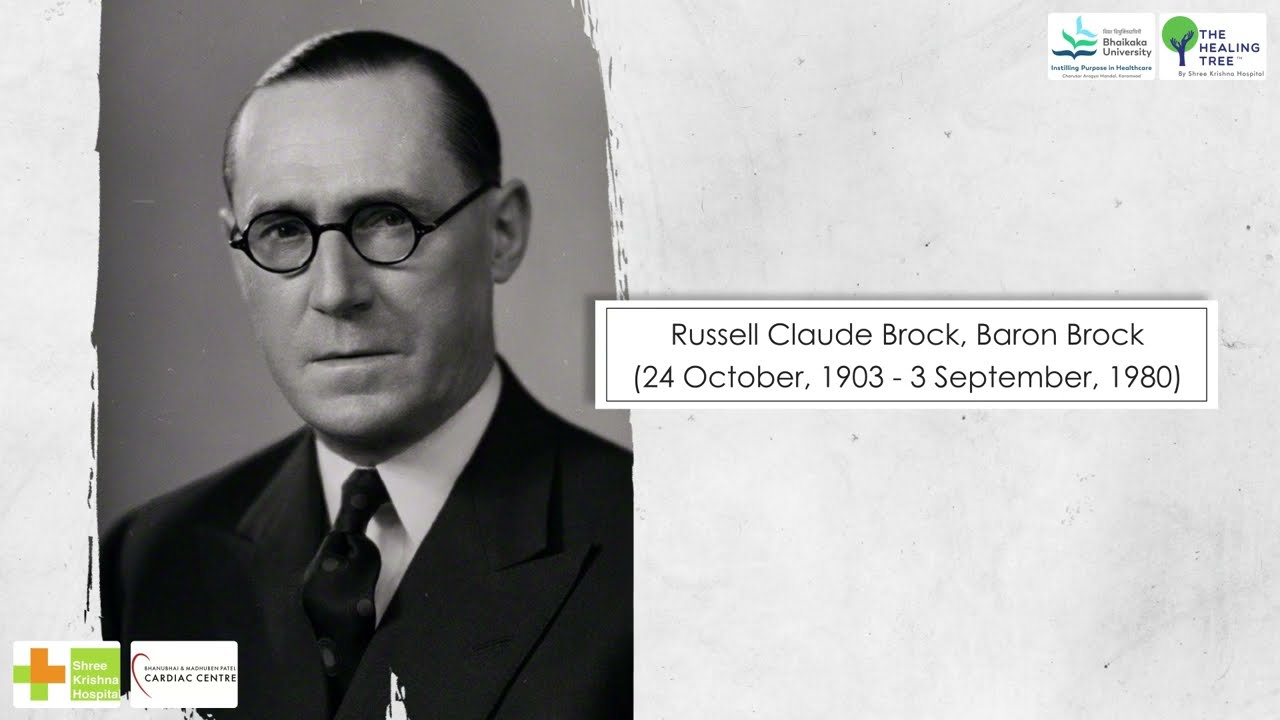
In 1948, Brock, using a cardio scope of his own design, attempted to
visualize the pulmonary valve and relieve pulmonary stenosis by
way of the left pulmonary artery.
After three unsuccessful attempts he abandoned the technique.
Brock concluded that visualization of the pulmonary valve from the
pulmonary artery before surgically reliving the stenosis carried too
high a risk.
He then turned to Doyen's trans-ventricular approach, using a
specially designed spade-shaped knife. Subsequently, an
expandable metal dilator was added to split the valve leaflets
further after passage of the valvulotome.
Using this technique of pulmonary valvulotomy, he and others
achieved good results with low risk to the patient.
SURGICAL STEPS OF BROCK'S OPERATION
1. Median Sternotomy performed to expose the heart
2. Thymus dissection done.
3. Pericardium opened in the midline.
4. Systemic Heparinization done.
5. Purse-string sutures are placed in the ascending aorta for
arterial cannulation and either bicaval cannulation or right
atrial single cannula.
6. Aorta is cross-clamped, and cold cardioplegic solution is
infused (crystalloid or blood cardioplegia).
7. Incise the infundibulum by doing infundibulectomy.
8. Pulmonary annulus and valve should be preserved
9. Right Ventricular Outflow Tract (RVOT) should be sized just to
the required size of the Hegar dilator to prevent pulmonary
flooding and right ventricle distension due to excessive
pulmonary regurgitation
10. RVOT patch should be taut and try to use PTFE
(Polytetrafluoroethylene) patch or bovine pericardial patch so
that native pericardium is retained for subsequent corrective
surgery.
11. A non-distensible RVOT patch also helps that in ensuring the
energy of RV contraction is transmitted to the distal
pulmonary vascular bed rather than expended in distending a
redundant RVOT patch.
12. Right ventricle (RV) pressure should be just sub-systemic and a
pulsatile pulmonary artery flow should exist.
13. When performing CPB with a beating heart to improve safety,
the root can be kept on continuous suction with head down to
prevent air embolism.
14. Cardioplegia can be used at the discretion of the operating
surgeon.
Повторяем попытку...
Доступные форматы для скачивания:
Скачать видео
-
Информация по загрузке:


