Pulp Fiction: A Coded Historical Allegory. Part Two: America's Dawn
Автор: Cinema Sensationalist
Загружено: 2026-01-10
Просмотров: 93
Описание:
Video Essay exploring the coded historical allegory in the Tarantino film Pulp Fiction
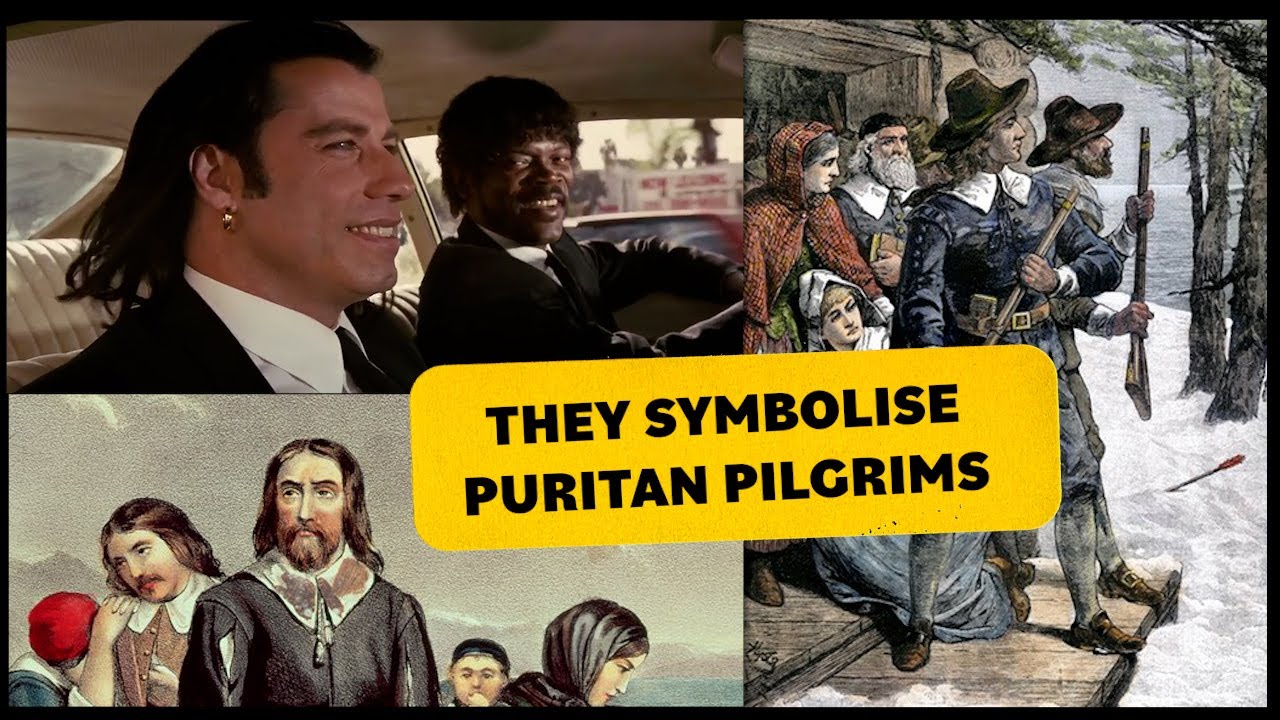
When viewed through the same postmodern lens as the opening scene, the first scenes that include Vincent and Jules tell the story of Puritan Englishmen arriving in the New World by way of Holland. The car that they are travelling in is essentially The Mayflower; the conversation is saturated with the same legalistic mindset that characterised the Mayflower passengers and the colonies that they established. The conversation in the hallway about Mia Wallace resembles a Hawthornean depiction of an adultery trial that might take place in 17th century Massachusetts.
Like in the opening scene, the postmodern elements are telling us something substantive beyond the surface level story, and there is a hermeneutic tension resulting from the deliberately built avoidance of interpretation.
Themes of historical Christian military expansion and fanaticism are coded in the dialogue and mis-en-scene of the car journey and arrival at the location.
The Puritans, Spanish Inquisition, and Early Christendom are connected but not historically periodised. This reflects a postmodern lack of distantiation.
In Pulp Fiction, this scene takes place in two parts. I will combine them for analysis.
Additionally, I will continue to present my analysis of the scene as a counterargument to Jameson’s critique of postmodern cultural production.
Please watch part one of this series to spare me repeating the argument that he makes, or enjoy the video without this added context. It’s not essential.
-Vince is presented as a Puritan in the car: he has shoulder length hair, he is wearing black with large white collars, and he has arrived from Europe.
Like The Puritans, he has been to Holland. The Pilgrims left for the New World via Holland, and it was an earlier refuge for them to avoid the persecution of English kings in a more liberal setting.
The presence of royalty and the Puritanical non-recognition of their sovereignty is connoted: in European McDonald’s there is ‘Le Royale’, this means the royal. Also, he does not go to Burger King – Puritans did not acknowledge the monarchy’s authority.
The conversation about burgers is signalling to us a rejection of, and desire to avoid, royal authority that was typical of The Pilgrim mentality.
#movievideoessay#tarantinofilm #pulpfictionanalysis #videoessay #filmstudies #sceneanalysis #filmtheory #filmreview #filmanalysis #pulpfiction #tarantino #tarantinofilms #quentintarantino #cinemaanalysis #cinema #vincevega #pulpfictionscene #deepdive #filmvideoessay #filmcoding #deepdivefilmanalysis #pulpfictionfilmstudies #deepdivemediatheory #filmanalysis #historyfilm #codedhistoricalnarrative #allegoryinfilm #historicalallegoryfilm #filmallegory #filmsymbolism #symbolisminfilm #nathanielhawthorne #washingtonirving #puritannewengland #nativeamerican #scenebreakdown #americanhistory #historyinfilm #tarantinofilmanalysis #tarantinoexplained #pulpfictionmeaning #filmhiddenmeaning
Upon arrival in The New World, The Pilgrims described encountering “a hideous and desolate wilderness, full of wild beasts and wild men.”
The song playing therefore connotes how the Pilgrims, and other early colonists, recorded their encounter with the environment of The New World and their first contact with its indigenous populations.
“There it’s a little different”
Vincent describes the minute differences between Europe and America.
This part of the conversation reinforces the widely known concept that the societies of the Americas developed largely out of the European cultures that were transplanted in The New World. The moral, legal, aesthetic, linguistic, and cultural tendencies of America have a deeply rooted connection to Europe. The reason that going to Europe is less bewildering for an American than going to China, for example, is because of the historical migration that is being represented symbolically through connotation in this scene. Nevertheless, America maintains its own character because of its unique history, its isolation across the Atlantic, and also the way in which different Old World cultures cross-pollinated in the New World – hence the little differences.
-Legalistic Puritanism. Vincent’s dialogue reveals an obsession with the minute details of what is and isn’t allowed, when discussing both hash in Amsterdam and the behaviour of Mia Wallace. Vincent approaches the Mia Wallace disagreement with a rhetorical framework that is typical of a lawyer. The discussion is quite literally about whether those who do an activity that is borderline adulterous deserve to be killed or not – it is typical of a religious court that would be held in Plymouth Colony, and satirised in Hawthorne’s fiction.
Повторяем попытку...
Доступные форматы для скачивания:
Скачать видео
-
Информация по загрузке: