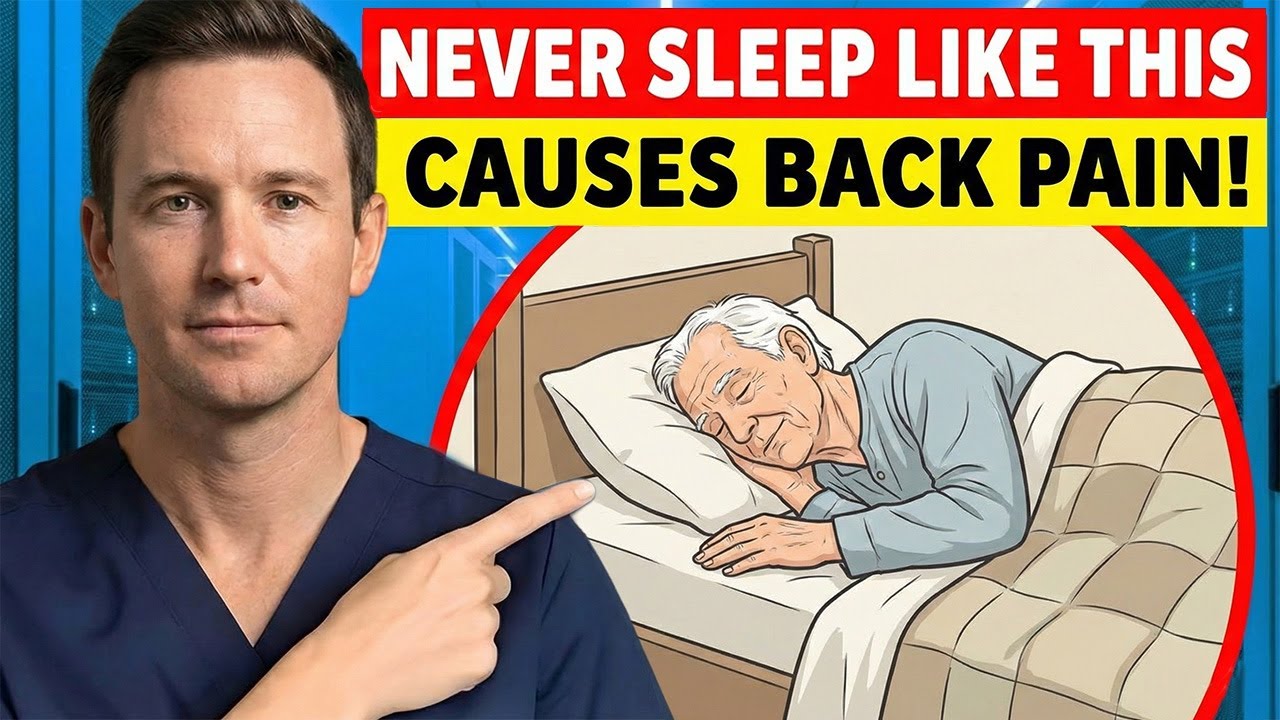
Over 60? Stop Sleeping Like This, It’s Causing Back Pain (Here's How to Fix IT)
Автор: Ben Harris Seniors Care
Загружено: 2026-01-25
Просмотров: 12
Описание:
You've been waking up with back pain for years and blaming it on your mattress, arthritis, or "just getting older"—but the real culprit is likely your sleeping position and pillow placement. Research from orthopedic specialists and studies on spinal alignment reveal that 80% of seniors are sleeping in positions that twist the spine, compress vertebrae, and strain muscles all night long, leading to chronic back pain, stiffness, and reduced mobility after 60.
In this video, we expose the three worst sleeping positions for older adults (and how to fix them), why stomach sleeping is destroying your spine and neck, how sleeping on your back without proper support creates a painful arch in your lower back, and why side sleeping—when done wrong—causes hip and shoulder pain plus spinal misalignment. You'll discover the exact pillow placement techniques, sleep posture adjustments, and mattress firmness levels that orthopedic doctors recommend for seniors to wake up pain-free and restore natural spinal curves.
Worst Position #1: Stomach Sleeping (The Spine Twister)
Sleeping on your stomach forces your neck to rotate 90 degrees to one side for hours, straining cervical vertebrae and compressing nerve roots. It also flattens the natural curve of your lower back, putting excessive pressure on lumbar discs and facet joints. After 60, when spinal flexibility decreases and arthritis sets in, stomach sleeping accelerates degeneration and causes morning stiffness, neck pain, and numbness in arms. If you must sleep on your stomach, place a thin pillow under your pelvis to reduce lower back arch and use a very flat pillow (or no pillow) for your head to minimize neck rotation.
Worst Position #2: Flat Back Sleeping Without Support
Lying flat on your back without proper lumbar support creates a gap between your lower back and the mattress, causing your spine to arch unnaturally and straining muscles that work all night to stabilize your pelvis. The fix: Place a pillow or rolled towel under your knees to reduce lower back strain by allowing your pelvis to tilt slightly and flattening the lumbar curve. Use a cervical pillow or rolled towel under your neck to maintain the natural curve of your neck while keeping your head neutral.
Worst Position #3: Side Sleeping With Poor Alignment
Side sleeping is the healthiest position for seniors—IF done correctly. Most people let their top knee fall forward, twisting the pelvis and lower spine, or use a pillow that's too high or too low, causing neck and shoulder misalignment. The fix: Place a firm pillow between your knees to keep hips, pelvis, and spine aligned. Use a pillow thick enough to fill the gap between your ear and shoulder—your head should be level with your spine, not tilted up or down. Pull your knees slightly toward your chest (fetal position) to open up spinal facet joints and reduce nerve compression.
Mattress Firmness Matters
Seniors need a medium-firm mattress that supports natural spinal curves without being so soft that the body sinks in or so firm that it creates pressure points. Too-soft mattresses allow the spine to sag; too-firm mattresses don't conform to body contours. Memory foam or hybrid mattresses often work best for seniors with back pain, providing contouring support and pressure relief.
Additional Sleep Position Tips
Keep a small pillow or cushion behind your back when side sleeping to prevent rolling onto your back during the night. Replace pillows every 1-2 years—flattened, unsupportive pillows cause neck and shoulder pain. Elevate your legs slightly if you have lower back pain or sciatica—this reduces pressure on nerve roots. Avoid sleeping with your arm under your pillow or head, which compresses shoulder nerves and causes numbness.
When to See a Doctor
If back pain persists despite proper sleep positioning, worsens over time, radiates down your leg, causes numbness or weakness, or is accompanied by unexplained weight loss or fever, consult your healthcare provider immediately. These could indicate serious conditions like spinal stenosis, herniated disc, compression fractures, or infection requiring medical treatment.
Medical Disclaimer: The content in this video is for educational purposes only and is not intended to be a substitute for professional medical advice, diagnosis, or treatment. If you are over 60 with chronic back pain, osteoporosis, spinal stenosis, herniated discs, or other medical conditions, consult your healthcare provider before changing sleep positions or using pillows/supports, as certain positions may worsen specific conditions. Never ignore severe or worsening back pain, numbness, weakness, or loss of bladder/bowel control—these require immediate medical evaluation.
Повторяем попытку...
Доступные форматы для скачивания:
Скачать видео
-
Информация по загрузке: