Cupressaceae - UK wild plants - Five-minute families
Автор: Five-minute families
Загружено: 2025-04-06
Просмотров: 385
Описание:
Five-minute families is on Patreon! If you're interested in supporting what I do, head over to / fiveminutefamilies
In this series, I aim to give you a quick introduction to some of the common plant families found in the UK. Learning to identify plant families is a great help in identifying individual plant species you come across. Plants are classified into families based on characteristics that they share; so, the way to identify a plant’s family is to know these characteristic features.
Today we’re going to look at our first family of non-flowering plants, a family of conifers. There’s not anywhere near as many families of coniferous plants as there are flowering plants. The UK only has three native conifer species, each in their own family: Pinus sylvestris (the Scots pine) in the Pinaceae, Taxus baccata, (the yew) in the Taxaceae and Juniperus communis (the juniper) in the Cupressaceae. It is the Cupressaceae, or cypress family, we will look at here. The Cupressaceae are all woody perennial trees and shrubs. There are over 130 species, which are found across the world on every continent except Antarctica, in all sorts of habitats.
The family is important economically, with some being used as timber trees and many others being grown ornamentally as landscape and garden trees. Ornamentals include Chamaecyparis lawsoniana (the Lawson cypress), Thuja occidentalis (the white cedar) and × Cuprocyparis leylandii (the Leyland cypress). Cupressaceae wood is used to make many artefacts and products, and certain species are of great cultural importance in different parts of the world, like Thuja plicata (the Western red cedar) and Cryptomeria japonica (the Japanese red cedar).
As conifers, the Cupressaceae don’t produce flowers, but they do produce cones. These cones are either male or female, and the plants are either monoecious – meaning they have both types of cone on the same plant – or are dioecious – meaning the female cones and male cones are found on separate plants. The male cones are small, sometimes very, and produce large amounts of pollen that they release into the wind for wind pollination of the female cones.
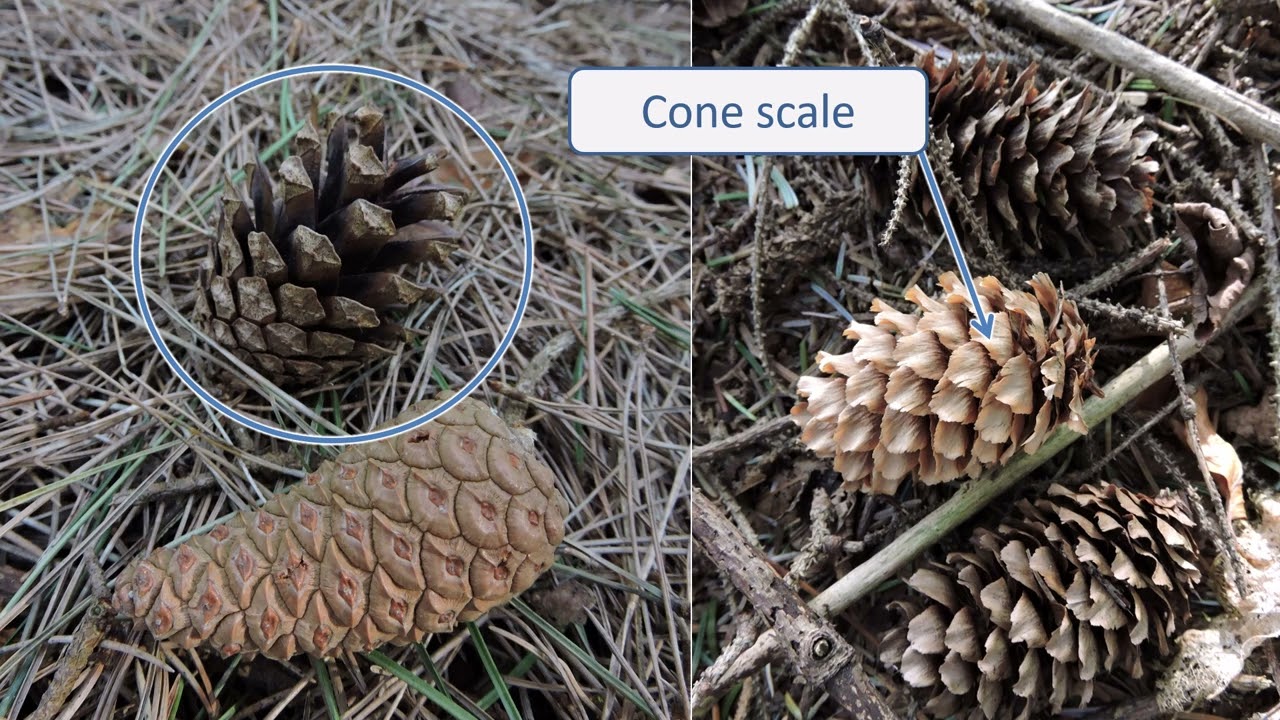
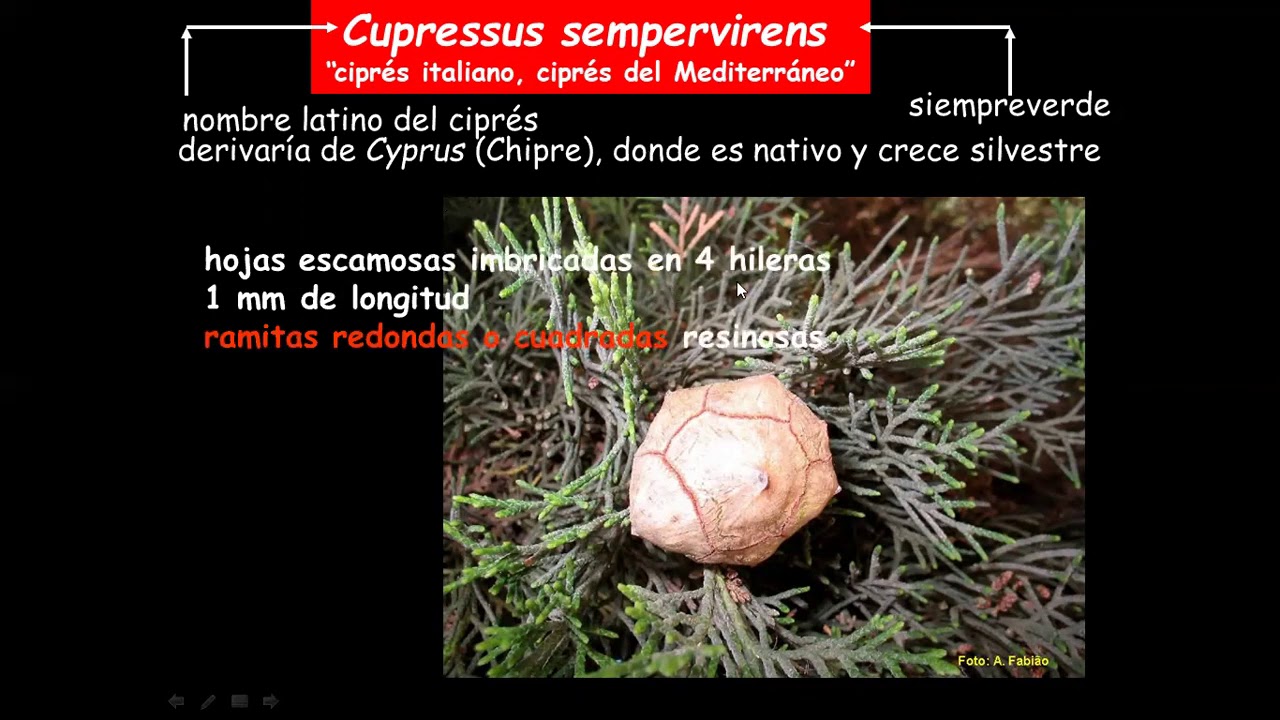
The female cones are larger and mostly consist of woody scales that fit against one another or overlap. The scales are generally arranged in a spiral or opposite one another. Each scale has a bract that is fused to it. The seeds are found on these scales and are shed once mature, when the cone scales open. In juniper, the cone scales are fleshy and look like a berry; the seeds are not shed from these but dispersed when animals eat the ripe cones.
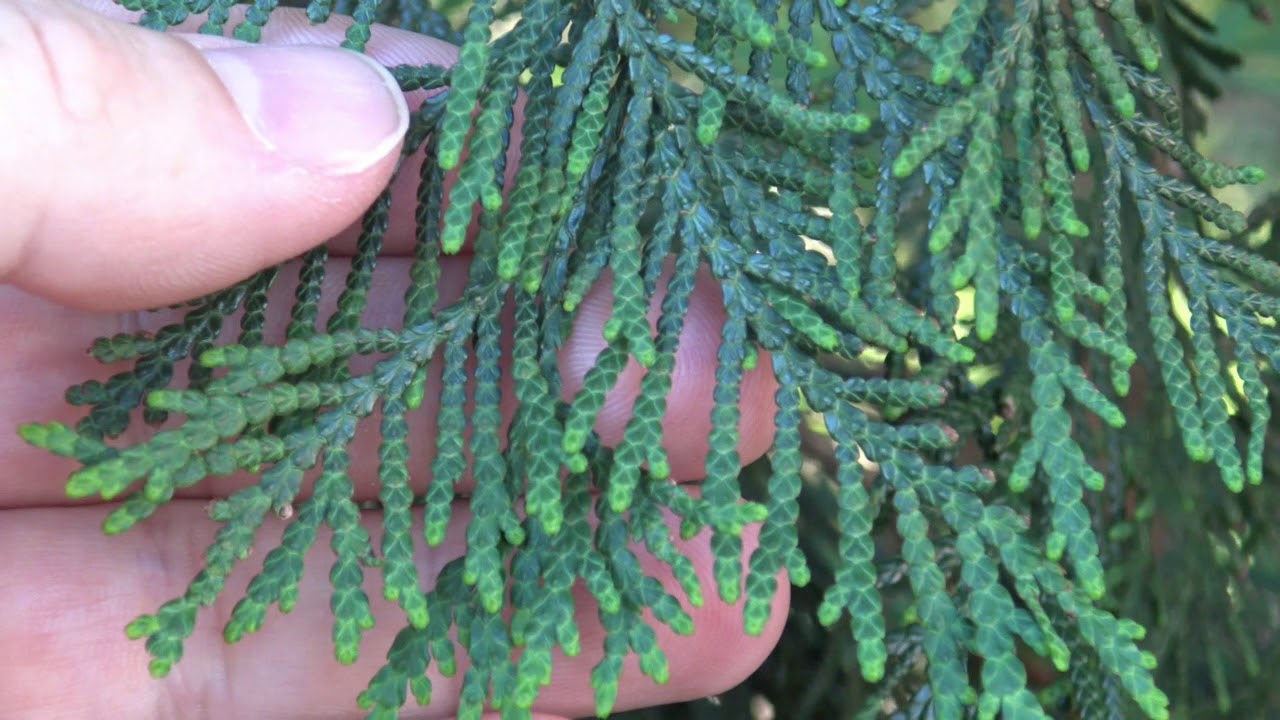
Cupressaceae leaves are entire and contain resin which makes them aromatic: give them a rub and have a sniff. The leaves of mature plants are generally very small, with a scale-like appearance, and grow pressed against the shoots. They are arranged oppositely on the twigs, with the pairs at 90 degrees from each other, or in whorls. You can see these sort of leaves in Chamaecyparis and Thuja. In some species the leaves are more needle-like, like in Taxodium or Metasequoia. In addition, many species have different leaves when they are young. This juvenile foliage is needle-like and can be seen in Juniperus. Cupressaceae are mostly evergreen, though a few species do shed their leaves for part of the year.
The bark of Cupressaceae is often fibrous and also contains resin.
So, if the tree or shrub you’re looking at produces cones of two different types, and the larger female cones either have woody scales or are fleshy, the leaves are opposite or in whorls and scale-like and growing pressed against the stems, or needle-like, and the leaves and bark are aromatic, then you may be looking at a member of the Cupressaceae.
See if you can find these three species when you’re out and about;
• Juniperus communis (common juniper), a shrub with needle-like leaves that are pale underneath and fleshy cones
• Thuja plicata (Western red cedar), an ornamental tree, with flattened branches and scale leaves which smell like pineapple when rubbed
• Sequoiadendron giganteum (giant redwood), a very tall North American tree with distinctive soft, fibrous, reddish bark and tiny, scale-like leaves
Повторяем попытку...

Доступные форматы для скачивания:
Скачать видео
-
Информация по загрузке: