Why Deep Learning Works Even When It shouldn't
Автор: Puru Kathuria
Загружено: 2026-02-10
Просмотров: 35
Описание:
Deep learning systems are full of flaws. They hallucinate, they lack true reasoning, they do not understand physics or causality, and they are not truth-seeking. And yet, they work remarkably well across vision, language, speech, and multimodal tasks. So the real question is: why does deep learning work at all?
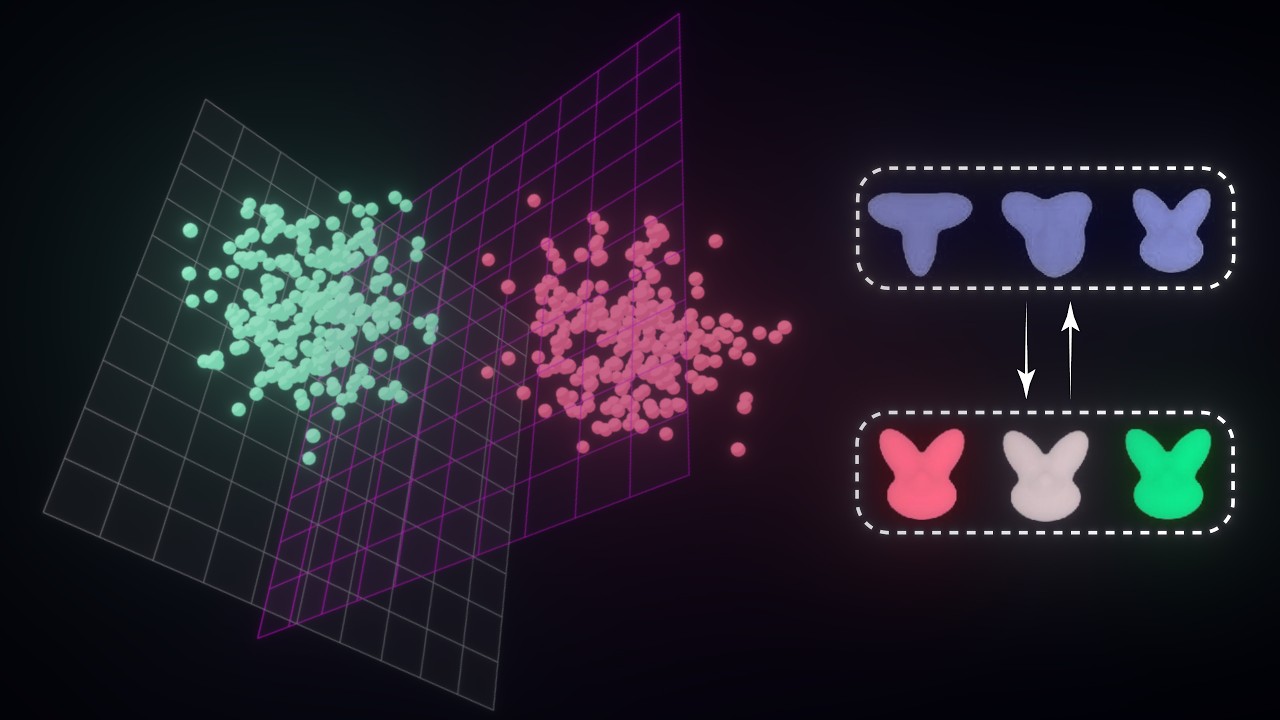
In this video, we break down what deep learning actually is from first principles. Neural networks, whether transformers, CNNs, or RNNs, are fundamentally loss-minimizing systems. They optimize objective functions like cross-entropy or mean squared error to learn high-dimensional representations of data. They are not symbolic reasoners or physics-based models. They are probabilistic function approximators trained to match data distributions.
We explore how large-scale data, massive parameter counts, and enormous compute budgets interact through scaling laws to make these systems effective. The key insight is that the real world, and the internet that represents it, contains strong repeating structures and relatively low entropy. Deep learning works because it exploits these regularities at scale, not because it understands the world in a human or causal sense.
The video explains why representation learning, memorization at scale, and gradient-based optimization are sufficient to produce linguistic fluency and cross-domain generalization, even in the absence of true reasoning or physical understanding. We also discuss why hallucinations and lack of truth-seeking are not bugs, but expected outcomes of probabilistic optimization.
If you want a clear mental model of why brute-force deep learning succeeds, why scaling laws matter more than intelligence, and why these systems work despite their limitations, this video is for you.
Повторяем попытку...
Доступные форматы для скачивания:
Скачать видео
-
Информация по загрузке: