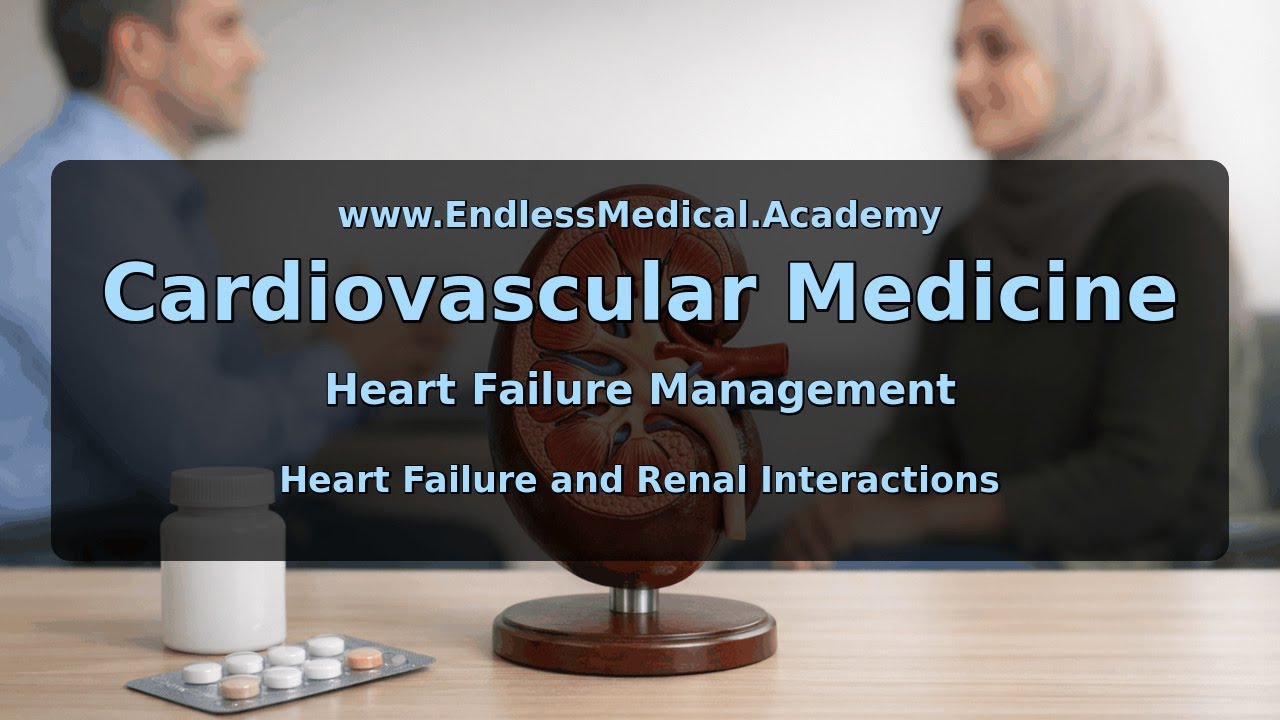
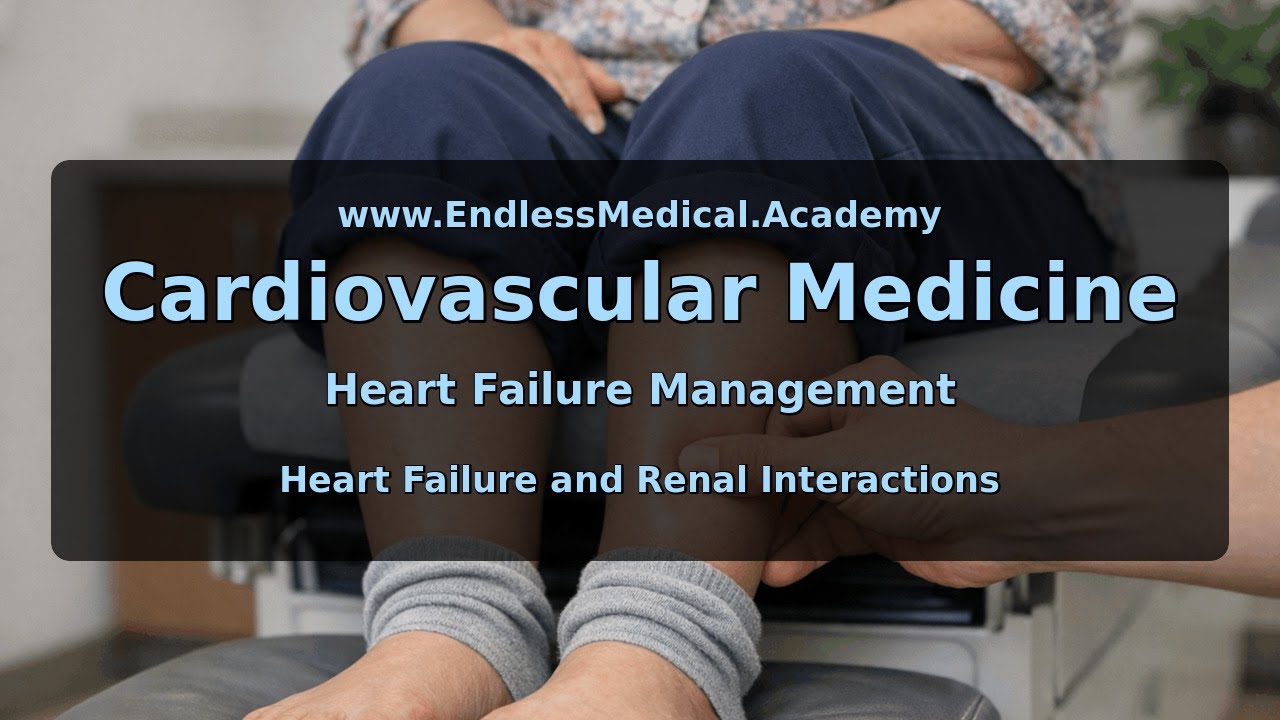
Heart Failure and Renal Interactions, Heart Failure Management, Cardiovascular Medicine - Full Vigne
Автор: EndlessMedical.Academy
Загружено: 2026-02-20
Просмотров: 7
Описание:
A 28-year-old woman with atrial fibrillation and chronic fatigue syndrome presents for heart failure management, reporting persistent exercise intolerance and stable dyspnea. Exam reveals elevated JVP, mild crackles, and ankle edema. With a complex past exposure history and multiple negative tests, her providers consider medication changes for improved outcomes. What underlying mechanisms in her clinical profile might explain the cardiorenal benefits of a new therapy proposed in this case?
VIDEO INFO
Category: Heart Failure and Renal Interactions, Heart Failure Management, Cardiovascular Medicine
Difficulty: Moderate - Intermediate level - Requires solid foundational knowledge
Question Type: Mechanism
Case Type: Routine Visit - Standard clinical encounter in outpatient setting
Explore more ways to learn on this and other topics by going to https://endlessmedical.academy/auth?h...
QUESTION
A 28-year-old woman with a history of atrial fibrillation and chronic fatigue syndrome presents for a routine heart failure visit. She smokes 10 cigarettes daily and worked in a shipyard with prior asbestos exposure. She reports stable dyspnea but persistent exercise intolerance. She takes sacubitril-valsartan, carvedilol, and furosemide; she has no known drug allergies....
OPTIONS
A. Increase distal tubular NaCl delivery to the macula densa, restoring tubuloglomerular feedback and lowering intraglomerular pressure while producing modest natriuresis.
B. Directly inhibit renin release at the juxtaglomerular apparatus, abolishing the renin-angiotensin-aldosterone cascade and producing sustained natriuresis without hemodynamic change.
C. Cause selective efferent arteriolar constriction via angiotensin II potentiation to raise filtration fraction, increasing glomerular capillary pressure and filtration rate.
D. Stimulate atrial natriuretic peptide secretion to produce potent diuresis without altering glomerular hemodynamics or tubuloglomerular signaling.
CORRECT ANSWER
A. Increase distal tubular NaCl delivery to the macula densa, restoring tubuloglomerular feedback and lowering intraglomerular pressure while producing modest natriuresis.
EXPLANATION
SGLT2 inhibitors increase proximal tubular sodium and glucose excretion, delivering more NaCl to the macula densa. This restores tubuloglomerular feedback, leading to afferent arteriolar vasoconstriction and lower intraglomerular pressure, which protects the kidney and contributes to cardiorenal benefit. Modest natriuresis and hemodynamic effects complement this primary intrarenal mechanism.
Directly inhibit renin release... is not how SGLT2 inhibitors work; RAAS effects are secondary. Cause selective efferent arteriolar constriction via angiotensin II potentiation... is the opposite of the observed reduction in intraglomerular pressure. Stimulate atrial natriuretic peptide secretion... is not the primary mechanism and would not explain the early hemodynamic GFR dip and long-term renoprotection.
In summary, the correct answer is restoration of tubuloglomerular feedback via increased distal NaCl delivery, reducing intraglomerular pressure with modest natriuresis-consistent with contemporary CKD guidance and mechanistic reviews.
Primary teaching point:
SGLT2 inhibitors lower intraglomerular pressure by enhancing macula densa signaling (tubuloglomerular feedback).
Secondary teaching point:
An early, small GFR dip reflects hemodynamic resetting and predicts long-term renal benefit.
Further reading:
Links to sources are provided for optional further reading only. The questions and explanations are independently authored and do not reproduce or adapt any specific third-party text or content.
---------------------------------------------------
Our cases and questions come from the https://EndlessMedical.Academy quiz engine - multi-model platform. Each question and explanation is forged by consensus between multiple top AI models (i.e. Open AI GPT, Claude, Grok, etc.), with automated web searches for the latest research and verified references. Calculations (e.g. eGFR, dosages) are checked via code execution to eliminate errors, and all references are reviewed by several AIs to minimize hallucinations.
Important note: This material is entirely AI-generated and has not been verified by human experts; despite stringent consensus checks, perfect accuracy cannot be guaranteed. Exercise caution - always corroborate the content with trusted references or qualified professionals, and never apply information from this content to patient care or clinical decisions without independent verification.
Clinicians already rely on AI and online tools - myself included - so treat this content as an additional focused aid, not a replacement for proper medical education. Visit https://endlessmedical.academy for more AI-supported resources and cases.
This material can not be treated as medical advice. May contain errors.
------------------------------------------------...
Повторяем попытку...
Доступные форматы для скачивания:
Скачать видео
-
Информация по загрузке:







![Почему взрываются батарейки и аккумуляторы? [Veritasium]](https://imager.clipsaver.ru/a3-3R9zwyGY/max.jpg)
