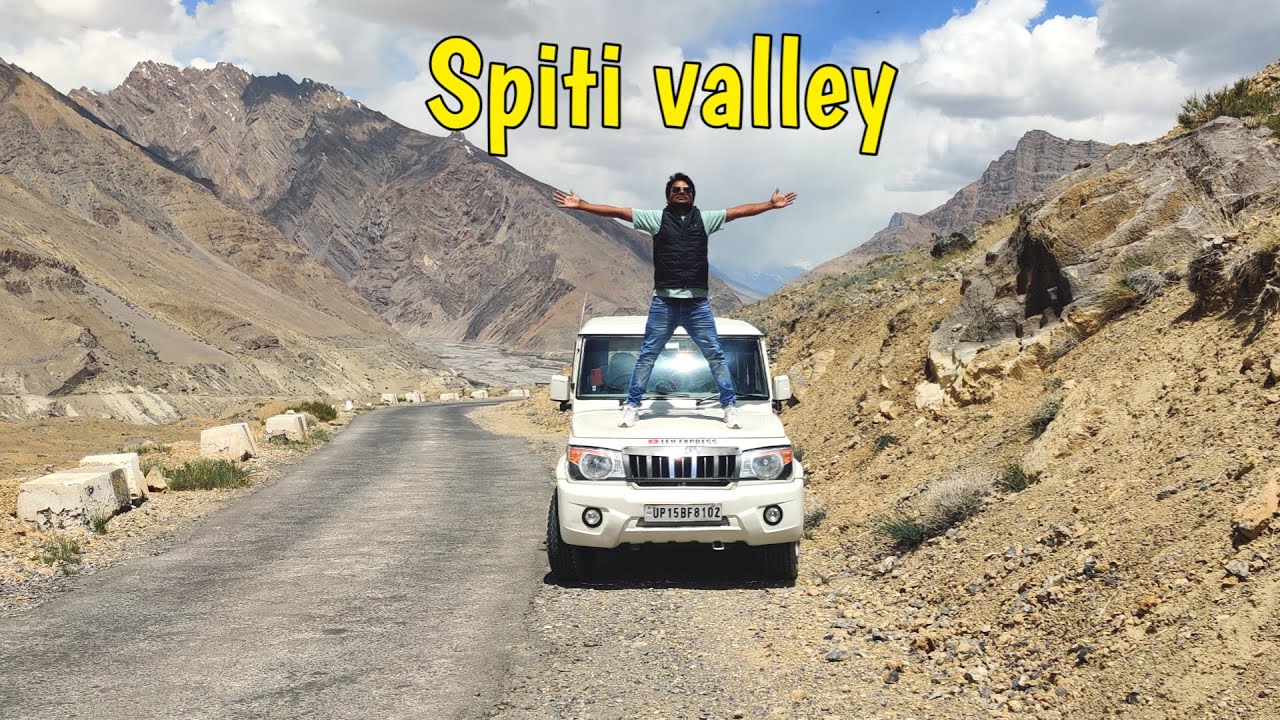
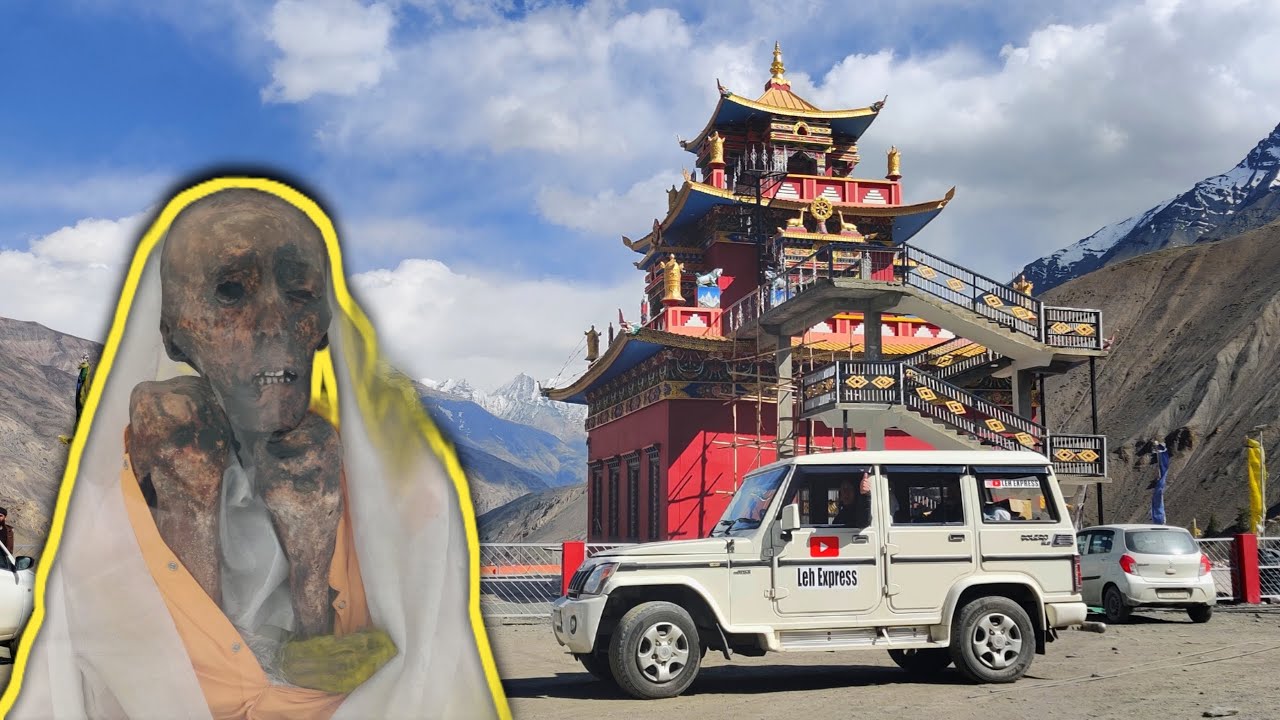
way back to Tabo village from world's Highest chicham bridge by road Mahindra bolero
Автор: Leh Express
Загружено: 2026-02-21
Просмотров: 92
Описание:
chicham bridge se tabo ka safar wo bhi apni Mahindra bolero me
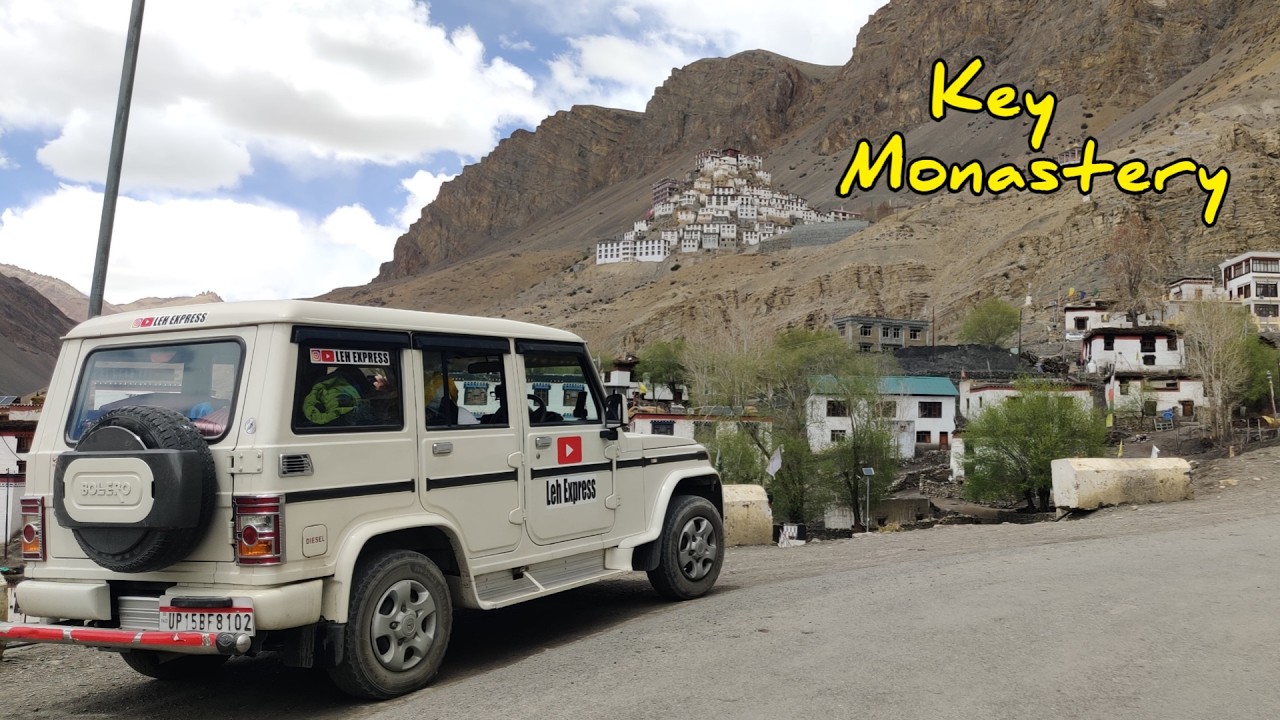
chicham bridge se key Monastery aur fir tabo village wo bhi mahindra bolero se
way back to Tabo village from world's Highest chicham bridge by road Mahindra bolero
Spiti Valley, the "Middle Land" in Himachal Pradesh, is a high-altitude cold desert in the Himalayas, renowned for its stark, breathtaking landscapes, ancient Buddhist monasteries, and rugged adventure opportunities. Located at ~13,000 ft, it is best visited from May to October, offering a mix of Tibetan culture,,, remote villages (Kaza, Tabo, Komic), and scenic spots like Chandratal Lake
Chicham Bridge
Kibber, Himachal Pradesh, India
492 feet high / 150 meters high
374 foot span / 114 meter span
2017
Completed in 2017, the Chicham Bridge is India's highest road span crossing approximately 150 meters above a tributary of the River Spiti in the Himachal Pradesh region. Chicham Bridge is also touted as the "world's highest bridge" which is a partial truth as the deck is in fact located 13,596 feet / 4,145 meters above sea level even if the deck height is not the highest.
Prior to the completion of the Chicham Bridge, it was a 2 to 3 hour journey to reach Kibber. At the crossing there was a ropeway where brave locals would winch themselves across the gorge. The ropeway assisted in the construction of the road bridge.
The region around Kibber and the great Spiti River valley is popular among Indian tourists who are willing to venture off the beaten path and do not mind spending several days on bumpy dirt roads to see this unusually high one-lane road bridge. The region has several hotels, monastery's, cottages and camps that offer overnight accommodations.
Prior to Chicham Bridge, the highest road bridge in India was the 100 meter high Singshore Bridge in the West Sikkim region of India.
Tabo is a small town in the Lahaul and Spiti district on the banks of the Spiti River in Himachal Pradesh, India. The town lies on the road between Rekong Peo and Kaza (alternative spelling: Kaja), the sub-divisional headquarters of Spiti. The town surrounds a Buddhist monastery which, according to legend, is said to be over a thousand years old. The Dalai Lama has expressed his desire to retire to Tabo, since he maintains that the Tabo Monastery is one of the holiest. In 1996, the Dalai Lama conducted the Kalachakra initiation ceremony in Tabo, which coincided with the millennium anniversary celebrations of the Tabo monastery. The ceremony was attended by thousands of Buddhists from across the world. Tabo Monastery's spiritual head is Tsenshap Serkong Rinpoche.
Kye Gompa (Tibetan: དཀྱིལ་དགོན་, Wylie: dkyil dgon;[1] also spelled Kyi, Ki, Key, or Kee; pronounced like the English word key) is a Tibetan Buddhist monastery of the Gelugpa sect located on top of a hill at an altitude of 4,166 metres (13,668 ft) above sea level, close to the Spiti River, in the Spiti Valley of Himachal Pradesh, Lahaul and Spiti district, India.
It is the largest monastery of the Spiti Valley and a religious training centre for lamas. It reportedly had 100 monks in 1855.
The monastery is dedicated to Lochen Tulku, the 24th reincarnation of the great translator Lotsawa Rinchen Zangpo.
It is about 12 km (7.5 mi) north of Kaza and 210 km (130 mi) from Manali by road.
History
Kye Gompa is said to have been founded by Dromtön (Brom-ston, 1008–1064 CE), a pupil of the famous teacher, Atisha, in the 11th century. This may, however, refer to a now destroyed Kadampa monastery at the nearby village of Rangrik, which was probably destroyed in the 14th century when the Sakya sect rose to power with Mongol assistance.
In the mid-17th century, during the reign of the Fifth Dalai Lama, Kye was extensively plundered and damaged by the Mongols, and became a Gelugpa establishment. Around 1821, it was sacked again during the wars between Ladakh and Kulu. In 1841, during the Dogra–Tibetan war, it was severely damaged by the Dogra army under Ghulam Khan and Rahim Khan. Later that same year, it was also attacked by Sikhs.[10] In the 1840s,
The Mahindra Bolero is a SUV produced by Mahindra & Mahindra since 2000. Bolero is available in 3 variants B4, B6 and B6 optional since April 2020. An ambulance model is also available. The five-seat pickup version of the Bolero (nowadays known as the Bolero Camper) entered production in Uruguay as the "Cimarrón" in June 2004.
2025 facelift
On 6 October 2025, Mahindra & Mahindra introduced the facelifted version of the Mahindra Bolero in India.The update retains the existing 1.5-litre mHawk75 three-cylinder diesel engine, producing 75 PS and 210 Nm of torque, paired with a five-speed manual gearbox and rear-wheel-drive layout.
The 2025 model is available in four variants — B4, B6, B6(O), and a new B8 — with prices ranging between ₹7.99 lakh and ₹9.69 lakh (ex-showroom, India).
#lehexpress #travel #spitivalley #mahindrabolero #keymonastery #himachalpradesh
Повторяем попытку...
Доступные форматы для скачивания:
Скачать видео
-
Информация по загрузке: