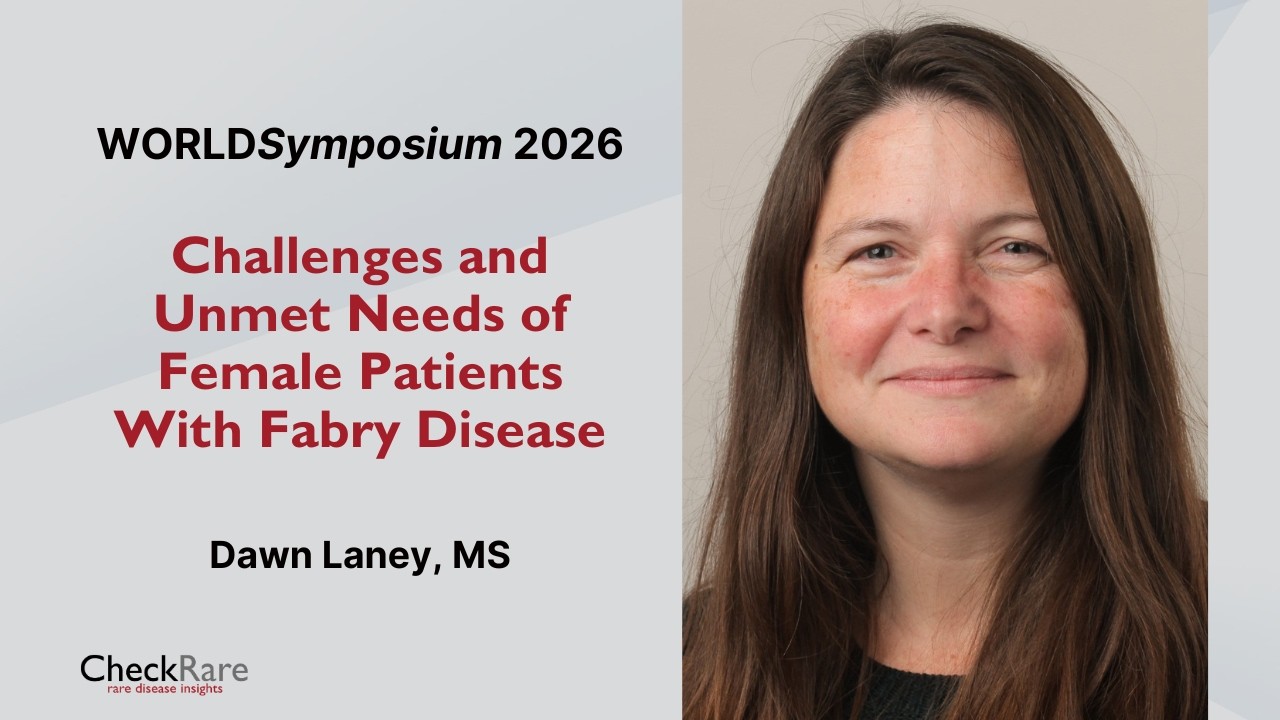
Challenges and Unmet Needs of Female Patients With Fabry Disease
Автор: CheckRare
Загружено: 2026-03-02
Просмотров: 20
Описание:
Dawn Laney, MS, Genetic Counselor at Emory University School of Medicine, discusses the challenges and unmet needs of female patients with Fabry disease.
Fabry disease is a type of lysosomal storage disease characterized by deficient alpha-galactosidase (alpha-GAL) enzymes. Without enough alpha-GAL, lysosomes become filled with GL-3 and can not function properly. Symptoms of Fabry disease may include episodes of pain, especially in the hands and feet, angiokeratomas, hypohidrosis, corneal opacity, and hearing loss. Internal organs, such as the kidney, heart or brain, may also be affected, leading to progressive kidney damage, heart attacks, and strokes. Fabry disease is caused by mutations in the GLA gene.
Clinical manifestations can be highly variable, especially in female patients, leading to delays in diagnosis and treatment. The management of female patients also commonly discount their lived experiences and perceptions of care. The objective of this study was to understand gender-specific differences in symptom burden, treatment, and care perceptions. A 34-question, cross-sectional, double-blind survey was conducted covering disease history, symptom severity and management, and treatments among adult patients in the US and Canada.
Among the 238 respondents, 55.9% were female, 43.7% were male, and one was non-binary. Females were often diagnosed later than males, with a greater proportion of females managed primarily by a geneticist (59% vs 38%), and a greater proportion of males (40% vs 20%) were primarily managed by a nephrologist. Overall, 80% of females and 78% of males were receiving treatment. Among those not receiving treatment, males were more likely to have discontinued treatment (19% vs 3%), and females were more likely to be treatment-naïve (17% vs 3%). In total, 60% of females and 51% of males were currently receiving enzyme replacement therapy.
Females experienced 22 of 25 evaluated symptoms more frequently than males. Symptoms most commonly experienced by females were daily fatigue (68%), pain in hands/feet with heat or exercise (64%), tingling in hands or feet (62%), heat intolerance (60%), and brain fog (56%). Females and males reported equal satisfaction with disease monitoring.
The findings from this survey highlight gender-specific variations in the clinical presentation and management of patients with Fabry disease. Despite similar treatment and care satisfaction, improved recognition and tailored care for female patients is necessary.
CHAPTERS
Introduction 00:00
Fabry Disease Overview 00:25
Burden of Disease for Females 1:09
Unmet Needs for Female Patients 1:46
Educating Physicians 4:14
Take Home Message 5:23
Повторяем попытку...
Доступные форматы для скачивания:
Скачать видео
-
Информация по загрузке: