Hudson Italia
Автор: Hudson Essex Terraplane Club - So Calif Chapter
Загружено: 2023-04-17
Просмотров: 173
Описание:
Late 1952 or early 1953, VP Stuart Baits and Chief Stylist Frank Springs started design on a sports-type 2 seat touring car based on the Hudson Super Jet. Frank developed the concept while Stuart finalized it. Coach maker Carrozzeria Touring of Milan, Italy, seeking work from Hudson, was commissioned to build a limited run of 25 plus a prototype. Frank made several trips to Italy between 1952 and 1954. The prototype was completed mid-1953.
September 23, 1953 - After the prototype was completed, the dealers could start taking orders at $4800 f.o.b. Detroit or $4350 p.o.e. New York. Seven of the 25 were sold overseas.
August 25,1954 - AMC announced the Italia. Roy Chapin, Jr. was the Sales Manager.
The car was 10 inches lower than a standard Hudson and used an aluminum skin. The engine was the 114 hp Jet 202 with a 3-speed transmission and column shift. 31
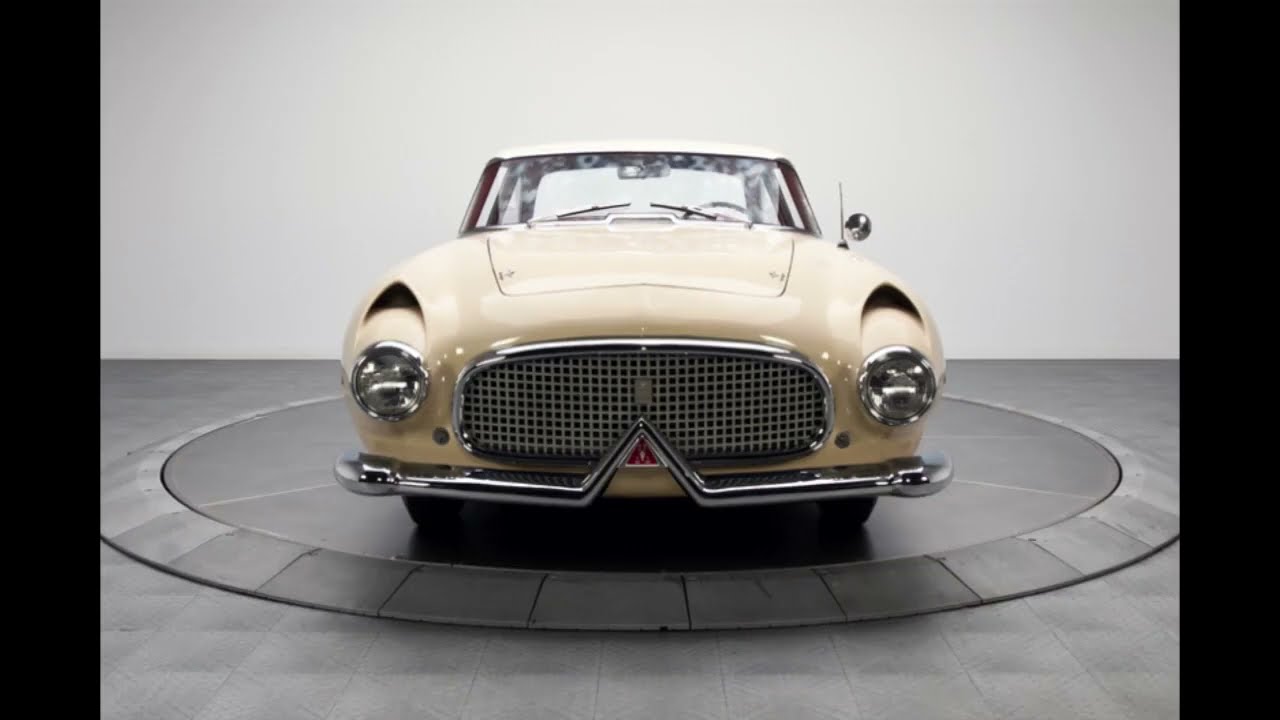
A wrap-around windshield was used. Front fender scoops directed cooling air to the front brakes while fuselage intakes gathered air for the rear brakes. The triple bank of (exhaust pipe appearing) chrome tubes on the rear fenders housed the tail, directional and backup lights. The doors cut 14 inches into the roof to ease entry.
First in the industry, flow-through ventilation entered at the cowl air intake and exited through exhaust grooves at the top of the rear windows provided complete air replacement every 10 minutes.
There were cleverly designed “Anatomical” seats, never duplicated by any other manufacturer. Twin buckets, adjustable for front-back position and rake and movable for 12 inches. Each seat had 2 separate backrests. The seatbacks gave firmer support at the lower back than the upper. Between the two cushions was an air space for breathing and the upholstery contained vent holes. Body movement caused the seat to breath. Leather seatbelts attached to the seats, were standard.
The upholstery was red and white leather and vinyl. Borrani wire wheels were used. The red crinkle-finished dash used the Jet instrument cluster. The glove box was centered and the radio controls on the far right.
Behind the seat was a large cargo area with luggage tie-down straps and stainless-steel protective cargo-ribs. There were lockable storage bins in the rear side panels. There was also a spacious trunk with spare tire and tool kit.
All 26 Italias were painted ‘Italian Cream’, that is the color name used by Hudson in all promotion information. The ones that are different colors now, were painted that way, usually so that the dealer could sell them.
The grille was of strip stock in a broad rectangular design. The die-cast grille of the ‘production run’ of 25 included a bumper with a large inverted ‘V’.
The molded plastic Jet steering wheel was used.
The exterior flush door handles snap out when pressed.
The Italia construction used the suspension, engine, running gear and instrument cluster of the Super Jet.
Total research and development cost was $28,000.
Some elements of the original Italia design were later seen on the 1960’s Falcon, Cougar and Mustang models.
Повторяем попытку...
Доступные форматы для скачивания:
Скачать видео
-
Информация по загрузке: