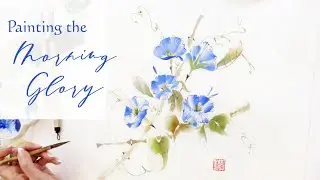
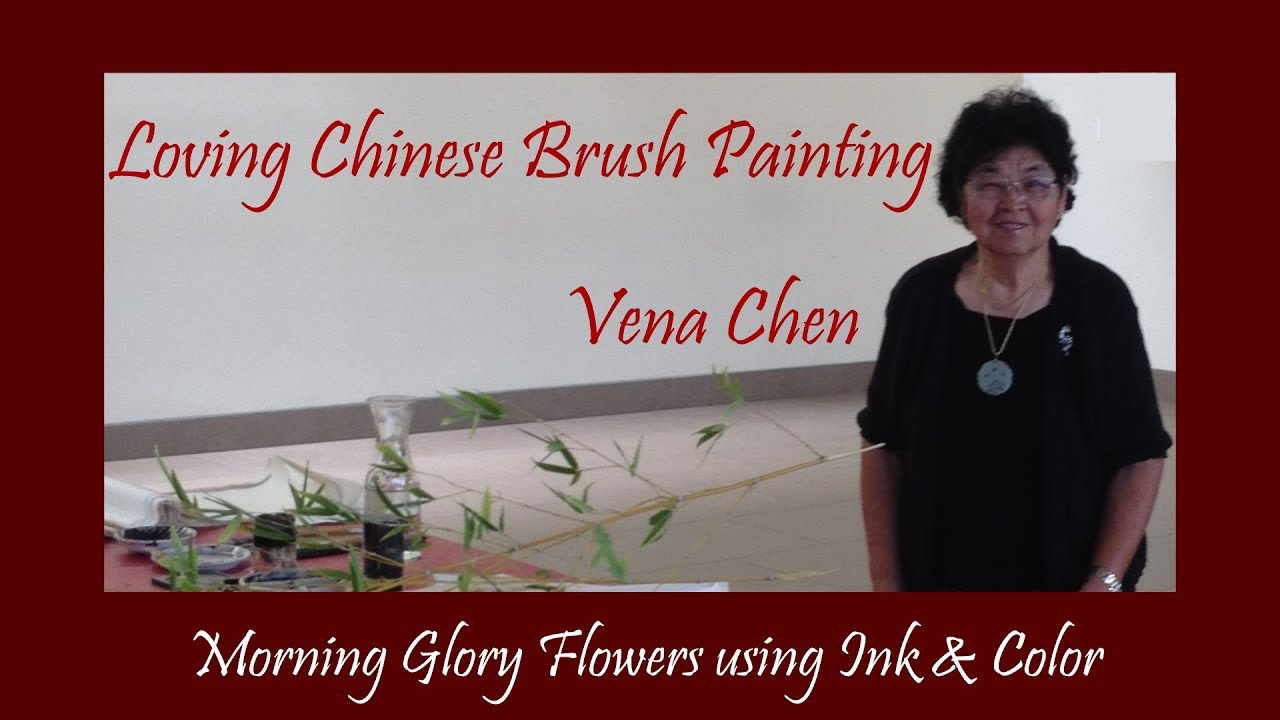
Morning Glory Flowers (牵牛花) with Vena Chen (鍾维娜)
Автор: Loving Chinese Brush Painting
Загружено: 2018-03-09
Просмотров: 510
Описание:
With heart-shaped leaves, trumpet-shaped flowers & ribbon-like graceful, dancing vines, Morning Glory flowers are a favorite flower in Chinese Brush Painting. Because the flowers are large, brightly colored & fragrant, they attract butterflies, bees & hummingbirds. Common colors for these annual climbers include purple, pink, blue, red & white. They thrive in the sun, usually blooming in the early morning.
00:00 Introduction
01:09 Flower Anatomy & Structure
06:29 Individual Flower Components
11:36 Creating a Composition
16:27 Adding Supporting Characters (Bees)
22:07 Thank you, Wrap up with Pictures & Tips
For today’s lesson, I will start by drawing outlines of the flower components to help understand the anatomy & structure. Then I will show you how to paint each of the flower parts. Practicing the components individually can be helpful. It will be easier to put them all together in a composition. When teaching how to create a composition, I will show you how to enhance your painting by adding some supporting characters.
Please stay tuned after the lesson for tips & close-up pictures of live flowers to compare to the painted ones. By examining the flowers from different angles, you can better understand the shapes & capture the Essence of the beautiful flowers, leaves & vines in your paintings.
FLOWERS:
The trumpet-shaped flowers have five petals & come in many colors. For today’s lesson, I will paint purple flowers by creating my own color. As I mentioned in my tutorial “Introduction to Color with Butterflies & Bees”, Chinese Brush Painters often use the Graduated Stroke. This technique of allowing 2 or 3 colors to blend on the paper in 1 stroke is achieved by loading different colors simultaneously.
Use a soft brush for this technique.
To make purple:
1. Load it with WHITE
2. Then mix RED
3. Dip the tip of the brush in BLUE
The more you mix the colors on the dish, the more blended the colors will become. By mixing less on the palette, when the brush is applied to the paper, the colors will blend on the paper & create dimension. Mix small amounts of paint. The variation in color caused by creating a new batch of color will enhance the painting. At the end of today’s lesson, there are several close-up pictures to illustrate this technique & highlight the beautiful color variations.
Small, tightly wrapped buds are the youngest, so the color is darker. Paint them first.
To paint the front view of the flower, use the side stroke to make 5 petals.
For the side view, paint 2 small ovals, then 3 petals, using 2 strokes to form the trumpet or funnel shape.
Flower hearts: With a small brush, use yellow to draw the filament & dark red (ink mixed with red) to paint the anther.
In Boneless Style painting, it is common to use ink for some parts of the painting & color for others. For today’s lesson, we will paint the flowers in color. We will use ink for the leaves, vines & calyx. Vary the shades of ink used for the greenery.
LEAVES:
Heart-shaped leaves can be fork-like, with 3 big veins. Use a large, soft brush. Load with light ink & dip the tip into darker ink. With the side of the brush, create 3 strokes to suggest the 3 lobes. While the leaves are still wet, paint the veins with black ink.
VINES:
Twining plants, like music notes, are sometimes strong/weak, wide/narrow, hard/soft. Use a medium hard brush & center pointed stroke (S-turn or tail head technique) to draw vines dancing through the flowers & leaves, connecting each part, crisscrossing over each other & narrowing at the tip.
Paint the calyx to connect the flowers to the vines for the buds, back & side views.
BEES:
Please watch my lesson on “Introduction to Color with Butterflies & Bees” for more information on creating the “old brown” color & making the wings look translucent.
Chinese painters leave empty space for balance: black with white, fullness with emptiness, yin & yang. Usually compositions are arranged like a triangle, such as more on the bottom & less on top, more on the left & less to the right. Artists can use the empty space for writing poetry, signing their name, or putting down their seal.
I sometimes think paintings are like living beings. They need room to breathe. We will talk more about compositions in upcoming lessons. In the meantime, I hope you enjoy dancing with the Morning Glory flowers!
Thank you all for sharing your time with me. I look forward to seeing you for the next lesson on Plum Blossom Trees.
Please be sure to ask any questions in the comments section!
With kindest wishes,
Vena (鍾维娜)
CREDITS:
Director, Photographer & Editor: Joe
Camera: Tracy
Editor-in-Chief: Stacy
All photographs taken by Vena's team
Photographs from Vena's book: "Loving Chinese Brush Painting"
Chinese Opera music from Vena's personal collection
Please visit my website & blog:
www.LovingChineseBrushPainting.com
COPYRIGHT NOTE: My videos are copyright protected. They are fully owned by me & are not allowed for any download.
Повторяем попытку...
Доступные форматы для скачивания:
Скачать видео
-
Информация по загрузке: