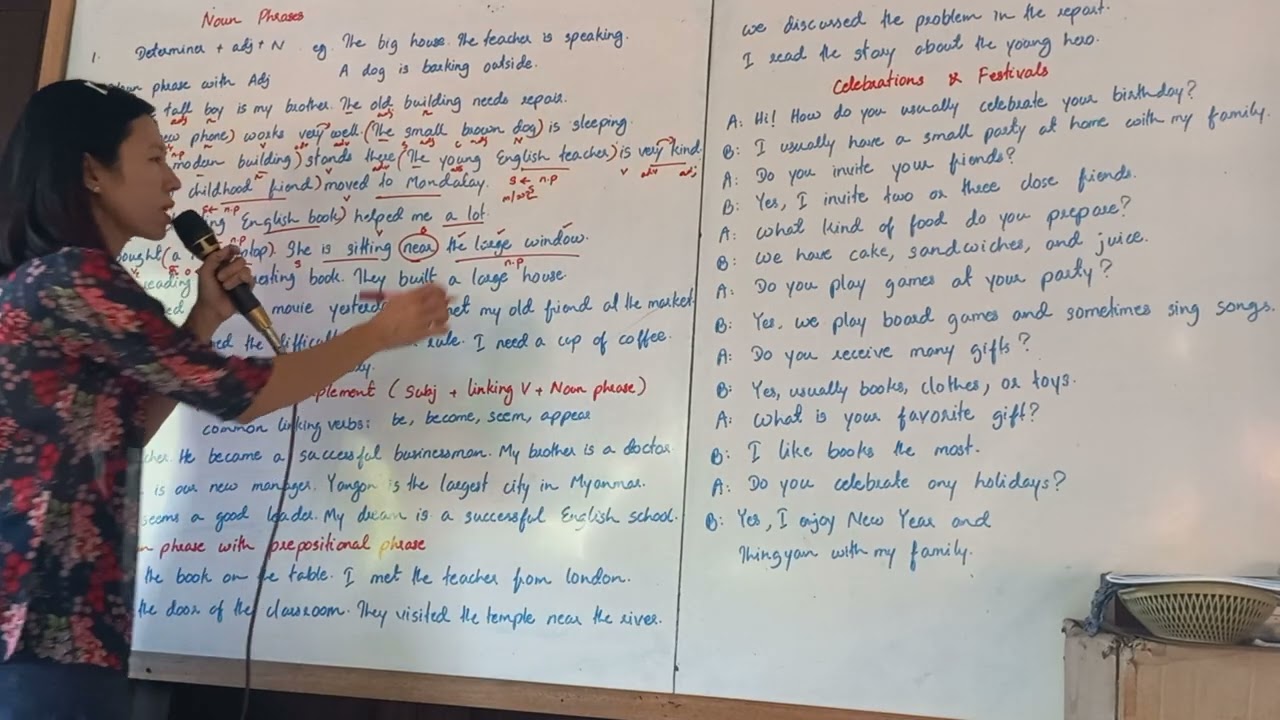
Anticipatory It & It extraposition II
Автор: Learning with sarah
Загружено: 2026-03-16
Просмотров: 13
Описание:
Anticipatory It & It-extraposition
Anticipatory “It”
The "anticipatory it" (sometimes called the "dummy it" or "preparatory it") is a placeholder.
Use it when we want to move a long or complex subject to the end of a sentence to make it sound more natural and balanced.
Why use it?
Weak/Subjective: My boss expects that we will lose money. (Sounds like just one person's opinion.)
Strong/Objective: It is expected that we will lose money. (Sounds like a general consensus or formal forecast.)
Weak: Scientists have proven that water exists on Mars.
Strong: It has been proven that water exists on Mars. (Focuses on the fact, not the scientists.)
1. Anticipatory "It" as a Subject
Place "It" at the start of the sentence, and the "real" subject (usually a to-infinitive or a that-clause) moves to the end.
The Structure: It + be (is/was) + adjective/noun + [Real Subject]
Example A: With an Infinitive (to + verb)
Without 'It' (Clumsy): To learn a new language is difficult. (Grammatically correct, but sounds stiff and unnatural.)
With Anticipatory 'It' (Natural): It is difficult to learn a new language.
Example B: With a That-clause
Without 'It' (Clumsy): That he arrived so early was surprising.
With Anticipatory 'It' (Natural): It was surprising that he arrived so early.
2. Anticipatory "It" as an Object
More advanced structure for sounding fluent.
Verbs like find, think, make, or consider are followed by an adjective.
The Structure: Subject + verb + it + adjective + [Real Object]
Examples:
Incorrect: I find hard to concentrate.
Correct: I find it hard to concentrate. (Here, "it" anticipates the phrase "to concentrate".)
Incorrect: The internet makes easy to stay in touch.
Correct: The internet makes it easy to stay in touch.
3. "It" with Passive Verbs (Formal Reports)
Often see this in news reports, academic writing, or formal speech. Common Verbs: said, thought, believed, expected, reported.
Example: It is expected that the economy will grow. (Real subject: "That the economy will grow" is expected.)
Example: It is said that he is a genius.
It has been confirmed that the virus is airborne.
It must be acknowledged that mistakes were made.
It will be announced tomorrow who won the election.
It can be argued that this method is ineffective.
It was agreed that the meeting would be postponed.
4. The "End-Weight" Principle
Heavy start (Bad): To criticize someone without understanding their situation is unfair.
Balanced (Good): It is unfair to criticize someone without understanding their situation.
Top-Heavy: To accurately predict the long-term movements of the stock market is nearly impossible.
Balanced: It is nearly impossible to accurately predict the long-term movements of the stock market.
Top-Heavy: To expect a complete novice to understand these complex regulations immediately is unfair.
Balanced: It is unfair to expect a complete novice to understand these complex regulations immediately.
The "Heavy" Wh-Clause
Clauses starting with who, what, where, when, or how can also act as subjects. If they are long, they benefit from being moved.
Top-Heavy: Who exactly authorized the transfer of such a large sum of money remains a mystery.
Balanced: It remains a mystery who exactly authorized the transfer of such a large sum of money.
Top-Heavy: How we are going to finish this project before the deadline with half the staff gone is unclear.
Balanced: It is unclear how we are going to finish this project before the deadline with half the staff gone.
This is crucial for fluency. If the object of a verb is a long phrase, we insert "it" and move the heavy phrase to the end.
Pattern: Subject + Verb + it + Adjective + [Heavy Object]
Top-Heavy (Confusing): The intense heat made wearing a heavy wool coat while hiking up the mountain unbearable. (The adjective "unbearable" is too far from "made".)
Balanced: The intense heat made it unbearable to wear a heavy wool coat while hiking up the mountain.
Top-Heavy: I consider investing all your savings in a single volatile cryptocurrency risky.
Balanced: I consider it risky to invest all your savings in a single volatile cryptocurrency.
🧠 . Quick Comparison (Anticipatory “It” vs Dummy “It”)
✅ In most grammar books, they are treated as the same structure.
✅ “Anticipatory it” = the dummy “it”
✅ “It-extraposition” = the movement of the real subject to the end
• Anticipatory It & It extraposition II
#englishgrammar
#anticipatory
#itextraposition
#cleft
ဒီနေ့သင်ခန်းစာမှာကတော့ Anticipatory It နဲ့ It-extraposition ဝါကျတွေကို Advanced sentences တွေနဲ့လေ့လာရမှာဖြစ်ပါတယ်။ It ကို Subject နေရာမှာ အစားထိုးပြီး စကားလုံးတွေများပြီးလေးလံနေတဲ့ Real subject ကို ဝါကျရဲ့အနောက်ဆုံးကိုပို့ပြီး ရေးသားတဲ့နည်းဖြစ်ပါတယ်။
Повторяем попытку...

Доступные форматы для скачивания:
Скачать видео
-
Информация по загрузке: