Leo Ornstein - Piano Quintet
Автор: pelodelperro
Загружено: 2026-02-12
Просмотров: 291
Описание:
Piano Quintet, Op. 92 (1927)
I. Allegro barbaro
II. Andante lamentoso
III. Allegro agitato
Marc-André Hamelin, piano
Pacifica Quartet
The Piano Quintet was written in the late 1920s, after Ornstein had accepted a position as head of the piano department at the Zeckwer-Hahn Philadelphia Music Academy. Even though he no longer regularly performed, he continued to receive commissions. Elizabeth Sprague Coolidge, an important patron in early twentieth-century American musical culture, privately commissioned the Piano Quintet. The first performance, sponsored by the Society for Contemporary Music, occurred in Philadelphia on 1 January 1928, with Ornstein at the piano. The concert also featured two works by Béla Bartók, who was also present and shared the stage with Ornstein. Several other performances occurred in the late 1920s and early 1930s, and except for one in Paris always with Ornstein at the piano.
Ornstein believed in a highly intuitive approach to composition. He claimed that music simply came to him and resounded in his head until he could exorcise it by writing it down. This was not entirely true, as the manuscript for the Piano Quintet contains many small corrections, probably made after rehearsals with the string players. Yet Ornstein’s intuitive approach is key to the work. Its wild, driving, energetic character, with many abrupt changes in tone and mood, presents Ornstein at his most direct and personal. Many musicians and writers consider it his best piece. Years later Ornstein commented: ‘The Quintette [as he called it] is not a polite piece … it may be overcharged but it is what I heard. Possibly it might have been less blunt and emotionally more reserved, but if one does not sense its almost brutal emotional directness, then I have indeed failed.’ He admitted that maintaining its emotional power forced him to sacrifice a greater unity he might otherwise have achieved, but ‘any attempt to modify it destroyed whatever was genuine’.
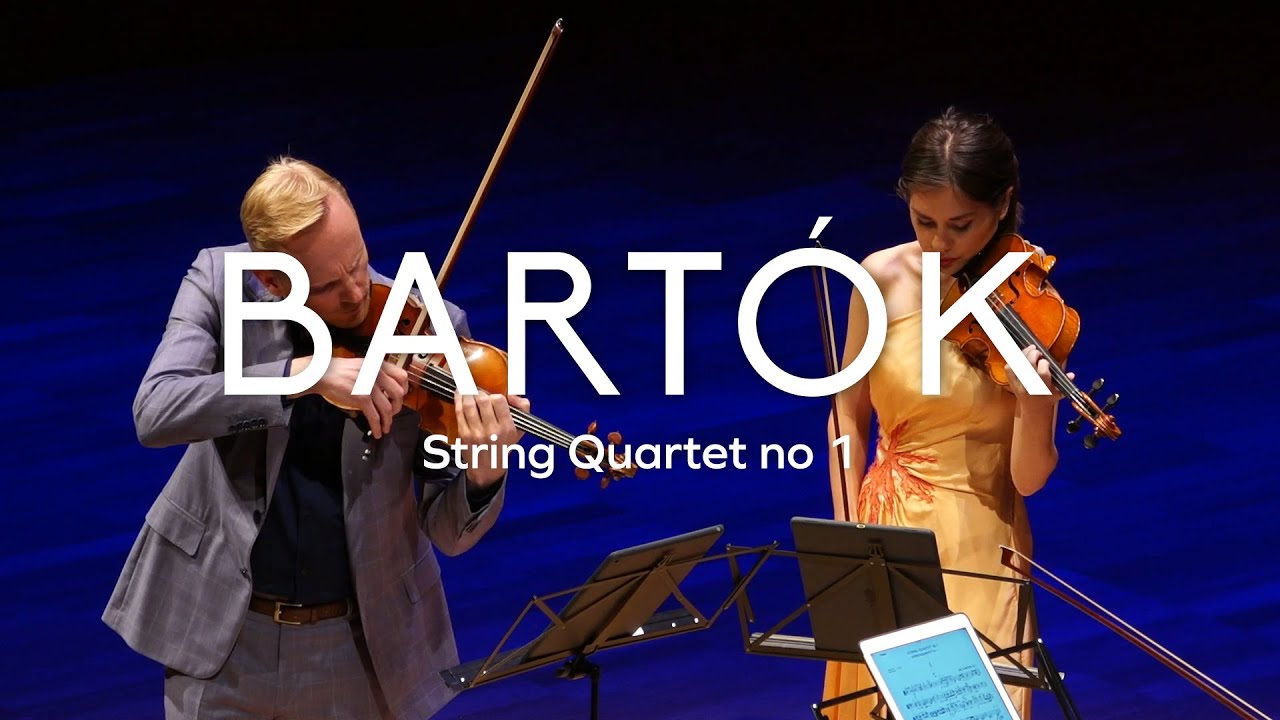
The first movement begins Allegro barbaro, which may have been a homage to Bartók, whose famous primitivist piece has the same title. The Quintet’s opening fits precisely Ornstein’s own description: it is wild, energetic, rhythmically charged and emotionally intense. This tone soon gives way to a meno mosso section where Ornstein’s lyricism comes to the fore. A modal melody passes through the strings against an undulating piano accompaniment, then builds in intensity as he increases the surface rhythm to usher in another driving agitato feroce. The movement continues to alternate between these two general moods, with much variation and a hint of a recapitulation of the opening material near the end. The movement is not atonal, but the shifting harmonies and an emphasis upon minor seconds and tritones prevent a single overriding key from emerging.
The second movement, Andante lamentoso, is one of Ornstein’s most lyrical statements. It is quiet and introspective, even though there are frequent tempo changes and the mood is broken three times by more rhythmically assertive music. These moments quickly fade and do not undermine the prevailing tone. The principal melody has an Eastern European flavour, as if Ornstein is drawing on memories of his Russian-Jewish heritage.
The third movement, Allegro agitato, returns the listener to the vigour of the first movement. And like the first movement the third contains many changes of tempo and mood. Animato, marcato barbaro, con fuoco, e molto feroce, risoluto and furioso sections alternate with ones marked dolente, molto espressivo, tranquillo e languido, sostenuto and tristamente. As a bow to unity Ornstein reprises part of one of the themes from the first movement, but it fits into the musical fabric so it scarcely seems a recollection.
As might be expected the piano-writing in all three movements is highly virtuosic. Ornstein of course knew the instrument well, and knew what best suited his own prodigious technical ability. Along with blisteringly fast runs and arpeggios, the piano part contains tight dissonant, chromatic chordal combinations comprising many sevenths but seldom the excruciating stretches found in the works of Rachmaninov—a reflection possibly of Ornstein’s own hands. --Michael Broyles
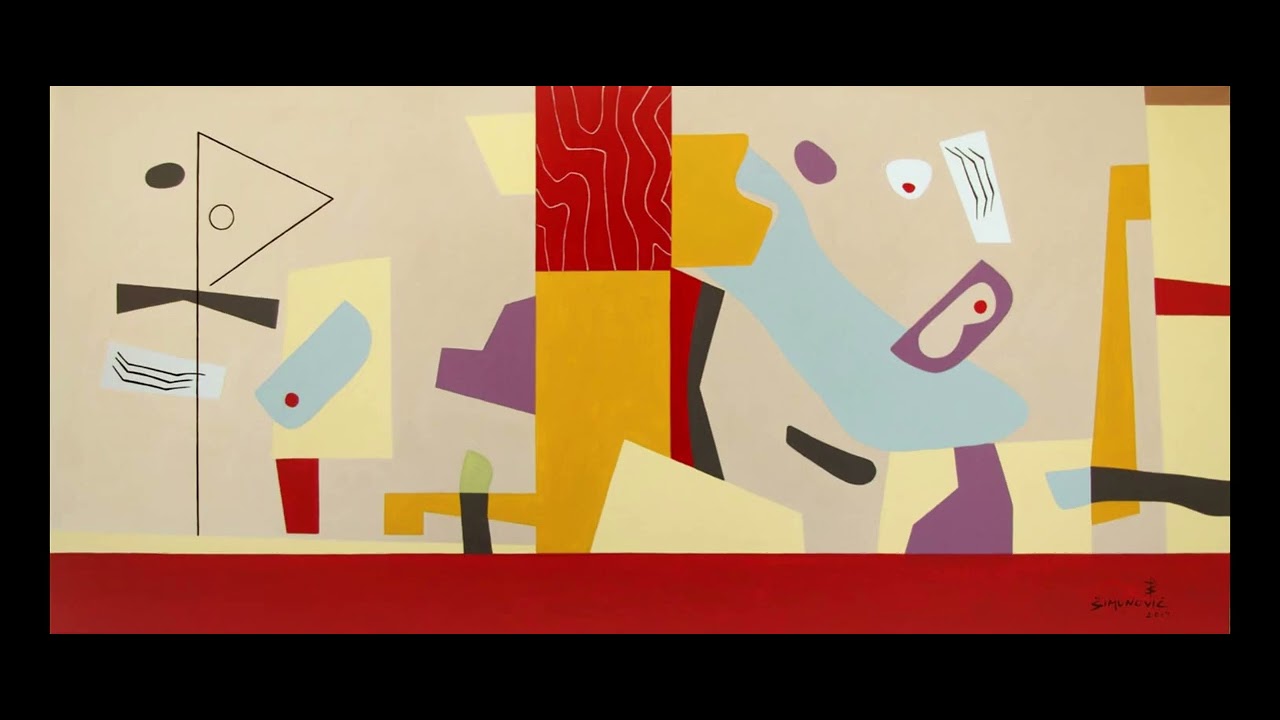
Art by Erik Bulatov
Повторяем попытку...

Доступные форматы для скачивания:
Скачать видео
-
Информация по загрузке:










![[Vinyl] Miles Davis - Birth of the Blue, 1958 (2024) Analogue Productions, Columbia](https://imager.clipsaver.ru/uQPLwrEXNZY/max.jpg)