Morton Gould - Venice
Автор: pelodelperro
Загружено: 2026-02-08
Просмотров: 176
Описание:
Venice, audiograph for double orchestra and brass choirs (1966)
I. Morning Scene with Church Towers
II. St. Mark's Square
III. Pigeons
IV. Cafeé Music
V. Doge's Music
VI. Grand Canal
VII. Night Festa with Fireworks
Seattle Symphony Orchestra
Milton Katims
In the spring of 1966 Milton Katims, conductor of the Seattle Symphony, called me and proposed a commissioned work for two orchestras, to be premiered the following spring by the Seattle Symphony and an as yet undesignated second orchestra. I accepted what seemed to me an intriguing challenge, presuming I could develop a musical structure with this “double” texture. I thought of many approaches during the summer of 1966, which was spent on a European tour with my wife and our four children, but by fall I still had no concept, and time was growing short.
One of the cities my family and I had visited was Venice. In retrospect I suddenly realized that I had been to the home of antiphonal music, where composers such as Gabrieli and Vivaldi had been part of a vital and flourishing Venetian school of writing for and performing with multiple instrumental and vocal choirs, physically separated from each other but component parts of a whole aural fabric. Live stereo, so to say. At the moment of recognition of this musical environment came a retrospective reaction to the unique physical beauty of Venice itself—its architectural magnificence, the special ‘Venetian’ colors, the canals, the fairy-tale magic of its charm and grandeur. In that instant of delayed musical and personal reaction came the solution. I had my concept and creative stimulant, consisting of two elements: the musical and the atmospheric. I would use both the formal lineal texture of the Venetian Baroque (Gabrieli, etc.) and the descriptive evocation of Venetian scenes.
The titles of the movements indicate some of the particular images of Venice I retained and “set to music.” The opening movement, Morning Scene with Church Towers, is Venice in the glistening sun, its waters reflecting the spires, domes and palaces in dazzling colors. Musically and pictorially this is “Gabrieli and sunlight.” The next movement, St. Mark’s Square, reflects the hustle and bustle of the “heart of Venice,” with citizens and with tourists from all over the world crowding and jostling—literally hordes of people moving, walking, sight-seeing, shopping. Suddenly the square can empty out and stand alone and quiet.
Third movement—Pigeons. Among the prominent inhabitants of the Square are countless pigeons—walking, strutting, cooing, fluttering, along with less pleasant manifestations which I could not resist depicting in my scoring!
Fourth movement—Café Music. The huge St. Mark’s Square often has in its many outdoor cafés bands and orchestras of different combinations all playing simultaneously their respective repertory. It is not unusual, therefore, to hear marches, jazz, show music, a classical overture and a Strauss waltz all “happening” and intermingling at the same time.
Fifth movement—Doge’s Palace. Stately and imposing yet subtle and airy in its physical proportions, with visual evidence in its ornamentation of past influences and mixtures from the historic Moorish and Oriental trade routes.
Sixth movement—Grand Canal. The most obvious image of Venice, with the gondolas and gondoliers, mandolins and songs and endless water and romance combined with a quiet, gliding beauty.
Seventh movement—Night Festa with Fireworks. One of the many holiday celebrations, perhaps a Saint’s day but an occasion for carnival and singing and dancing—and above all, fireworks lighting up Venice like a stage set, at times like a toy city set in water. The exploding sounds echo through the sky and waterways. Musically the work returns to a massed reiteration of the first-movement chorale. Then the fireworks go off again with noisemaking—general pandemonium to an explosive end.
The movements are linked by interludes for the two brass choirs, setting the mood for the ensuing movement. The subtitle, “Audiograph for Double Orchestra and Brass Choirs,” means “sound pictures”—a musical or sonic picture postcard, couched in formal musical structure.
For this recording we all decided to take advantage of the technological possibilities of multi-channel recording. Milton Katims, conducting the Seattle Symphony, first recorded the Orchestra I part on four tracks of an eight-track tape. By listening over headphones to that part, he then synchronized the performance of the Orchestra II part on the remaining four tracks of the same tape. This is a highly complex and difficult undertaking because obviously both orchestras have to dovetail and coordinate with each other. For the finished record, the eight tracks were reduced to produce two stereo channels, with Orchestra I predominant on the listener's left and Orchestra II on the right. --Morton Gould
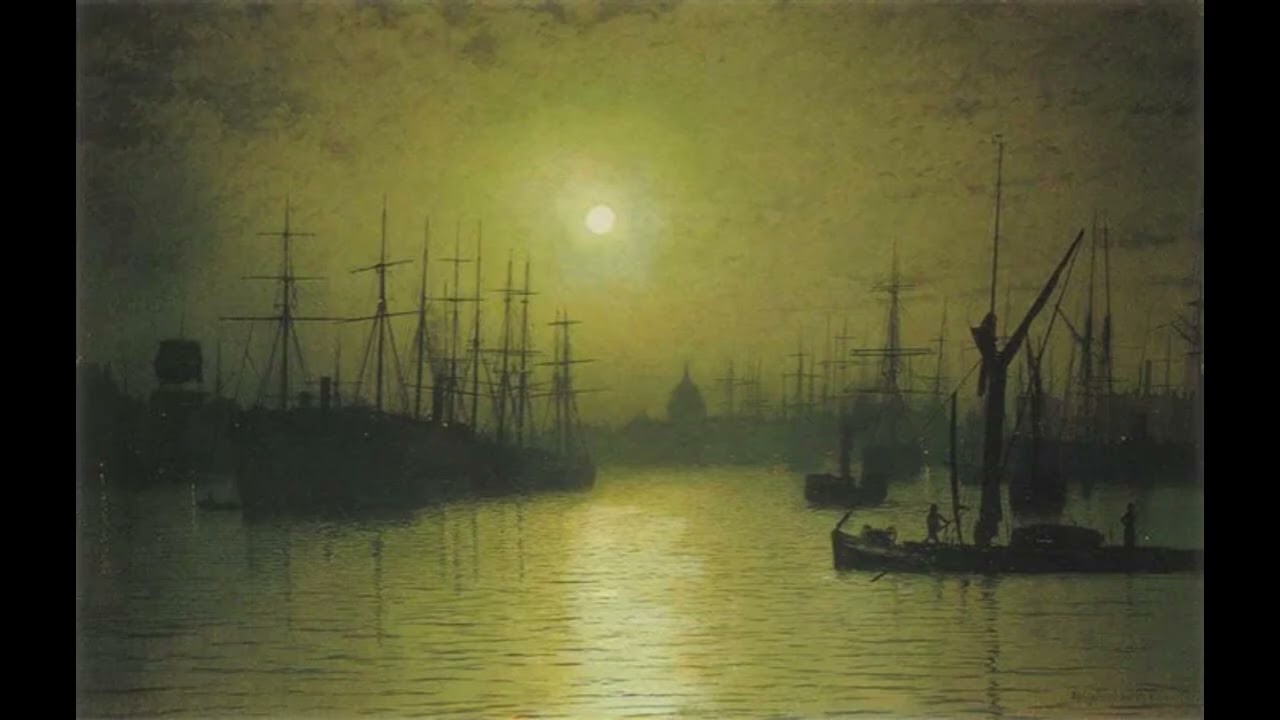
Art by Canaletto
Повторяем попытку...

Доступные форматы для скачивания:
Скачать видео
-
Информация по загрузке: