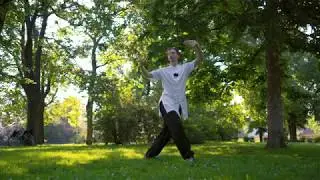
The Eight Pieces of Brocade (Baduanjin) taught by Wudang Funk, explained in detail
Автор: Wudang Funk
Загружено: 2020-03-29
Просмотров: 113
Описание:
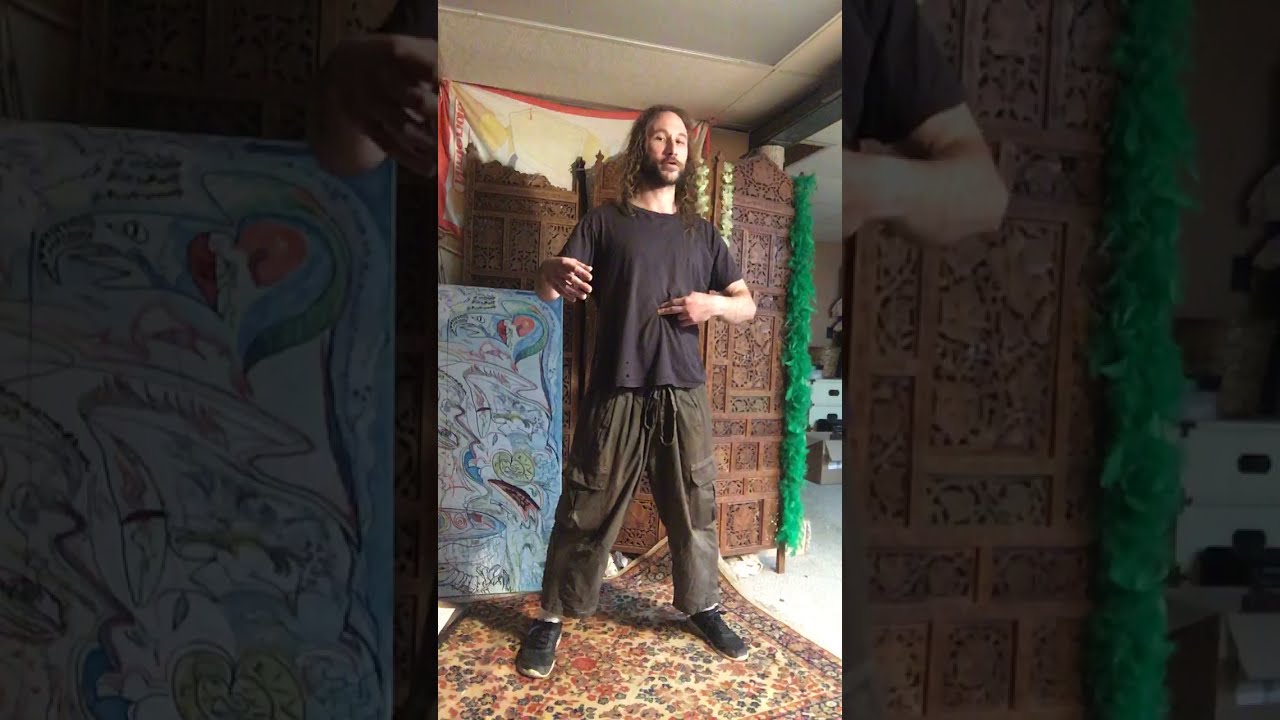
Originally uploaded to facebook at the beginning of the coronavirus outbreak. Here, Wudang Funk explains The 8 Pieces of Brocade in detail, including the meditative images and the internal body motions.
This set is like an alphabet of motion. It teaches 8 types of motion AND stillness. All of the 8 skills can be applied to any "external" motion. This is the foundation of Wudang Kung Fu, and therefore also Tai Chi. It's practice can compliment any martial art, but is also good to do simply for health!
Each exercise has 3 main components:
Yi- Mind (as in focusing on the mental image)
Chi- Breath (tying it to your motion)
Li- Body (having to do with the tendon/muscle system)
If you want to break it down further than that, consider these as well:
Nei- Internal (having to do with the tendon/joint system, the Yin side of Li)
Shen- Spirit (feeling the motion as it happens anyway, the Yin side of Yi)
We hear terms like "Chi Gong" (sometimes spelled "Qi Gong"), Yi Gong, Nei Gong. This set is all of those, all at once. Gong (sometimes spelled Kung) means practice. Yi Gong- Mind Practice (meditation), Chi Gong- Breath Practice, Li Gong- Body Practice and so on and so forth. This is all of those.
Your sum total of how well these components work together is:
Jing- Power
Strength is different from power. Strength is having individually strong muscles, Power is result in motion. Power has more to do with how well you coordinate your body as one unit, working together as a system. This gives you 8 ways of generating power.
The Exercises are:
1- Press the Sky
2- Turn to Gaze Over Shoulder
3- Celestial Dragon Flies to Heaven and Earth
4- Bend the Bow
5- Turn the Heart's Wheel
6- Lifting Rocks
7- Pound the Drum
8- Crane Shakes it's Wings
9- Holding the Post
All the exercises have alternate names as well. Every name is a clue.
There are also many variations of each exercise. I am grateful and proud to have learned this old version of the set in great detail.
The skills (principals of motion) that they develop are called:
1- Listening (Feeling)
2- Spiralling
3- Compression/Expansion
4- Differentiation
5- Turning
6- Spinning
7- Pounding (Rooting)
8- Twisting
9- Balance
This, over time, will wake up parts of your body that may have been "sleeping." Remember to relax and breathe. Less is more, especially in the beginning. I recommend starting by doing 8 repetitions of each exercise at a medium/slow pace with five slow breaths of holding the post in between once per day. It takes some practice, but before you know it your body will open in ways that you didn't know it could.
Kung means practice, Fu means time. Kung Fu means skill.
Повторяем попытку...
Доступные форматы для скачивания:
Скачать видео
-
Информация по загрузке:


![Bagua Neigong [ Explanation ] : Full Form Set](https://image.4k-video.ru/id-video/YaspQI5mBOU)