🔬Nature as a Computer: Max Welling on AI x Materials Science
Автор: Latent Space
Загружено: 2026-02-25
Просмотров: 1525
Описание:
In this episode recorded at NeurIPS 2025, Max Welling traces the intellectual thread connecting quantum gravity, equivariant neural networks, diffusion models, and climate-focused materials discovery.
We begin with a provocative framing: experiments as computation. Welling describes the idea of a “physics processing unit”—a world in which digital models and physical experiments work together, with nature itself acting as a kind of processor. It’s a grounded but ambitious vision of AI for science: not replacing chemists, but accelerating them.
Along the way, we discuss:
Why symmetry and equivariance matter in deep learning
The tradeoff between scale and inductive bias
The deep mathematical links between diffusion models and stochastic thermodynamics
Why materials—not software—may be the real bottleneck for AI and the energy transition
What it actually takes to build an AI-driven materials platform
Welling reflects on moving from curiosity-driven theoretical physics (including work with Gerard 't Hooft) toward impact-driven research in climate and energy. The result is a conversation about convergence: physics and machine learning, digital models and laboratory experiments, long-term ambition and incremental progress.
Timestamps
00:00 Introduction to Max Welling and the concept of Physics Processing Units (PPUs)
01:34 Max’s career evolution: From quantum gravity to climate-focused AI
03:39 Physics as the "thread": Symmetries, gauge theory, and stochastic thermodynamics
07:05 The explosion of "AI for Science" and the emerging investment bubble
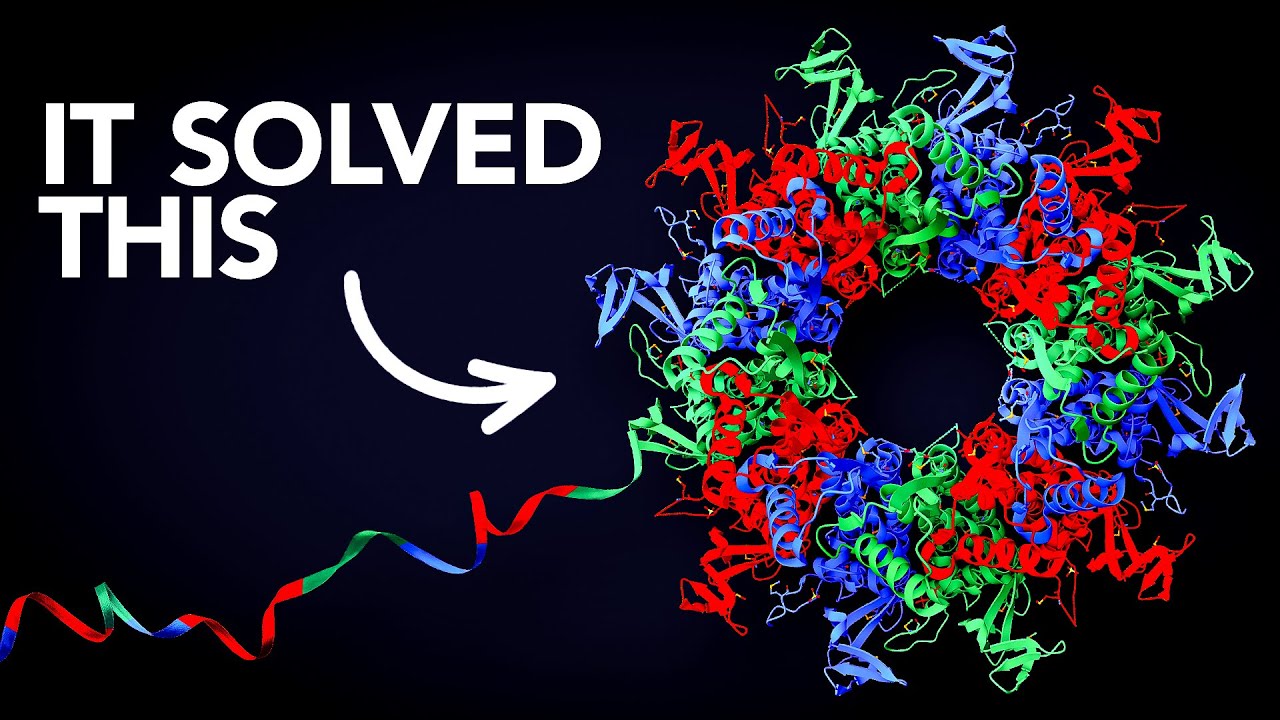
07:53 Successes in protein folding and machine learning inter-atomic potentials
11:05 Why materials matter: The physical foundation of the AI software layer
13:47 Transforming material discovery into a search engine problem
14:47 The origin and mission of CuspAI: Solving carbon capture
17:49 CuspAI’s platform architecture: Generative models, digital twins, and agents
20:47 The role of humans in the loop: Moving from manual workflows to automation
24:39 Strategy for breakthroughs: Lighthouse moonshots vs. incremental partnerships
28:40 Technical Deep Dive: Explaining Equivariance and symmetry in neural networks
31:07 The "Bitter Lesson" in the context of scientific inductive biases
31:47 Preview of "Generative AI and Stochastic Thermodynamics" (Upcoming Book)
Повторяем попытку...

Доступные форматы для скачивания:
Скачать видео
-
Информация по загрузке: