Build a RAG AI Agent with Mastra & Qdrant (Full Tutorial + Demo)
Автор: Harith Codes
Загружено: 2026-03-01
Просмотров: 64
Описание:
In this session, we dive deep into implementing Retrieval-Augmented Generation (RAG) using Mastra and Qdrant, building a real AI agent that retrieves knowledge from a Southern Nigerian folklore book before generating responses.
You’ll learn what RAG is, why it’s one of the most important AI architectures today, how it compares to fine-tuning, and how to implement a production-ready RAG pipeline step-by-step. We’ll also build and demo a working AI storytelling agent that retrieves from Folk Stories from Southern Nigeria and answers questions using semantic search.
By the end of this video, you’ll understand how modern AI systems ground responses in real data instead of hallucinating — and how you can build one yourself.
Github Repo:
https://github.com/Harithmetic1/Niger...
🔎 Read More About RAG
https://www.merge.dev/blog/how-rag-works
Why is RAG Important?
Retrieval-Augmented Generation improves LLM accuracy and reliability by grounding responses in external knowledge sources like documents, PDFs, or databases.
Unlike fine-tuning, which requires retraining models on new datasets (costly and time-consuming), RAG allows you to update your knowledge base instantly without retraining the model.
With RAG, you can:
• Keep knowledge up-to-date in real time
• Reduce hallucinations
• Lower operational costs compared to fine-tuning
• Build scalable AI agents
• Improve response relevance
This makes RAG essential for startups, SaaS platforms, AI agents, customer support bots, and knowledge-heavy applications.
What You’ll Learn in This Video
Introduction to RAG
Understand Retrieval-Augmented Generation and why it is reshaping modern AI systems.
RAG vs Fine-Tuning
Clear comparison of architecture, cost, flexibility, and scalability.
How RAG Works (Step-by-Step)
• User submits a query
• Query is converted into embeddings
• Vector database performs semantic search (cosine similarity)
• Relevant documents are retrieved
• LLM generates a response using retrieved context
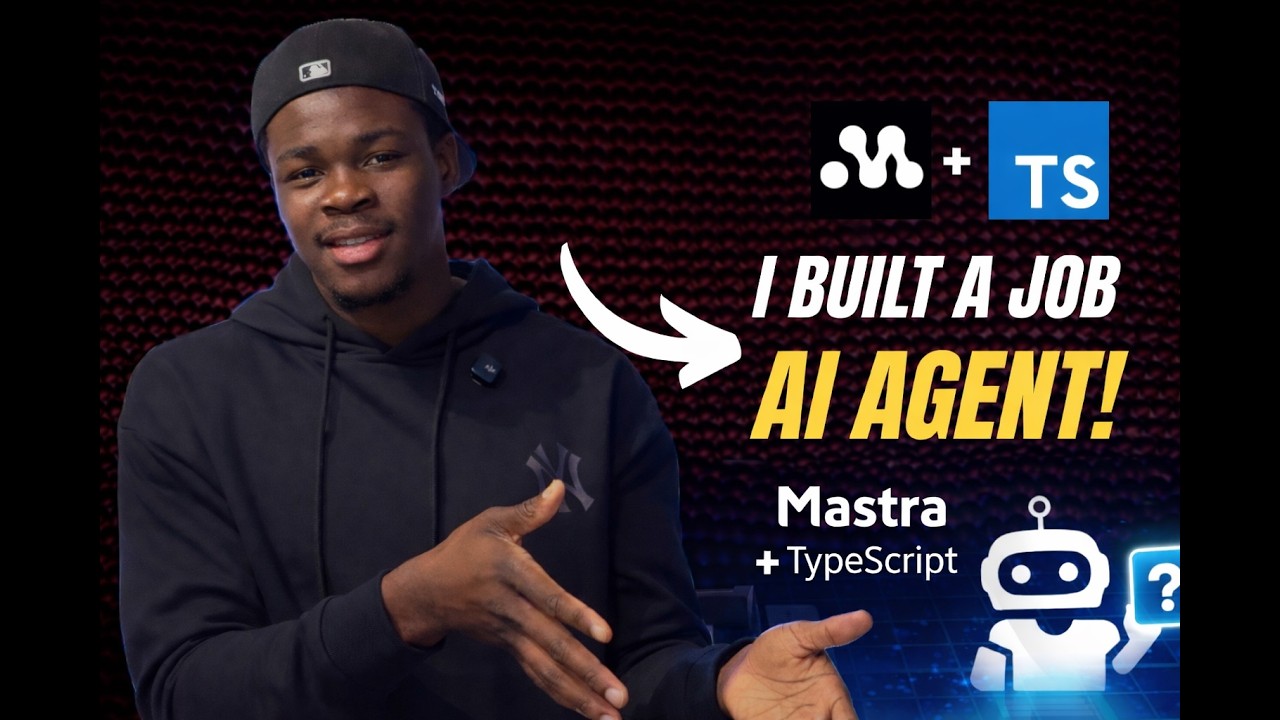
Building a RAG Agent with Mastra
• Setting up Mastra
• Connecting to OpenAI
• Creating a Qdrant vector database
• Storing embeddings from a folklore book
• Implementing retrieval
• Running a live demo
Real Demo: Southern Nigerian Folklore AI Agent
We use Folk Stories from Southern Nigeria by Elphinstone Dayrell to populate our vector store and build an AI storytelling assistant capable of retrieving and explaining traditional folklore stories.
Who Should Watch This?
• AI Engineers
• Backend Developers
• Next.js / TypeScript Developers
• Startup Founders building AI products
• Anyone learning RAG architecture
• Developers using Mastra or Qdrant
Tech Stack Used
Mastra
Qdrant Vector Database
OpenAI Embeddings
TypeScript
If you found this helpful, consider subscribing to more deep dives into AI Agents, RAG systems, and modern AI infrastructure.
Let me know in the comments what kind of AI agent you want to see next.
Повторяем попытку...

Доступные форматы для скачивания:
Скачать видео
-
Информация по загрузке: