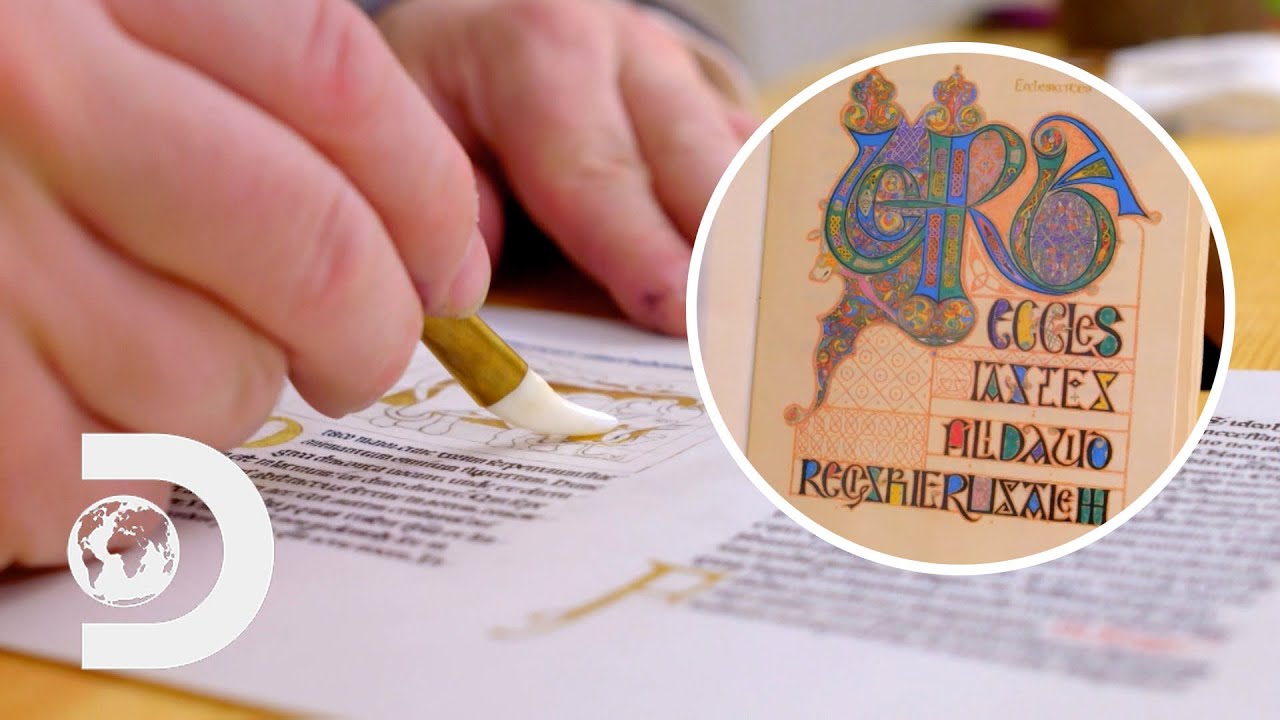
History of early modern book illustrations: what methods were used?
Автор: Shetland Neurodiversity Project
Загружено: 2025-07-07
Просмотров: 110
Описание:
Trinity College Dublin. "Looking at Illustrations." FutureLearn, The History of the Book in the Early Modern Period: 1450 to 1800, Week 1, Step 1.7, 27 Apr. 2012, www.futurelearn.com/courses/book-history/1/steps/123. Accessed 7 July 2025.
Q: Who created early modern book illustrations? A: Illustrations were typically designed by artists and engraved by separate craftsmen. For example, William Hogarth designed the frontispiece for Tristram Shandy, but Simon François Ravenet engraved it.
Q: What illustration methods were used? A: Early methods included woodcuts (cut in relief and easily printed with type) and engravings/etchings (intaglio techniques that required separate printing). Woodcuts were more common in 1460–1550; engravings dominated later.
Q: Why are some illustrations reused? A: Due to high production costs, woodblocks were often reused across multiple editions, especially in works like The Ship of Fools by Sebastian Brant.
Q: What role did frontispieces play?A: Frontispieces were often more detailed than interior illustrations, used to attract readers—particularly in children’s books or subversive works.
Further Reading
Füssel, Stephan. Theuerdank: The Epic of the Last Knight. Taschen, 2018.
Gascoigne, Bamber. How to Identify Prints: A Complete Guide to Manual and Mechanical Processes from Woodcut to Inkjet. Thames & Hudson, 2004.
Goldman, Paul. "The History of Illustration and Its Technologies." The Book: A Global History, edited by Michael F. Suarez, S.J., and H. R. Woudhuysen, Oxford UP, 2013, pp. 231–244.
Повторяем попытку...
Доступные форматы для скачивания:
Скачать видео
-
Информация по загрузке:
![Проект «Поговорим о Йоркшире» (Видео 1 из 4): История Йоркшира и его языка [Йоркширское общество]](https://imager.clipsaver.ru/LWHLZ0tQjRo/max.jpg)