NOV 2025 LAKE ERIE SEICHE ON THE NORTH SHORE OF WESTERN LAKE ERIE EXPOSED SHIPWRECK DEMMING OVERTON
Автор: Windsor Aerial Drone Photography
Загружено: 2025-12-03
Просмотров: 634
Описание:
Seiche: A seiche (pronounced: saysh) is a standing wave in an enclosed or partially enclosed body of water.
Seiches and seiche-related phenomena have been observed on lakes, reservoirs, swimming pools, bays, harbours and seas.
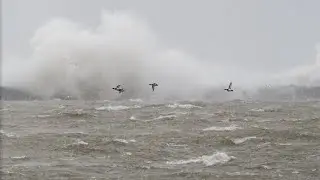
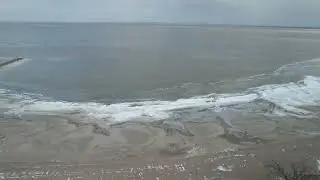
November 2025 Seiche: The western basin of Lake Erie experienced the effects of sustained high winds during the last week of November.
What is Lake Erie especially prone to seiches?
Lake Erie is the shallowest of the great lakes, which means water can move quickly.
Being a long narrow lake, strong sustained winds can push water along its length displacing huge volumes of water.
Sudden changes in air pressure , such as from fast moving storms can also contribute to the seiche effect.
When the wind subsides, the water will "slosh" back towards the opposite end, oscillating for hours similar to water in a bathtub.
Seiches of 1-3 are common, but extreme events have produced 7-10 foot water level changes within hours.
One of the more significant events was the October 26, 1916 seiche which caused an 8 foot rise at Buffalo leading to significant flooding.
In addition to flooding, they can also produce dangerous currents , sudden drops in water levels and boat groundings.
During extreme weather events, the negative results can be magnified exponentially.
These events expose old docks, pilings and shipwrecks.
SOME FACTS ABOUT LAKE ERIE SHIPWRECKS:
1. Lake Erie has over 1,700 known or estimated shipwrecks.
It has more wrecks per square mile than almost any other freshwater lake in the world. Many remain undiscovered due to sediment, depth changes, and shifting lakebeds.
2. It is the shallowest Great Lakes. Average depth: 62 ft (19 m)Maximum depth: 210 ft (64 m)This shallow profile made the lake dangerous during storms, with steep, sudden waves capable of capsizing vessels.
3. Lake Erie was a major shipping corridor. From the early 1800s through the mid-1900s, the lake carried massive coal, iron ore, grain, limestone, and timber traffic.Heavy traffic + unpredictable weather = high wreck numbers.
4. Many shipwrecks are extremely well-preserved. Cold, fresh water slows decay.Diving conditions can be excellent due to relatively shallow depths compared to other Great Lakes.
5. Sudden storms caused many disasters.
Lake Erie storms can produce short, steep waves—more dangerous to ships than the long rollers of deeper lakes.Quick weather changes left crews with little warning.
6. The western basin is especially hazardous. It is the shallowest part of the lake.A large number of wrecks lie between Toledo, Kelleys Island, South Bass Island, and Long Point.
7. The Battle of Lake Erie left historic wrecks. The War of 1812 produced several wrecks, including ships from Oliver Hazard Perry’s fleet.Some were intentionally sunk after the war for preservation or abandonment.
8. Ship types lost in Lake Erie vary widely. Schooners,Steam-powered freighters, Passenger vessels, Barges, Tugboats, Fishing boats, Early motor vessels
9. Notable individual wrecks.
Some of the most talked-about include:The James B. Colgate (1916) – lost in a massive storm; only one survivor.The Dean Richmond (1893) – a steel freight steamer with a long history of mechanical failures.The Adventure (1903) – a well-preserved wooden schooner.The Dundee (1900) – found upright and intact in deep water.10. Many wrecks remain “time capsules”Wooden hulls, cargo, tools, and even ship wheels are often found intact.Some vessels sit in nearly perfect sailing condition, resting on the bottom like underwater museums.
Major seiches typically accompany strong storm systems especially in late fall and winter.
Lake Erie's seiche period (the time for one back and forth oscillation is approximately 14 hours.
Aerial photography, videography, thermography and promotional content by Windsor Aerial Drone Photography.
Kingsville Shipwreck photo courtesy of Matt Vermette.
Historians believe the sunken vessel in Kingsville could be either the Demming or the Overton, both of which sank before 1900.
Serving Windsor Essex and S/w Ontario.
Fully Licensed by Transport Canada.
Be sure to like and follow Windsor Aerial Drone Photography on Facebook and You Tube for more local content.
#seiche
#shipwreck
#lakeerie
Повторяем попытку...

Доступные форматы для скачивания:
Скачать видео
-
Информация по загрузке: