99 95% + Alkenes in Pressure Swing Adsorption
Автор: Rajamani Krishna
Загружено: 2023-03-05
Просмотров: 342
Описание:
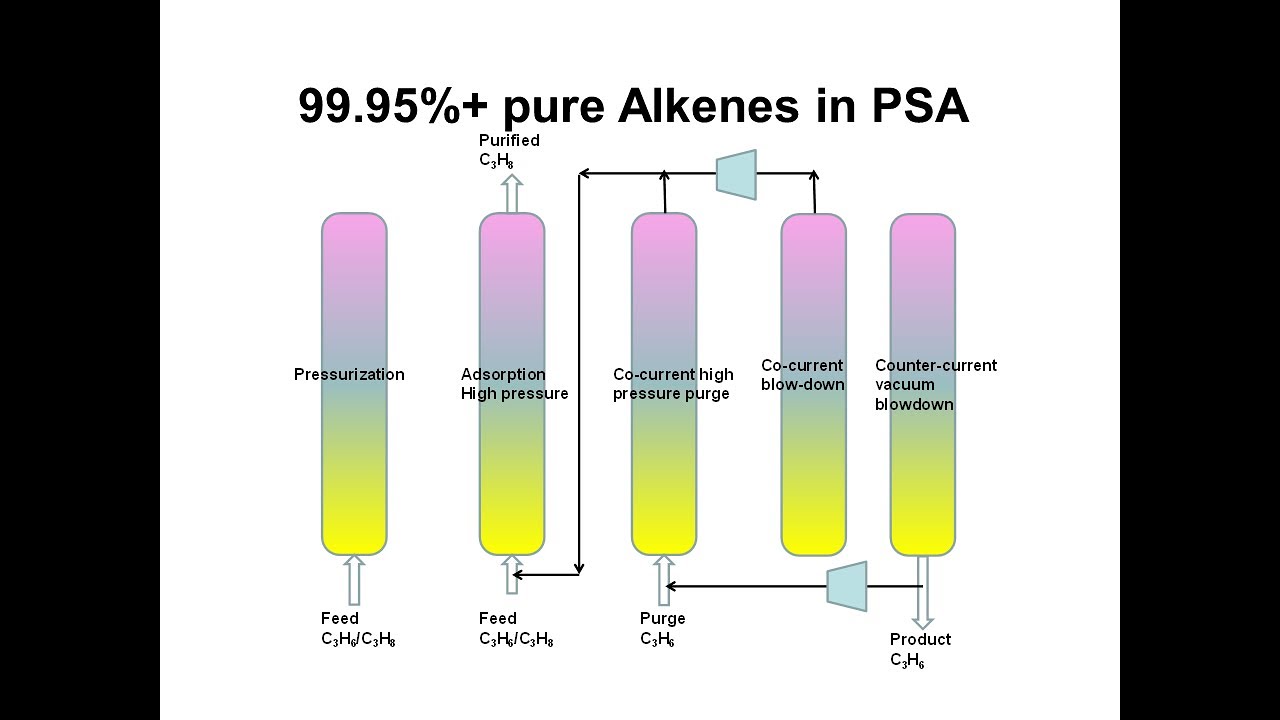
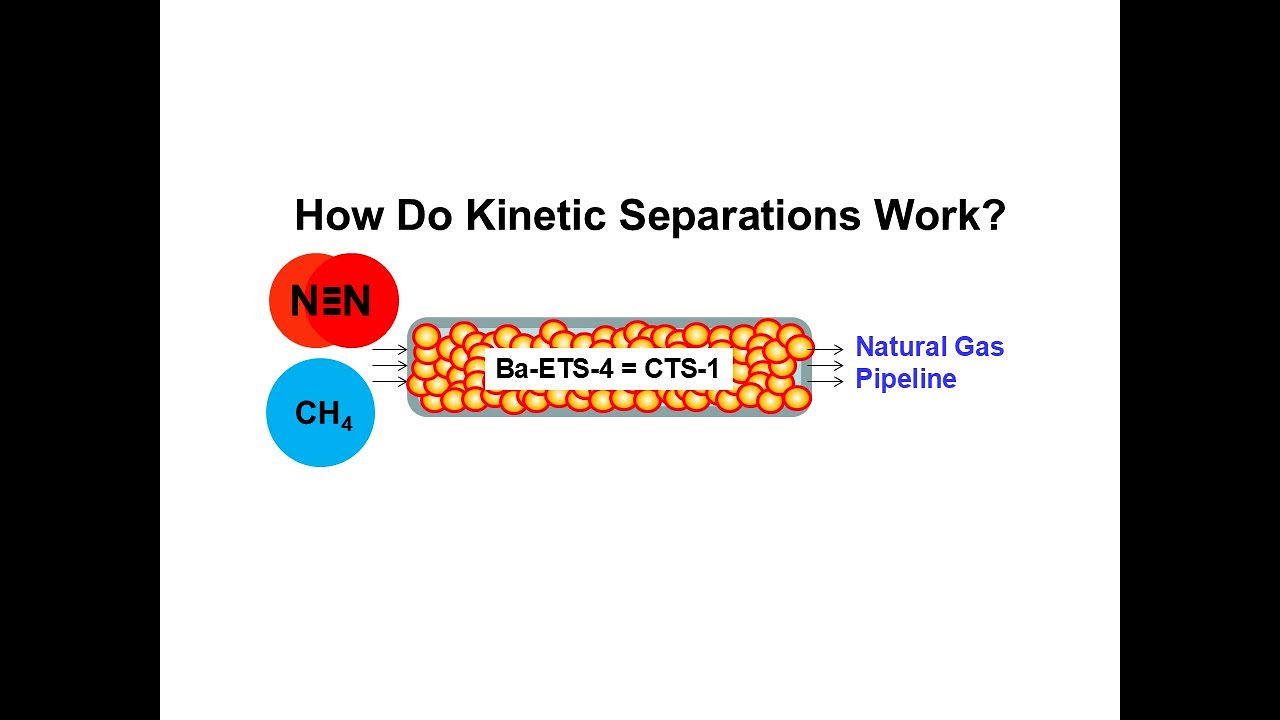
For production of alkene feedstocks of 99.95%+ purity required for polymerization reactors, cryogenic distillation columns operated at high pressures and high reflux ratios are commonly employed for large scale separations of C2H4/C2H6, and C3H6/C3H8 mixtures. Many MOF developments have targeted alkene/alkaBoth ethene (C2H4) and propene (C3H6) are important precursors for the manufacture of a variety of polymers. Propene is a by-product from the steam cracking of liquid feedstocks such as naphtha and liquefied petroleum gas (LPG), as well as off-gases produced in fluid catalytic cracking (FCC) units in refineries. Key processing steps in preparing feedstocks for polymer production are the separations of C2H4/C2H6, and C3H6/C3H8 mixtures, that are traditionally carried out in distillation columns. Due to small differences in the boiling points, the relative volatilities of C2H4/C2H6, and C3H6/C3H8 separations are in the range 1.1 to 1.2. In order to satisfy the 99.95%+ purity requirement of alkene feedstocks to polymerization reactors, the distillation columns are tall (150 - 200 trays), and operate at cryogenic temperatures, high pressures and high reflux ratios ( 15). Use of adsorptive separations may result in reduced energy consumption.
Each of the unsaturated alkenes C2H4, and C3H6 possesses a pi-bond, and the preferential adsorption of the alkene from the corresponding alkane with the same number of C atoms can be achieved by choosing zeolitic adsorbents with extra-framework cations (e.g. LTA-4A zeolite, NaX (= 13X) zeolite), or MOFs with unsaturated “open” metal sites (e.g. M2(dobdc) [M = Mg, Mn, Co, Ni, Zn, Fe; dobdc4- = 2,5- dioxido-1,4-benzenedicarboxylate], and CuBTC). All of the atoms of C2H4 lie on the same plane, and its dipole moment is zero; however it does possess a quadrupole moment. It is to be noted that the polarizability of the alkane (C2H6, C3H8) is slightly higher than that of the corresponding alkene (C2H4, C3H6).
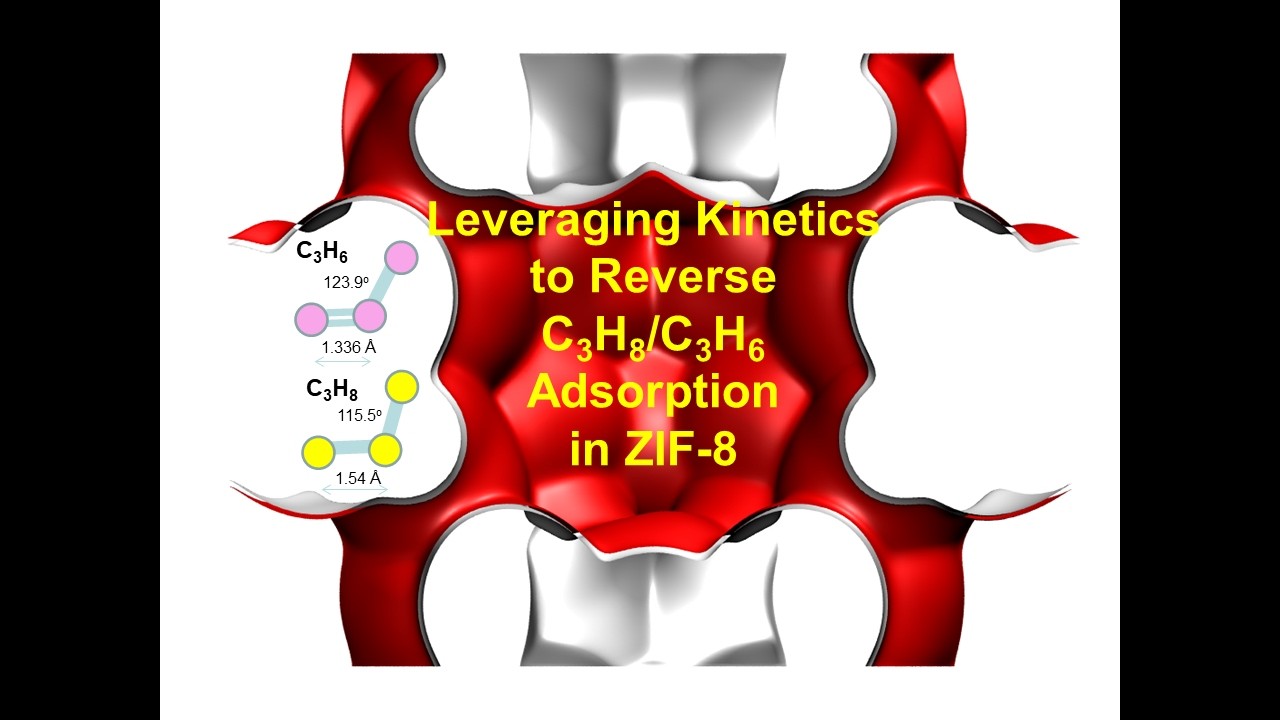
In this presentation I first examine C3H6/C3H8 separations with M2(dobdc), KAUST-7 and Co-Gallate to determine whether polymer grade feedstocks are achievable.
For C2H4/C2H6 separations, near total exclusion of C2H6 is achieved by use of ultramicroporous metal–organic framework [UTSA-280 = Ca(C4O4)(H2O)], that possesses rigid one-dimensional channels. The 1D channels are of a similar size to C2H4 molecules (all of atoms of which lie on the same plane), but owing to the size, shape and rigidity of the pores, practically exclude the C2H6.
For further background information consult my paper
R. Krishna, ACS Omega 5 (2020) 16987−17004. https://doi.org/10.1021/acsomega.0c02218
Watch also Transient Breakthrough Simulations, Screening MOFs for Mixture Separations
on my YouTube channel https://www.youtube.com/@rajamanikris...
Повторяем попытку...
Доступные форматы для скачивания:
Скачать видео
-
Информация по загрузке:



![SYPIE SIĘ ŁAD TRUMPA? SAFE - ZMIANA OCENY [Komentarz]](https://imager.clipsaver.ru/4BQkHFydP0w/max.jpg)