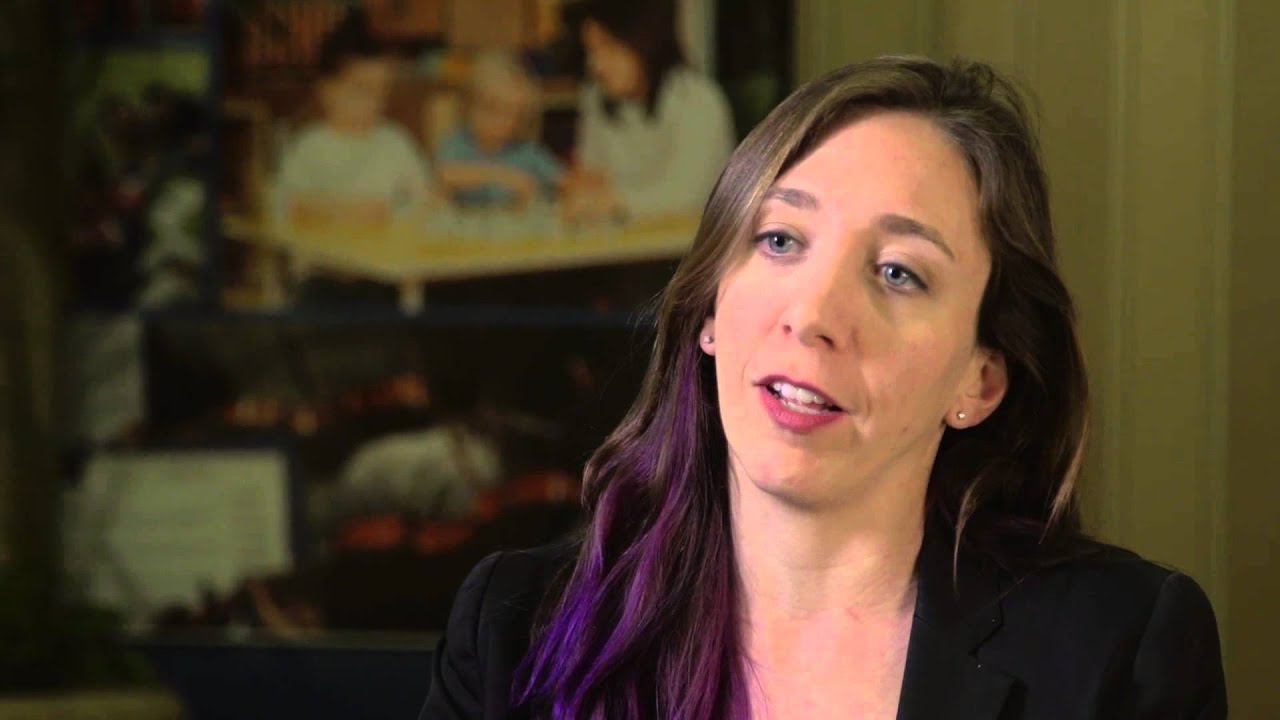
Dr. Madhav Chavan: Technology Alone Won't Reform Education | Big Think
Автор: Big Think
Загружено: 2014-10-15
Просмотров: 17796
Описание:
Dr. Madhav Chavan: Technology Alone Won't Reform Education
Watch the newest video from Big Think: https://bigth.ink/NewVideo
Join Big Think Edge for exclusive videos: https://bigth.ink/Edge
----------------------------------------------------------------------------------
Dr. Madhav Chavan describes how technological innovations are inherently non-linear, and therefore don’t easily transpose to the linear world of education.
----------------------------------------------------------------------------------
Dr. Madhav Chavan:
Dr. Madhav Chavan is a co-founder and CEO-President of Pratham, an organization that reaches 3 million primary school age children in India every year. He acquired a Ph. D. in Chemistry at the Ohio State University in the US in 1983 and returned to India in 1986 after his post-doctoral work at the University of Houston. In 1989, while teaching at the University of Mumbai, he started mass scale work for adult literacy in the slums of Mumbai as a part of the National Literacy Mission in the slums of Mumbai. In 1994, as a result of an initiative of UNICEF in Mumbai, Pratham was set up to address problems of universal primary education in Mumbai. Dr. Chavan has since then led the development of the organization and its programs. Pratham has several mass-scale innovations such as the Annual Status of Education Report in the area of assessment and the Read India movement in the delivery of education for the underprivileged to its credit.
----------------------------------------------------------------------------------
TRANSCRIPT:
Madhav Chavan: Going to technology is something that’s inevitable. People will go to technology because technology is spreading far and wide it does offer some advantages. But to think that technology alone will solve problems is not quite right. I think there are a few fundamental issues here. Let’s assume that you can get a hundred percent connectivity to Internet and all that. Let’s say all that is true. The biggest problem in using technology is that if you use technology to improve the learning outcomes under the present curriculum and the present education system then there’s a conflict. The technology, information technology is essentially a nonlinear tool. You can go to the Internet and serve just about any content. Whereas the education system as it has existed over the 200 years is a very linear one. Somebody out there in Washington or London or Delhi decides what you’re going to learn in fifth grade and sixth grade and seventh grade. And that’s the boring part. Whereas the kids are learning the nonlinear stuff our life has become nonlinear. It’s not assembly line anymore. We don’t stand in lines anymore. You want a book a cinema ticket, you want to book a Broadway ticket, you want to book an airline ticket you just go on the Internet and do stuff.
And this is true of production. Everything has become nonlinear except where seasons are concerned. Whereas the learning systems have remained linear. Now when you take technology and place it in the learning environment, if you make it subservient to the current linear system then the power of the technology is constrained and then to that extent it is not affected. Then its effect is only as much as the school system’s effect. Whereas if you were to remove it from the school education system and say the school system, the learning system should be now changed to suit the new technology then you have a particular advantage. The question is how you do it. Second part is in our parts of the world at least – I can’t say much about the developed world. Due to or shall we say feudal culture where you have to listen to the elders to start with. Of course it’s changing a little bit. Sometimes it’s good to listen to elders. But you have to – you go to the teacher – the teacher is the one who gives you answers and the pretension is that the teacher knows the answers or the textbook knows the answers or somebody knows the answers. Whereas the whole idea is that in the modern world you should be looking for answers.
You should become a self-learner because there’s so much out there to be learned and there’s no way that the content that humanity’s generated over so many hundred years can be absorbed over 5, 10, 15, 16 years. So the important thing is to learn the skills of learning, to learn cooperatively. The old system says you are going to learn and you are going to appear for the exam. The new system is saying you can work in groups and learn and crack the problem. So I think we need to fundamentally change the way we’re learning, the way that we are being assessed and certified as well. So policymakers – very clearly everybody says put computers in the kids’ hands. That’s only part of the problem. In my part of the world even the content is not available in local languages.
Read the full transcript at https://bigthink.com/videos/dr-madhav...
Повторяем попытку...

Доступные форматы для скачивания:
Скачать видео
-
Информация по загрузке: