ycliper

Популярное

Музыка Кино и Анимация Автомобили Животные Спорт Путешествия Игры Юмор

Интересные видео

2025 Сериалы Трейлеры Новости Как сделать Видеоуроки Diy своими руками

Топ запросов

смотреть а4 schoolboy runaway турецкий сериал смотреть мультфильмы эдисон
Скачать

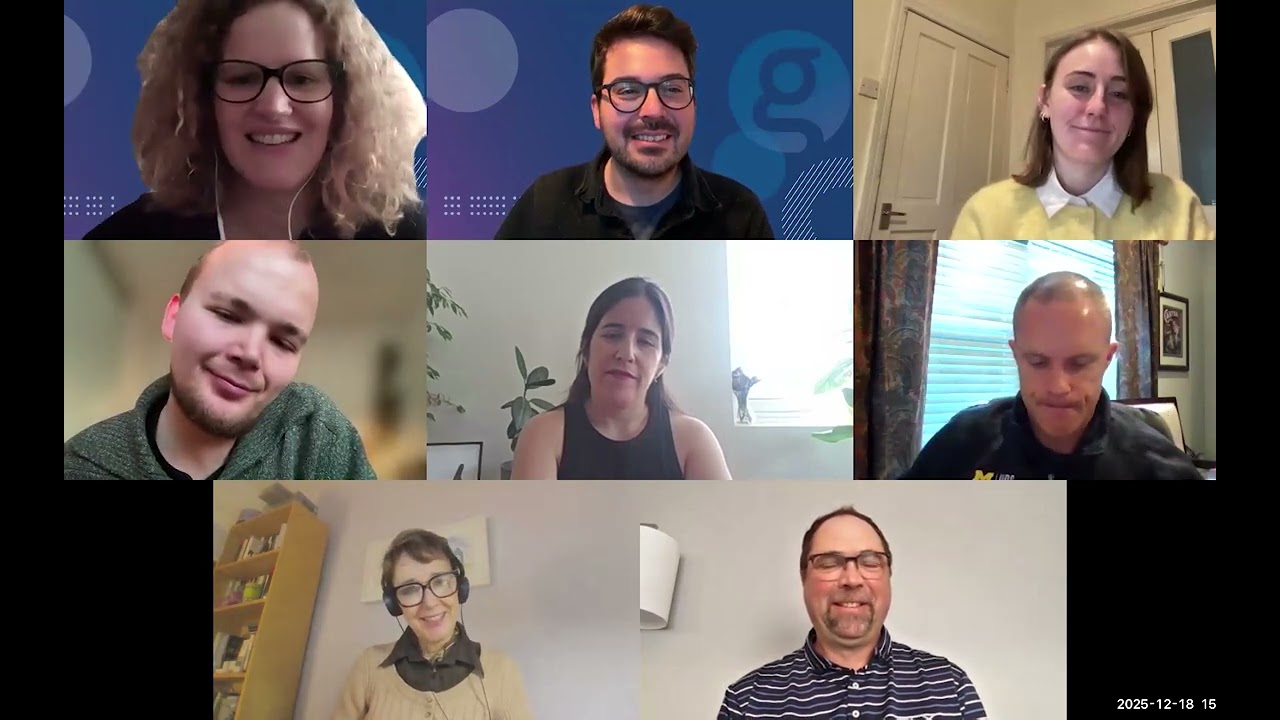
Meet the Editors: Working with New Data Source - Methodological Choices, Challenges and Solutions

Автор: GESIS - Leibniz-Institut für Sozialwissenschaften

Загружено: 2026-02-17

Просмотров: 27

Описание: This special session of the GESIS Meet the Experts format “Meet the Editor” is based on a Special Issue of the Journal mda that explores and promotes scholarly reflection and transparency on emerging best practices in the collection, processing, analysis and sharing of new data sources within the research community. It is a topic of growing importance for quantitative social sciences given that social media and digital trace data as well as data collected from sensors are now widely used in many areas of research. In large part, the appeal of these data is that they offer fresh insight into new and ongoing research questions and allow researchers access to ‘harder to reach’ geographies and populations. Notwithstanding their appeal, these data can often be difficult to obtain due to platform restrictions, are subject to potentially multiple sources of unknown bias and require extensive curation and cleaning prior to analysis. In this special issue, we bring together a range of papers that highlight the challenges and opportunities in working with these new and emerging digital trace data sources, and in particular the value they add when integrated with more traditional forms of data.

As well as showcasing papers that directly explore the ‘added’ value of these new data sources for investigating ongoing social science debates, the Special Issue incorporates an exciting new initiative in which authors share with readers their reflections on the process of producing their published work. Through these so-called ‘reflective appendices’ our authors explicitly confront and interrogate the assumptions and processes that guided their analysis and explain where and how these changed during the course of their research. Questions addressed include whether decisions regarding sampling frames and sizes were adjusted, if alternative forms of data were considered and adopted or discarded, whether the methodological and analytical approaches designated at the start were modified in any way to adapt to issues in working with new data sources and what if any ‘lessons learned’ they would pass on to others in the field to improve the robustness of future studies seeking to exploit these new forms of data. Longer term, we hope the Special Issue and particularly our authors’ reflective appendices serve to promote the ongoing shift toward embedding a more ‘open research’ culture within the social sciences.

The session will involve guest editors Trent D. Buskirk and Rachel Gibson and Special Issue authors in a discussion about how their work contributes to a better understanding the challenges and solutions in working with new data sources, and what they perceive as the value of the reflective appendices both in relation to their own work but for the discipline more generally.


Presenters:
Trent D. Buskirk,
Rachel Gibson (Guest Editors)
in conversation with authors

Не удается загрузить Youtube-плеер. Проверьте блокировку Youtube в вашей сети.
Повторяем попытку...
Meet the Editors: Working with New Data Source - Methodological Choices, Challenges and Solutions

Поделиться в:

Доступные форматы для скачивания:

Скачать видео

  • Информация по загрузке:

Скачать аудио

Похожие видео

Meet the Experts: Resquin for Assessing Response Quality in Multi-Item Scales

Meet the Experts: Resquin for Assessing Response Quality in Multi-Item Scales

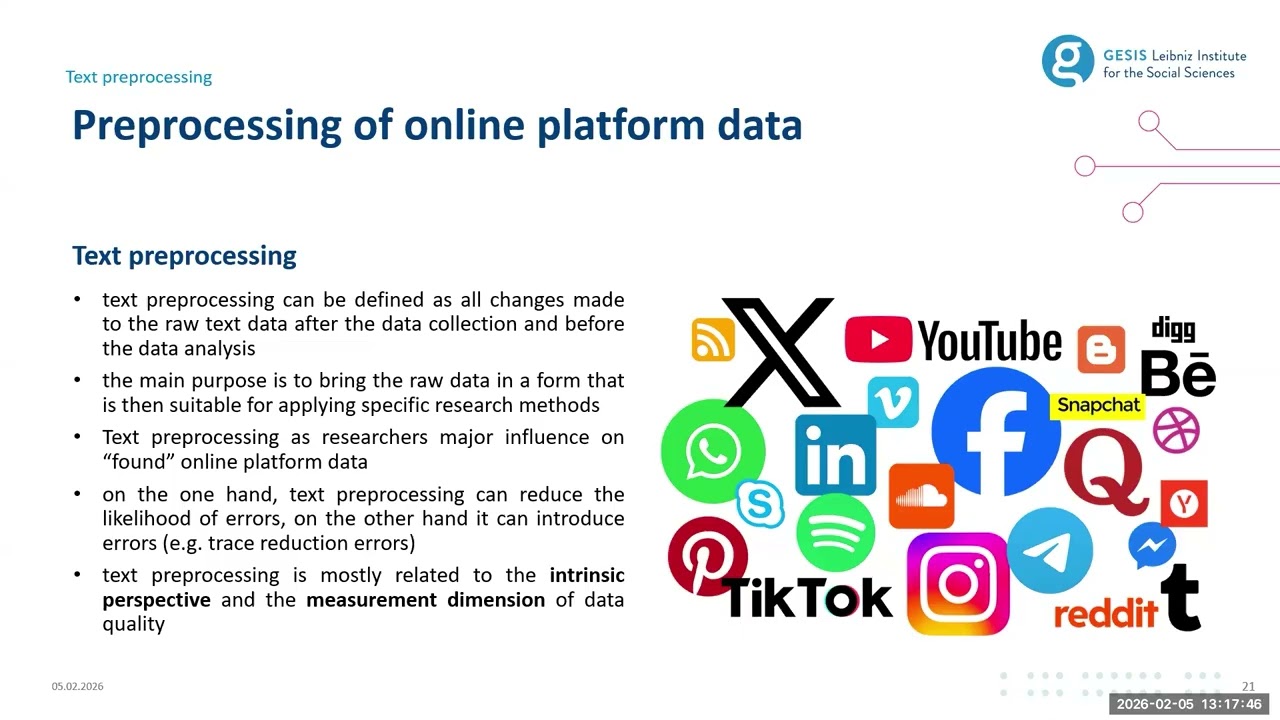
Meet the Experts: Preprocessing text data with TextPrep (KODAQS Toolbox)

Meet the Experts: Preprocessing text data with TextPrep (KODAQS Toolbox)

Jorrit Jongbloed, Advisor to the City Council, explains democratic processes in Eindhoven

Jorrit Jongbloed, Advisor to the City Council, explains democratic processes in Eindhoven

Meet the Experts: KODAQS Toolbox AreaMatch

Meet the Experts: KODAQS Toolbox AreaMatch

Метод анализа главных компонентов (PCA) объяснен простыми словами.

Метод анализа главных компонентов (PCA) объяснен простыми словами.

Как заговорить на любом языке? Главная ошибка 99% людей в изучении. Полиглот Дмитрий Петров.

Как заговорить на любом языке? Главная ошибка 99% людей в изучении. Полиглот Дмитрий Петров.

NotebookLM в Изучении Иностранных Языков: Обзор Функций

NotebookLM в Изучении Иностранных Языков: Обзор Функций

Но что такое нейронная сеть? | Глава 1. Глубокое обучение

Но что такое нейронная сеть? | Глава 1. Глубокое обучение

Эндоплазматический ретикулум. Как появилась эта логистическая система клетки?

Эндоплазматический ретикулум. Как появилась эта логистическая система клетки?

Чем ОПАСЕН МАХ? Разбор приложения специалистом по кибер безопасности

Чем ОПАСЕН МАХ? Разбор приложения специалистом по кибер безопасности

Когнитивные искажения и ошибки восприятия. Лекция в Ереване. День 1

Когнитивные искажения и ошибки восприятия. Лекция в Ереване. День 1

Традиционное машинное обучение мертво — суровая правда 😔

Традиционное машинное обучение мертво — суровая правда 😔

Александр Артамонов | Заявление вдовы Эпштейна. Необходимость решительных действий

Александр Артамонов | Заявление вдовы Эпштейна. Необходимость решительных действий

AI-экономика: автономные компании, нулевая маржа и банки будущего

AI-экономика: автономные компании, нулевая маржа и банки будущего

Почему люди ненавидят математику? Ефим Зельманов (Филдсовская медаль, 1994)

Почему люди ненавидят математику? Ефим Зельманов (Филдсовская медаль, 1994)

Zapomniane historyczne kadry, które miały nigdy nie ujrzeć światła dziennego

Zapomniane historyczne kadry, które miały nigdy nie ujrzeć światła dziennego

Гипотеза Пуанкаре — Алексей Савватеев на ПостНауке

Гипотеза Пуанкаре — Алексей Савватеев на ПостНауке

Новые функции NotebookLM просто невероятны.

Новые функции NotebookLM просто невероятны.

PIAAC Conference 2025: Skills Use, Work Conditions, and Cognitive Skills Using PIAAC Cycle 2 Data

PIAAC Conference 2025: Skills Use, Work Conditions, and Cognitive Skills Using PIAAC Cycle 2 Data

Вот как читать дифференциальные уравнения.

Вот как читать дифференциальные уравнения.

© 2025 ycliper. Все права защищены.


  • Контакты
  • О нас
  • Политика конфиденциальности


Контакты для правообладателей: [email protected]